
The Baggage Belt Became a Communication Channel

22North acts as flight disruption communication management engine for airlines. This platform ensures disruptions, while inevitable, are communicated clearly, on time and geared towards providing non-aero revenue opportunity to airlines.
Delays Happen. Silence Shouldn’t.
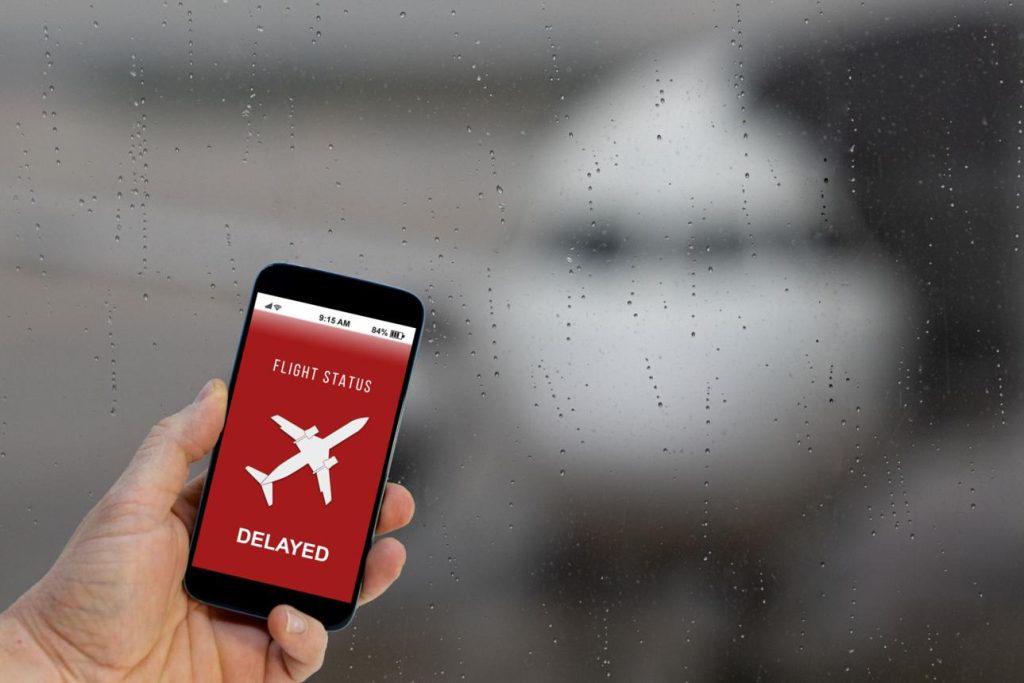
22North acts as flight disruption communication management engine for airlines. This platform ensures disruptions, while inevitable, are communicated clearly, on time and geared towards providing non-aero revenue opportunity to airlines.
The future of airline contact centres: Smarter, faster, and passenger-first

Airline contact centres used to be a cost centre: phone trees, long hold times, frustrated passengers and mountains of manual, repetitive work for agents. That’s changing fast. The future of airline contact centres will be defined not by how many calls they handle, but by how seamlessly they prevent calls from being needed in the first place, how quickly they resolve the ones that do happen, and how consistently they deliver personalized, context-aware experiences across every channel a passenger uses. Here’s how that future looks and how Phonon’s capabilities map directly to the opportunities airlines are racing to capture. 1. From reactive queues to proactive journeys Traditional contact centres wait for problems to arrive. The future flips that script: airlines will anticipate issues and reach passengers before they call. Proactive disruption notifications (flight changes, gate moves, delays), pre-departure checklists, and real-time rebooking options will reduce inbound traffic and improve passenger satisfaction. Phonon enables this shift through automated, event-driven messaging that integrates with airline operations. Instead of a generic SMS blast, passengers receive relevant, timely messages on the channel they prefer, with actionable links and options to self-serve. Proactive outreach becomes a revenue and loyalty tool, not just an operational fix. 2. Omnichannel, but with true continuity Passengers don’t think in channels, they think in outcomes and so should airlines. A traveler might start on WhatsApp, switch to web chat, then call the contact centre. Future contact centres must retain the full context across that journey so the passenger never has to repeat themselves. Phonon’s platform is built for omnichannel continuity: messages, attachments, and the passenger’s previous interactions are accessible across touchpoints in real time. That means an agent picking up a call sees the same context the passenger had in chat, reducing handle time and delivering empathetic service. 3. Automation where it matters — human where it helps Automation isn’t about replacing agents; it’s about elevating them. Bots and guided self-service should handle predictable, high-volume tasks (boarding pass delivery, baggage updates, simple rebookings), while human agents focus on complex, emotionally charged situations. Phonon provides modular automation — templates, decision flows, and safe escalation rules. The differentiator is that these sit beside agents rather than in front of them. When a situation becomes complicated, the handover includes the entire conversation history and machine-generated suggestions, so agents can resolve issues faster and with higher first-contact resolution. 4. Personalization powered by real context Passengers expect experiences tailored to their journey: loyalty tier, past interactions, seat preferences, and the current disruption context. Future contact centres will use that data in real time to prioritize cases and present relevant choices. Phonon’s context layer pulls operational events and traveler data into the messaging stream, enabling personalized prompts (e.g., “As a Silver member you can select premium rebooking options”) and reducing decision friction. This context awareness turns routine communications into conversion opportunities in a highly personalized manner. 5. Resilience and regulatory-ready messaging Airlines operate across jurisdictions with different privacy and messaging regulations. The contact centre of the future must be resilient: able to route messages through compliant channels, handle peak load during global disruptions, and store conversation logs for auditability. Phonon’s architecture is designed for regulatory flexibility and operational resilience. Built-in consent handling, channel routing logic, and secure archiving mean airlines can scale communications globally while maintaining compliance and traceability. 6. Data that drives operations, not just dashboards Contact centres generate rich operational data: reason codes, wait times, channel preferences, and sentiment. Future operations will use this data in closed-loop processes — to adjust staffing in real time, improve flight recovery playbooks, and refine proactive outreach. Phonon offers analytics that go beyond vanity metrics. Its dashboards and event logs feed into operational decision engines, enabling rapid learning loops: identify the top five reasons passengers call after a delay, automate fixes for the top two, and reduce calls — repeat. 7. A developer-friendly platform for rapid innovation The pace of change in travel requires lightweight, extensible systems. Airlines want to experiment with new channels, partner integrations, or revenue features (like pre-departure retail or ancillary upsells) without multi-quarter IT projects. Phonon is built with APIs and modular capabilities so teams can prototype and deploy features quickly. Whether integrating duty-free purchase flows into WhatsApp or connecting crew communications into the same context layer, airlines can move fast and iterate based on real passenger behavior. 8. The human touch remains the differentiator Automation, data, and omnichannel continuity are powerful — but the real differentiator is how contact centres preserve human empathy at scale. Agents augmented with context and AI suggestions can spend more time on what matters: calming anxious passengers, offering creative recovery options, and converting disruption into loyalty. Phonon’s hybrid approach ensures automation reduces noise while preserving human discretion. The result is a contact centre that’s not only more efficient, but more humane. Conclusion: Contact centres as strategic engines The future airline contact centre is an operational engine for recovery, a commercial channel for conversion, and a brand experience that turns friction into loyalty. Airlines that modernize around proactive, context-aware, omnichannel communications will reduce costs, improve NPS, and unlock new revenue paths. Phonon positions itself as the communication partner for airlines to lead this transformation: modular automation, omnichannel continuity, real-time context, and a plug-and-play low-code interface make it possible to move from firefighting to foresight. For airlines, the question is no longer whether to modernize, but how quickly they can deliver passenger experiences that feel effortless and smooth. Phonon’s simple yet effective MCP layer for aviation lets airlines modernise their contact centres fast — with tangible results from week one. Read about us in the press! https://travel.economictimes.indiatimes.com/news/technology/phonon-and-jazeera-airways-unveil-jazlink-a-game-changer-in-passenger-communication/125358016
How to Deploy a Resilient Passenger Communication System That Never Goes Down

Air travel is returning to historic highs. According to IATA projections, global air passenger traffic is expected to reach 9.8 billion travelers in 2025, surpassing pre-pandemic levels. With this surge comes increased pressure on airlines and airports to communicate quickly, clearly and consistently, especially when operations are disrupted.
When delays, weather challenges, airspace restrictions or crew shortages occur, thousands of passengers can be affected within minutes. In these moments, the reliability of an airline’s communication system directly impacts customer experience, operational efficiency and brand trust. A message that is late by even ten minutes can lead to crowded counters, overwhelmed call centres and avoidable frustration.
The Rise of Aviation-Specific MCP Integrations

MCP – or Model Context Protocol – was introduced by Anthropic in 2024. A relatively new technology, it has found rapid adoption with the advent of artificial intelligence (AI) in almost every industry working to bridge the gap between technology and human needs. Currently, it is mainly being used in AI, tech or enterprise software as it is very nascent. Aviation is a sector where, by nature of the operative framework, quick and accurate data transfer between booking engines, airlines, airports and passengers is very crucial and time-bound. In such use cases, contextual exposure to information becomes very important. But what is MCP? Thinking of it in passenger journey terms – Say you wish to travel from Delhi to Dubai for 25th December 2025. There are so many ways of searching, indexing and presenting the search results – all managed by the airline’s AI assistant/LLM. The LLM first asks the MCP Client for the information. The request is formatted into a standard method of expression and then fed into the MCP server. This server securely “exposes” or provides the necessary flight options by verifying the GDS/CRS availability and returns results in the same protocol to the airline’s AI bot. The LLM decodes it back then adds on fare families, flight options, discounted prices (if applicable) to the user.This protocol acts as a universal connector between airport systems, airline systems, 3rd party aviation APIs and AI agents. This means that the AI assistant never has access to the airline system directly, it always goes through the MCP layer thus building an additional layer of security. This also means that integrations are quicker and easier with this standard protocol and more consistent. AI assistants could be of many kinds – a passenger chatbot, a travel agent assistant or a regular operations bot but with MCP, they can communicate with different aviation systems in a standardized manner. MCP servers (acting as backend plugins or tools, are exposed by every aviation backend system. MCP in Aviation: Pros & cons In the aviation industry, such an interface is pathbreaking because it affords universal implementation in an ecosystem where data from diverse geographies, airlines, airports, currencies, time zones, etc. has to be accurately and safely ferried from one access point to another. MCP opens doors to new ways of data extraction & pipelining for varied applications right from emergency actions, new bookings, ancillary revenue streams and more. With the rise of AI in the overall business & operations landscape, MCP will have far reaching impact on speed, simplicity & adaptability of integrations across the stages of pre-booking, booking, pre-travel, travel, post-travel in a passenger’s journey. However, one word of caution: Even with the buzz, security is a big concern: research papers highlight vulnerabilities in MCP servers (e.g. “tool poisoning” or maintainability issues). Because it’s so new, industry use is still mostly in technology / AI / enterprise, not yet deeply mature in very traditional industries, although it may change quickly. 22North: Building the world’s best AI-MCP layer for airlines 22North is engaged with building a best-in-class MCP layer for airline partners to simplify and facilitate AI integrations. Using this, airline partners can seamlessly generate images, QR codes or documents, manage conversations and also conduct simple tasks like URL shortening along with regular functions. This ensures scalability of operations and the ability to fetch real-time updated data without the need for referring to training data. With MCP as an integral part of operations, 22North aims to standardize data, API and tool exchanges. Since it is a low-code flow designer, navigating the setup for various journeys & notifications becomes easy, reliable and easily trackable. 22North. Keep your passengers, crew & ground staff always informed, always assured. Check our demo for the smoothest, most intuitive conversation flows over WhatsApp. Sources
Phonon Partners with Jazeera Airways to Launch ‘JazLink’ — Delivers First In Market Baggage Belt Notifications Ensuring Smoother Arrivals & Faster Turnaround

Phonon, a leading customer experience automation company, has partnered with Kuwait-based low-cost carrier Jazeera Airways to launch ‘JazLink’, an AI-powered digital communication platform. Built on Phonon’s no-code flow designer (22North), JazLink delivers real-time, multilingual updates via WhatsApp, flight status alerts, and feedback options. Notably, the collaboration introduces automated baggage belt notifications—a first-of-its-kind initiative in the GCC region—which has helped achieve a 73% improvement in passenger notification efficiency and a 35% increase in communication accurac
Customer Lifetime Value: The New KPI for Aviation

Airlines have always measured performance by on-time departures, load factors, and cost per seat. But in today’s hyper-competitive skies, the real differentiator isn’t just operational excellence — it’s Customer Lifetime Value (CLV). CLV in aviation depends on far more than the ticket sale. It’s shaped by every moment of the journey: the boarding pass that arrives without delay, the proactive gate-change alert, the seamless rebooking option when disruption strikes. Each interaction either builds loyalty or chips away at it. That’s why aviation-first platforms like 22North are transforming the game. With seamless integration into airline PSS and DCS systems, 22North ensures every communication — whether by voice, WhatsApp, SMS, or email — is real-time, contextual, and compliant with global aviation standards. The result? In aviation, every second counts. But every message counts even more. With deep system integration and smart automation, 22North helps airlines turn communication into a driver of lifetime value. CLV isn’t just a finance metric anymore — it’s the new north star for airlines. Get in touch with our Travel Automation Experts:? (+??) ??? ??? ????? connect@phonon.io
Over 300 Flights Canceled And Delayed within a Week !!!

Flight delays and cancellations across Europe are highlighting the urgent need for smarter disruption management in aviation. Discover how 22North is helping airlines and airports improve passenger experience with real-time communication, predictive insights, self-service recovery, and intelligent operational orchestration.
Revolutionizing Passenger Communication: The Launch of 22North

Revolutionizing passenger communication is here with the launch of 22North — Aviation’s Smartest Communication Engine! Imagine a world where every flight update, gate change, and emergency notice reaches passengers in real-time, seamlessly across SMS, WhatsApp, voice, and email. With AI-led workflows and automated resolutions for common queries, 22North ensures that passengers are never left in the dark. Transform the customer experience and boost satisfaction for every traveler, every moment. Discover how 22North can simplify customer support and enhance the journey from booking to touchdown. Ready to elevate your communication game? Dive in to learn more!