Every Passenger Is Different.
Why Should Their Airline Experience Be the Same?
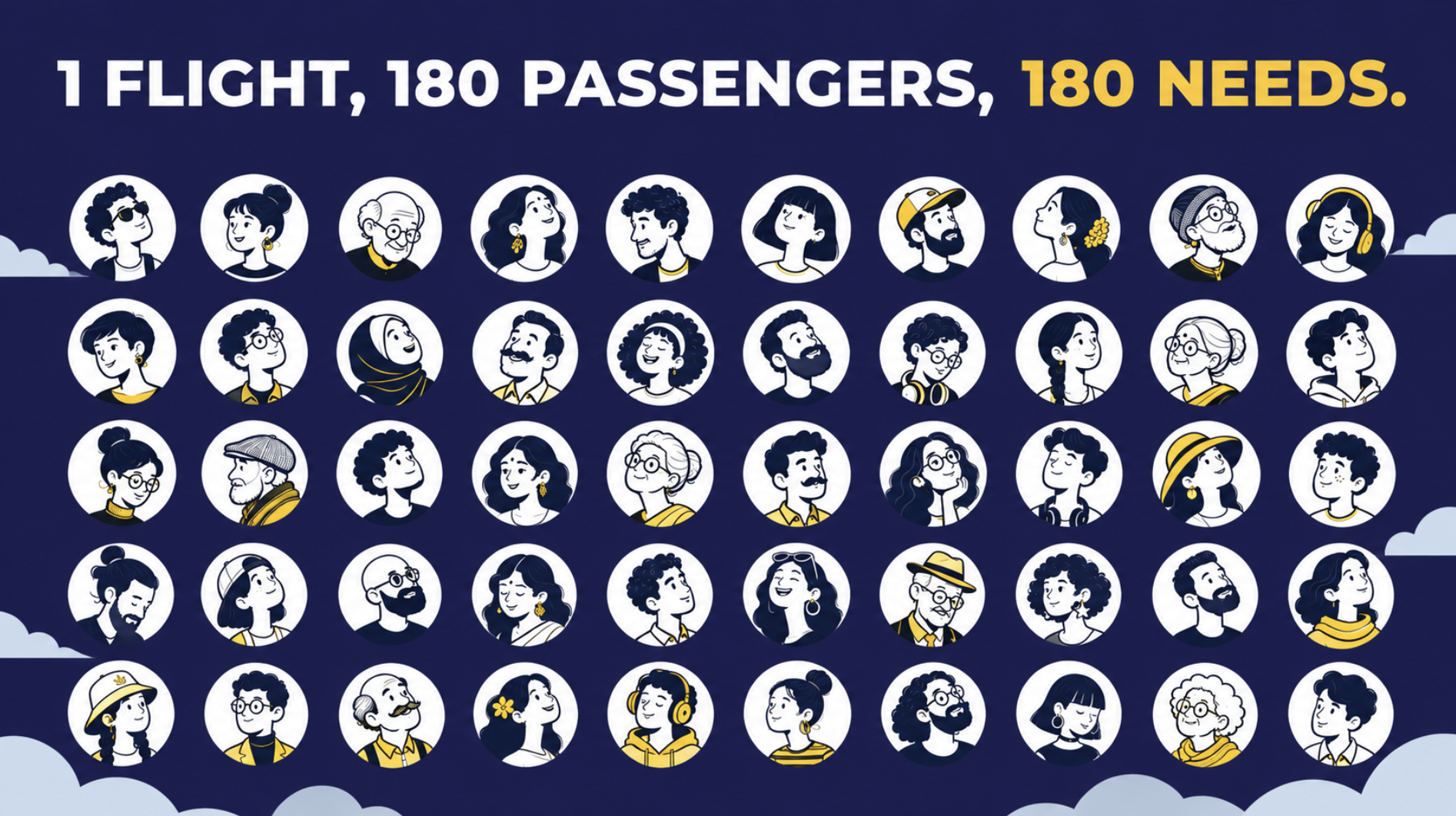
Imagine boarding a flight with 180 other passengers. Every individual has a different reason for travelling, a different set of expectations, and a different definition of a great travel experience. Some are business travellers rushing between meetings. Others are families embarking on their first international holiday. Some are elderly passengers travelling alone, while others are frequent flyers who know exactly what they want.
Yet, traditionally, airlines have approached customer experience through largely standardised service journeys.
The question is: How do you deliver a personalised experience to ~15000 passengers, everyday, each with different needs, simultaneously?
The answer lies in hyper-personalisation, intelligent automation and AI concierge technology.
Customer Experience Is No Longer One-Size-Fits-All
Customer experience for airlines is evolving. Passengers today expect more than a confirmed ticket, an allocated seat and an on-time departure. They expect convenience, relevance, proactive communication and services that understand their individual preferences. This is where automation in customer experience needs to move beyond automated responses and standardised workflows. It needs to become intelligent, contextual and personal.
Consider Fred.
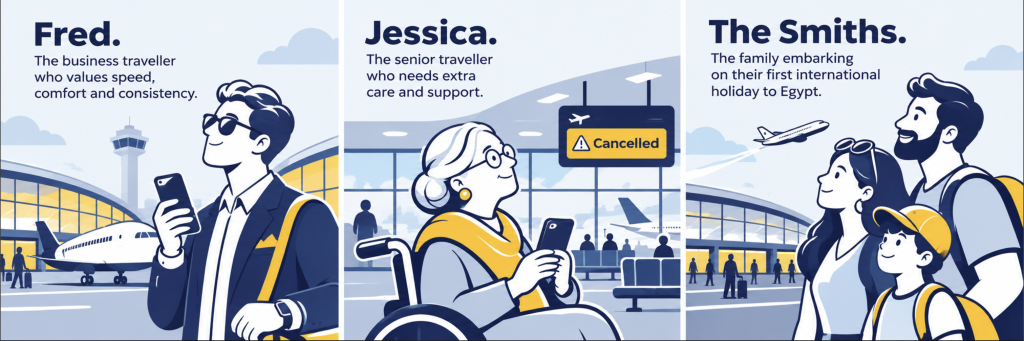
Fred is a frequent business traveller. He takes early morning flights, returns the same evening, prefers an aisle seat, always chooses a healthy local meal and has specific baggage requirements. He also enjoys shopping at duty-free.
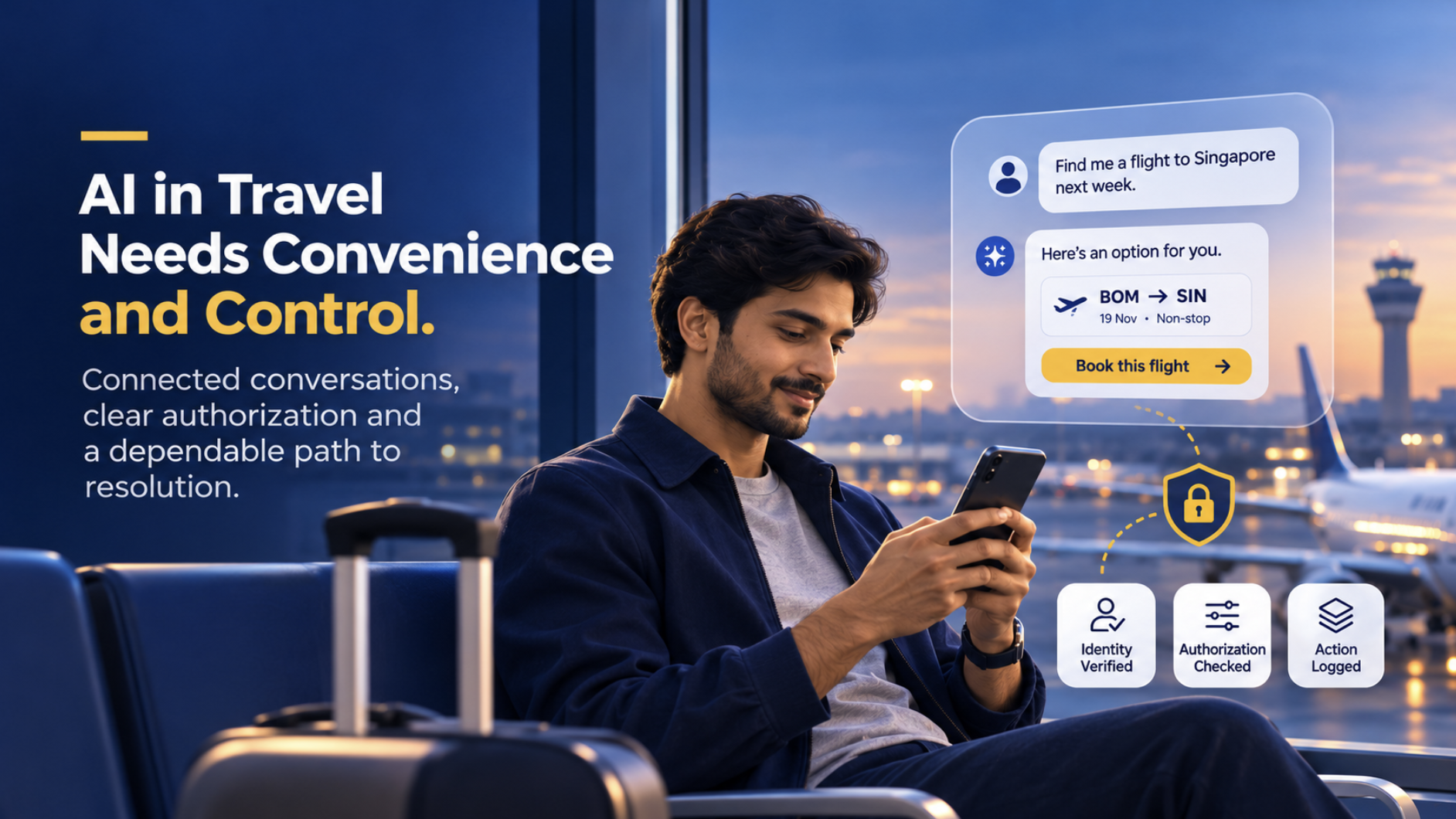
An AI concierge can learn Fred’s preferences and anticipate his requirements. It can help book his usual flights, recommend relevant ancillary services, suggest personalised duty-free offers and notify him about events at his destination if he wishes to extend his stay.
Instead of Fred repeatedly communicating his preferences, the AI concierge already understands them.
Now, consider Jessica.
Jessica is 75 and travels alone to visit her children. She requires wheelchair assistance, additional baggage and ground staff support throughout her journey.
Her flight gets cancelled.
For Jessica, this is not simply a flight disruption. It is an unfamiliar and potentially overwhelming situation.
An AI concierge can proactively communicate the disruption, explain her available alternatives, facilitate rebooking and coordinate assistance from ground staff. It can keep her informed throughout the recovery process, ensuring she knows where to go, what happens next and who will assist her.
Then there is the Smith family, travelling internationally to Egypt from Singapore for the first time. Before departure, their AI concierge can proactively remind them about applicable visa requirements, direct them towards official application resources and communicate important travel information.
Three passengers. Three entirely different journeys. Three different definitions of exceptional customer experience.
From Reactive Service to Predictive Passenger Experience
These examples illustrate what automating passenger experience should actually accomplish.
An intelligent AI concierge does not simply wait for passengers to raise queries. It can anticipate needs, identify opportunities and communicate relevant information before passengers even think to ask.
From booking assistance and ancillary recommendations to weather alerts, travel documentation, disruption recovery and real-time flight updates, AI concierge technology creates an intelligent layer of assistance across the passenger journey.
This is the shift from reactive customer service to proactive, hyper-personalized passenger experience.
For airlines, the opportunity extends beyond operational efficiency. Better personalization can contribute to higher Customer Satisfaction (CSAT), stronger customer loyalty, increased ancillary revenue and improved Customer Lifetime Value (CLTV).
When passengers feel understood, they are more likely to remember the experience, trust the airline and choose it again.
AI Is Not Replacing Human Service. It Is Making It Better.
One of the biggest misconceptions surrounding AI in customer service is that automation means replacing people. It doesn’t have to.
The purpose of an AI concierge is not to eliminate call centres or replace human interaction. It is to make customer service more accessible, responsive and intelligent.
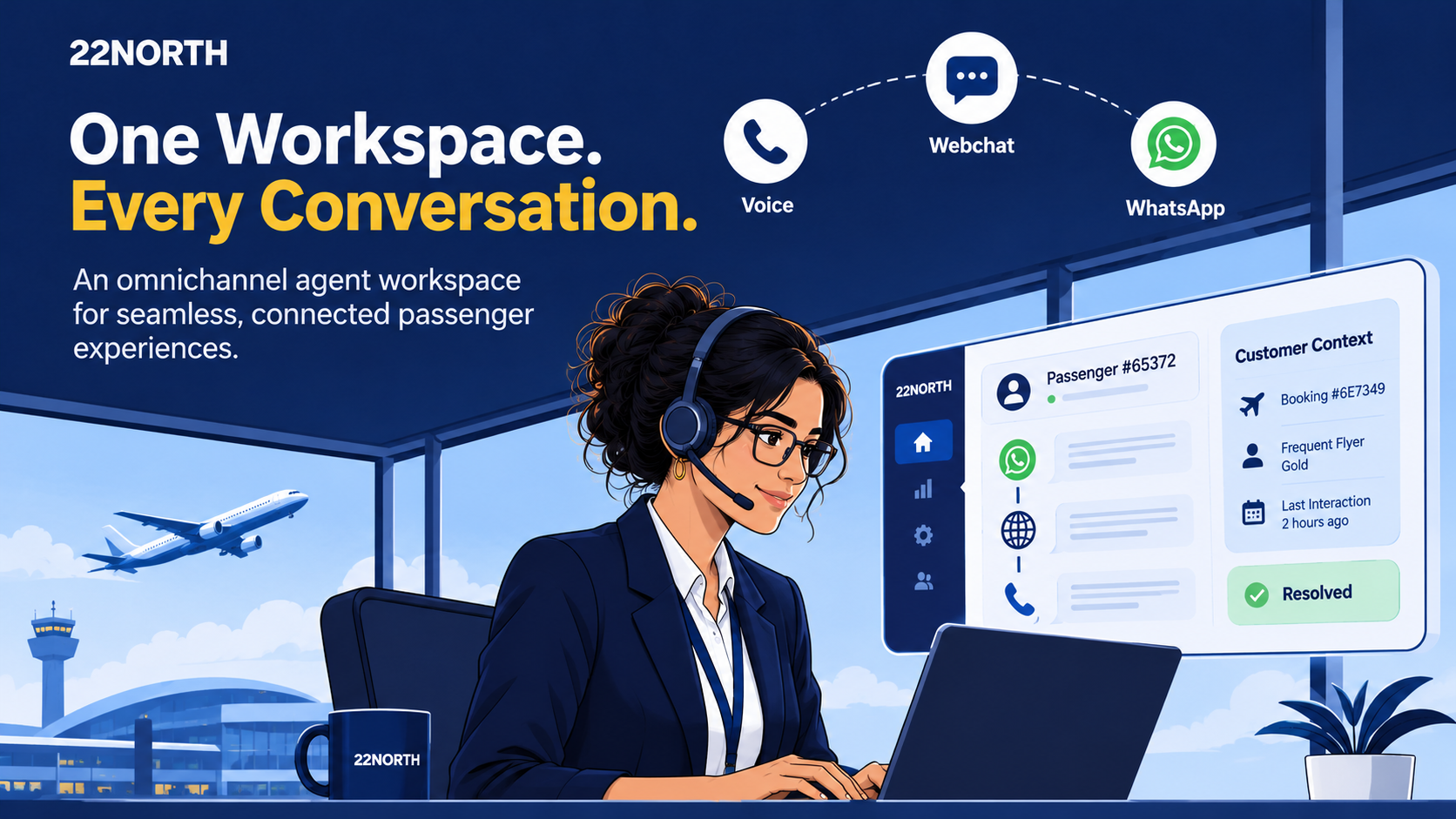
AI can independently handle routine enquiries, provide personalised recommendations, communicate updates, facilitate transactions and support recovery workflows. When a situation requires empathy, judgement, human intervention or escalation, it can seamlessly bring the relevant service team into the conversation.
Human agents remain essential. AI simply gives them more context, reduces repetitive workloads and allows them to focus on situations where human assistance makes the greatest difference.
The future is not AI versus people. It is AI and people working together to deliver better passenger experiences.
The Future of Airline Customer Experience Is Personal
With passengers expecting increasingly connected and personalised journeys, airlines have an opportunity to rethink how they approach customer experience.
The future of passenger experience is not about sending more notifications or automating more conversations. It is about making every interaction meaningful, timely and relevant to the individual.
An intelligent AI concierge makes this possible at scale, across different passengers, preferences, languages, regions and travel requirements.
Because ultimately, passengers may share a flight, but they do not share the same journey.