In today’s hyper-connected world, the aviation industry handles billions of passengers annually and generates massive volumes of operational data every minute. Airlines, airports, ground handlers, crew, and ancillary partners must coordinate seamlessly to deliver safety, efficiency, and a world-class travel experience.
AI-enabled communication, especially through widely adopted messaging platforms like WhatsApp, can transform how these stakeholders coordinate. By combining real-time messaging with predictive insights and intelligent automation, aviation organisations can streamline operations, respond faster to disruptions, and improve the passenger experience.
This guide explores how AI can make airport–airline communication smarter, faster, and more cost-efficient.
The Scale of the Challenge: Global Aviation by the Numbers
The aviation ecosystem moves billions of passengers every year, requiring complex coordination across multiple stakeholders.
-
Global air travel: In 2024, global air travel surpassed 9.4 billion passengers, exceeding pre-pandemic levels.
-
Busiest airports: Hartsfield–Jackson Atlanta International Airport handled approximately 108 million passengers in 2024, followed by Dubai International Airport with 92 million and Dallas/Fort Worth International Airport with nearly 88 million.
-
India’s aviation growth: Indira Gandhi International Airport in Delhi handled over 77 million passengers, ranking ninth globally.
At this scale, even small communication or operational inefficiencies can cascade into flight delays, higher fuel costs, dissatisfied passengers, and increased pressure on crew and ground staff.
Effective coordination is no longer optional. It is essential to operational resilience.
WhatsApp: A Widely Adopted Communication Platform
Before exploring the role of AI, it is important to understand the scale of platforms like WhatsApp, where both informal and formal coordination already takes place.
-
Over 3 billion monthly active users: WhatsApp was the world’s most popular mobile messaging app by this measure in 2025.
-
More than 100 billion messages daily: The platform supports an enormous volume of global communication.
-
Frequent daily use: Its widespread adoption makes WhatsApp a familiar channel for timely updates and alerts.
Sources: Backlinko – WhatsApp Statistics and Meetanshi – WhatsApp Statistics.
For airlines and airports, WhatsApp can support more than passenger updates. It can also facilitate operational coordination, from crew briefings and gate changes to ground-handling notifications.
When integrated with operational systems and AI-driven workflows, messaging can help ensure that the right information reaches the right people at the right time.
Why AI Matters in Airport–Airline Coordination
Airline and airport operations are constantly changing. Flight schedules shift, weather conditions evolve, crew availability fluctuates, and technical issues can arise with little warning.
AI can help aviation teams process real-time and historical data, identify potential problems, and trigger timely communications before minor issues escalate.
1. Real-Time Alerts and Predictive Notifications
AI can analyse flight schedules, weather conditions, traffic patterns, and operational data to identify potential disruptions.
It can help airlines and airports:
-
Predict potential delays and automatically notify relevant stakeholders through WhatsApp.
-
Identify emerging disruptions, such as thunderstorms or airport congestion, and support timely resource adjustments.
-
Forecast operational bottlenecks using historical and real-time data.
-
Recommend action plans that help teams respond more quickly and consistently.
By turning operational insights into actionable alerts, AI can help teams move from reactive problem-solving to more proactive coordination.
2. Smoother Crew and Ground-Handling Coordination
Coordinating pilots, cabin crew, maintenance teams, and ground staff involves schedules, compliance requirements, resource availability, and logistical updates.
AI-enabled workflows can connect crew schedules with flight and operational data to trigger:
-
Reminders about duty start times and upcoming assignments.
-
Notifications about last-minute schedule or gate changes.
-
Alerts when crew availability or duty-time requirements need attention.
-
Requests for alternative staffing arrangements, subject to operational and regulatory approval.
Automating routine notifications reduces manual workload, improves visibility, and helps minimise communication gaps and human error.
3. Passenger Services and Ancillary Revenue Opportunities
AI-powered messaging can improve passenger communication while creating opportunities for more relevant service recommendations.
Airlines can use integrated WhatsApp workflows to provide:
-
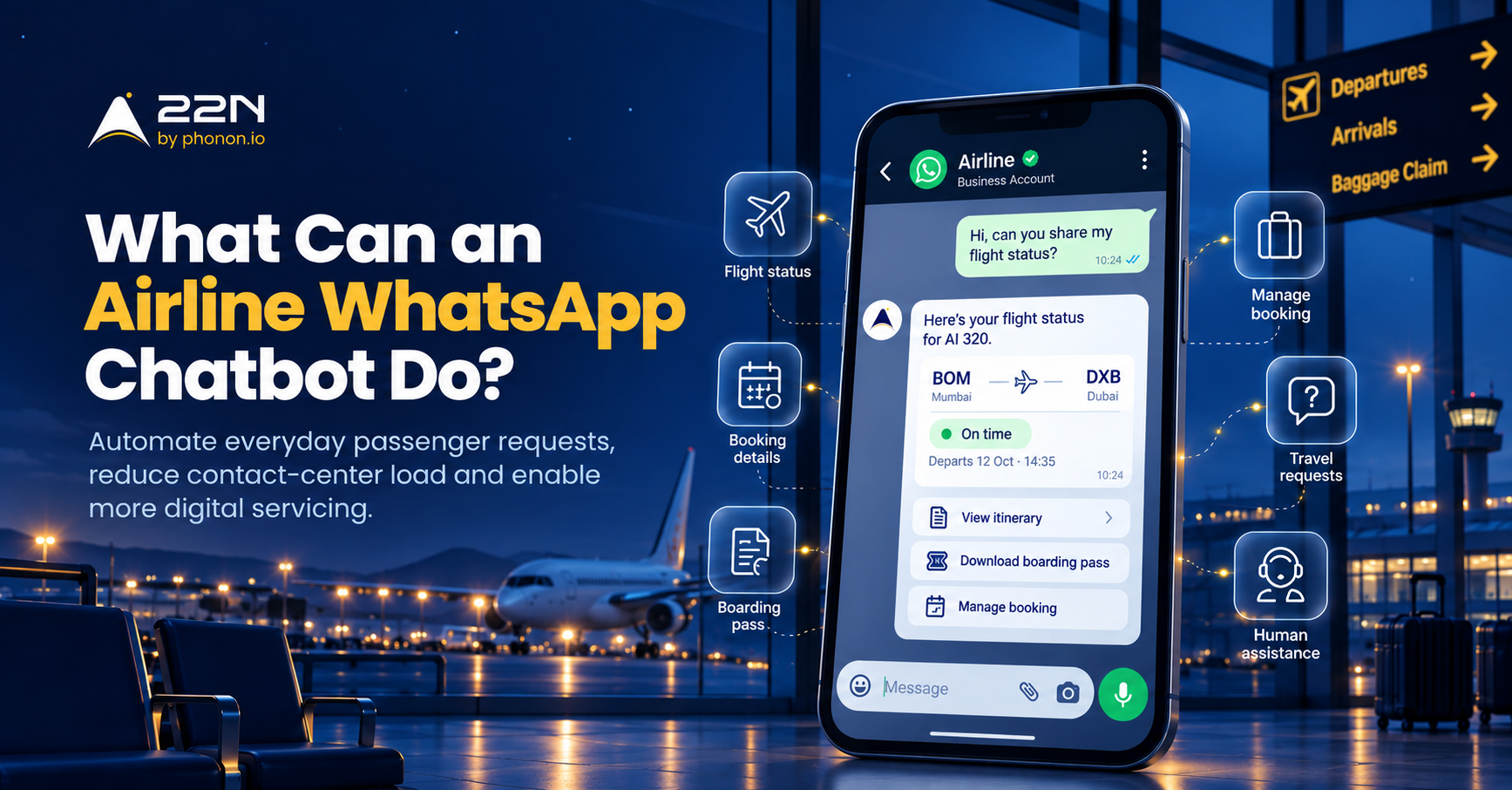
Real-time flight updates: Boarding information, delays, gate changes, cancellations, and recovery updates.
-
Personalised offers: Relevant options for lounge access, duty-free shopping, and partner services based on passenger preferences and eligibility.
-
Automated customer support: Responses to frequently asked questions, ticket-change requests, and refund queries, with more complex cases routed to staff.
The result is a more responsive passenger experience, with opportunities to improve service delivery and ancillary revenue.
Applying AI to WhatsApp: Practical Use Cases
The combination of AI, operational data, and WhatsApp can support several practical aviation workflows.
Flight Delay Predictions
AI models can analyse weather forecasts, aircraft maintenance history, airport traffic, and flight schedules to identify factors that may contribute to delays.
When a potential disruption is detected, automated WhatsApp notifications can be sent to:
-
Ground operations teams
-
Flight crew
-
Passenger service teams
-
Affected passengers
Timely communication gives teams more time to prepare, coordinate resources, and inform travellers about potential changes. This can help reduce avoidable waiting, operational inefficiencies, and passenger frustration.
Crew Planning and Resource Allocation
AI can analyse crew duty hours, mandatory rest requirements, flight patterns, and availability to support more effective resource planning.
Integrated workflows can generate:
-
WhatsApp reminders for duty start times and assignments.
-
Alerts when schedule changes may affect crew availability or compliance.
-
Requests for alternative crew arrangements when required.
These workflows can improve coordination and help teams identify potential staffing issues earlier, while keeping final operational decisions subject to applicable regulations and airline procedures.
Ground-Handling Synchronisation
Ground handling involves several interdependent activities, including baggage handling, refuelling, catering, aircraft cleaning, and other turnaround services.
AI can use flight schedules and operational data to anticipate service windows and coordinate the teams involved. WhatsApp notifications can alert handlers to changes in arrival times, gate assignments, or turnaround requirements.
Better synchronisation can help minimise avoidable turnaround delays—a key performance consideration for airlines seeking schedule reliability and airports managing gate efficiency.
Benefits of AI-Enabled WhatsApp Integration
Time Savings
Automated alerts reduce the gap between information becoming available and teams acting on it. In time-sensitive flight operations, even a small improvement in response time can support smoother coordination.
Cost Efficiency
Better planning and faster communication can help airlines and airports reduce avoidable delays, staffing overtime, inefficient ground services, and some disruption-related costs.
Better Passenger Experience
Timely, relevant updates help passengers understand what is happening and what they should do next. Automated support can reduce uncertainty, improve service responsiveness, and introduce relevant ancillary services when appropriate.
Stronger Airport–Airline Collaboration
Shared operational information and coordinated alerts can help reduce information silos between airlines, airports, and ground handlers.
When integrated systems provide a consistent view of operational changes, stakeholders can work from more aligned information and coordinate their responses more effectively.
Conclusion: Embracing AI and Messaging Platforms
The aviation sector continues to grow in scale and complexity, requiring precise coordination across distributed teams and systems. AI-enabled communication through widely adopted platforms like WhatsApp can become a strategic advantage by connecting operational insights with timely, actionable notifications.
From predicting potential delays and coordinating crew to synchronising ground handling and improving passenger support, intelligent messaging workflows can help airlines and airports make better use of data, respond faster, and deliver more consistent experiences.
As passenger volumes grow, real-time coordination will become increasingly important to operational resilience and service quality.
22North by Phonon helps bring this coordination together. Its AI-enabled communication capabilities can connect airline operations with airport and ground-handling systems—including GHS, BHS, and DCS—as well as reservation platforms such as Amadeus, Navitaire, and Sabre. Through an AI-powered MCP layer designed to coordinate large language models with connected systems, 22North supports the integration of operational information, intelligent workflows, and automated communication.
The opportunity is clear: move beyond disconnected updates towards smarter, more coordinated aviation operations.