As AI takes a larger role in travel, airlines need connected conversations, clear authorization and a dependable path to resolution.
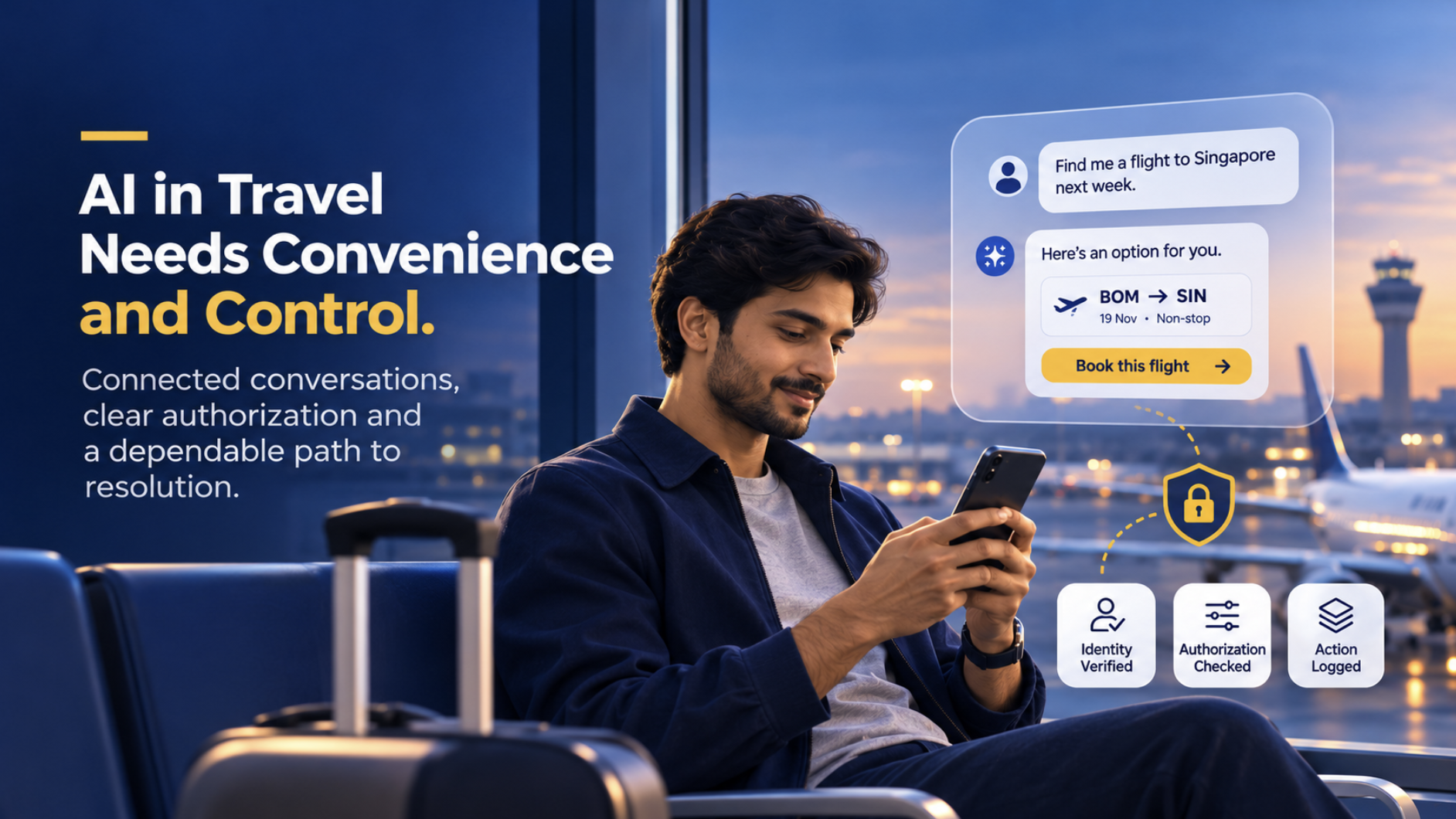
A passenger asks an AI assistant to find a flight. The assistant recommends an itinerary and offers to book it.
For the passenger, this feels convenient. For the airline, it raises several questions: who is accessing the account, what has the passenger authorized, and who is accountable if the wrong transaction takes place?
United Airlines brought these questions into focus with its decision to restrict unauthorized third-party personal AI agents. In its 11 November 2026 announcement, the airline cited concerns about exposed credentials, unintended purchases, account changes and loyalty-mile use. It also highlighted the potential for automated actions to bypass required human acknowledgments during check-in. united.mediaroom.com
The broader issue deserves attention across the industry.
As AI becomes part of passenger service, airlines need to establish how information, authority and responsibility moves through every interaction.
Convenience needs clear boundaries
A conversational interface can make very different tasks feel equally simple.
Explaining a baggage allowance provides information. Purchasing additional baggage creates a transaction. Suggesting an alternative flight presents an option. Changing a ticket can affect fares, connections and other passengers on the booking.
Each action requires appropriate checks, even when the conversation feels effortless.
This is a central challenge for airline AI: keeping the experience straightforward while respecting the complexity behind the request.
The Wall Street Journal’s reporting on United’s decision also highlights concerns about sensitive information and unintended purchases. www.wsj.com
Airlines evaluating AI should therefore define what an assistant may access, what it may recommend and what it may execute. Passenger confirmation, identity verification and human review should be built into the relevant steps.
A capable assistant needs to recognize the limits of its authority.
Airlines must make their own service channels work together
Restricting unauthorized assistants addresses one boundary. Airlines must also make their own service channels connected and capable enough for passengers to complete requests with confidence.
Consider a passenger who starts on WhatsApp about a flight change, opens web chat to clarify the options and eventually calls the contact center.
If each channel starts from the beginning, the passenger carries the burden of connecting the service experience. They repeat the booking details, explain previous advice and try to establish what has already been agreed.
The agent faces the same fragmentation from the other side.
Adding AI to each channel can accelerate individual responses while leaving the overall request unresolved. A faster answer has limited value if the next agent cannot see it or determine whether an action followed.
The priority should be a continuous service journey: relevant context follows the request, completed actions are visible and ownership of the next step is clear.
Context should help the next person act
Conversation history is useful. Operational context makes it actionable.
For a passenger affected by a cancellation, the next agent may need to understand the affected booking, travelling companions, alternatives discussed, confirmations received and actions still pending.
That distinction matters. A passenger considering a flight has not necessarily accepted it. An attempted booking change may not have succeeded. A refund request may still require review.
A connected contact center should make those differences visible.
AI-generated summaries can help agents review lengthy conversations, but they should distinguish between a request, a recommendation and a confirmed outcome. Relevant information from reservation and customer systems can provide further context, subject to authorized integrations and access permissions.
The purpose of continuity is to help the next participant take the right action with confidence.
Protecting passenger data is part of service design
Bringing information together creates an opportunity to apply consistent controls. It also increases the importance of deciding who can see and use that information.
An agent may need to identify a booking without viewing every sensitive field in full. A supervisor may need additional access to investigate an exception. An AI assistant may need only a limited set of details to answer a specific question.
These decisions belong within the service workflow.
Configurable PII masking and role-based access can help align visibility with responsibility. Their scope must cover the places where information is actually used, including supported screens, transcripts, reports and exports.
Airlines must also consider information passed to external AI providers. Masking a field on an agent’s screen does not establish how the underlying data is stored or processed elsewhere.
The guiding question is practical: what information does this person or system need to complete this task?
Human handoff is part of effective automation
Some passenger requests require judgment, investigation or additional authority.
A family travelling during a disruption may need an exception reviewed. A payment dispute may involve conflicting records. A booking change may fall outside the assistant’s configured scope.
In these situations, a well-designed handoff is a successful service step.
The receiving agent should understand the passenger’s intent, the relevant verified information, what the automation attempted and what remains unresolved. The passenger should know that someone has taken responsibility for the request.
Supervisors also need a way to intervene when an interaction requires support or approval.
This changes how airlines should evaluate automation. Containment remains useful, but it should sit alongside resolution time, repeat contacts, handoff quality and passenger satisfaction.
An interaction that transfers appropriately and reaches resolution may deliver more value than one that stays automated without solving the problem.
The contact center becomes a coordination point
These requirements give the airline contact center a broader role: coordinating passenger intent, business information, automated workflows and human decisions.
The workspace supporting that team should bring those elements together.
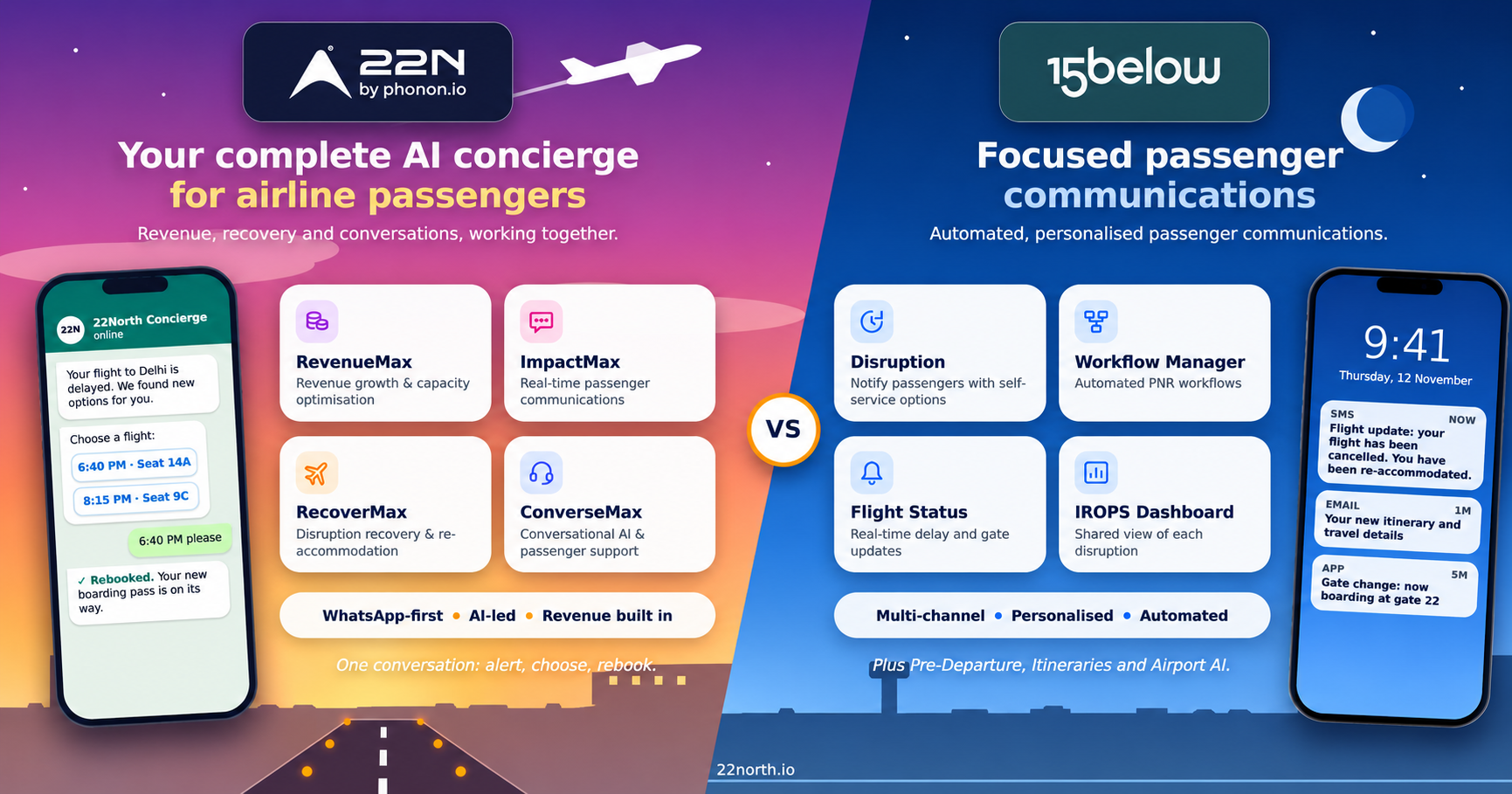
This is the approach behind ConverseMax by 22North. It brings passenger conversations, customer context, AI assistance and human handoffs into a shared service environment, with configurable controls for supported data visibility and permitted actions.
For airlines, the opportunity is to connect channels such as WhatsApp, web chat and configured voice services while giving agents a clearer understanding of the passenger’s request. Approved knowledge, workflow rules and escalation paths help define how assistance progresses toward resolution.
The operating model remains essential. Enabled channels, integrations, masking coverage and transactional capabilities must follow the agreed deployment and rollout.
Trust will shape the next phase of airline AI
United’s announcement makes authorization a visible part of the debate about AI in travel. It also invites airlines to examine the quality of the service they provide through their own channels.
Passengers want convenient assistance. They also need confidence that their information is handled appropriately, their choices are understood and their requests will reach a dependable outcome.
Airlines can build that confidence by connecting conversations, limiting access according to the task and making responsibility clear at each step.
The next advantage in airline customer service will come from making every interaction easier to continue and every action easier to trust.