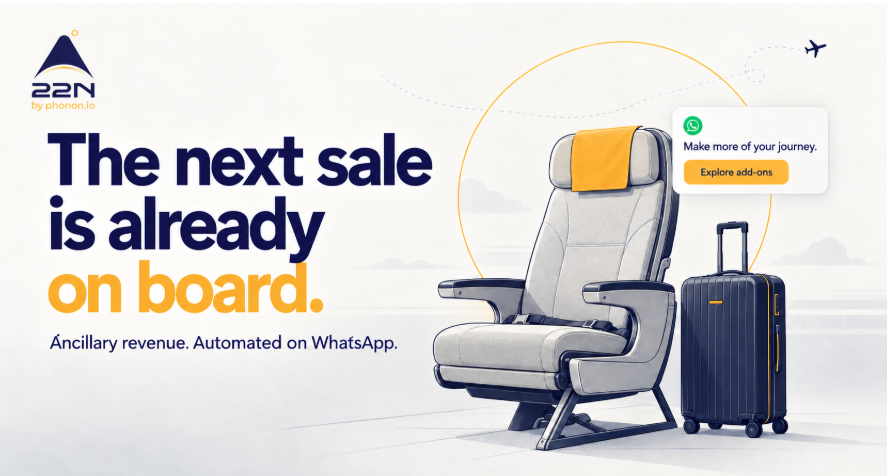
Airline ancillary sales through WhatsApp can help airlines reach passengers whose needs change after booking. A passenger may initially skip extra baggage, leave seat selection for later and overlook meal options.
Two days before travelling, their needs change. They are packing a larger suitcase, considering a more comfortable seat or planning how to stay connected onboard.
For airlines, this creates another opportunity to serve the passenger and earn additional revenue.
Automating airline ancillary sales through WhatsApp connects changing passenger needs with relevant offers and a direct path to purchase.Success depends on choosing the right passenger, product and moment, then tracking the completed sale.
Airline Ancillary Revenue: A Growing Opportunity
IdeaWorksCompany’s November 2025 estimate projected global airline ancillary revenue of US$157 billion in 2025, accounting for 15.7% of total airline revenue, compared with 9.1% in 2016. This includes optional services, commissions and loyalty-related partnerships. [¹]
For airline commercial teams, this growing contribution strengthens the case for making ancillary products easier to discover throughout the passenger journey.
Extra baggage, preferred seats, upgrades, meals and internet packages help passengers personalise their travel. However, the initial booking captures only one moment in their decision-making process.
A traveller may not know their baggage requirements when buying a ticket. Lounge access may become relevant once their airport plans are clear.
Post-booking engagement gives passengers another opportunity to purchase when a service becomes useful.
Why WhatsApp Works for Airline Ancillary Sales
In April 2025, Meta reported that WhatsApp had more than 3 billion monthly active users worldwide. [²]
For airlines, this reach creates an opportunity to engage passengers through a familiar messaging channel, alongside existing websites, apps and email campaigns.
For passengers who choose to receive WhatsApp communications, a relevant offer can provide a convenient next step: explore baggage options, select a seat or review an available upgrade.
The value comes from connecting the message with booking context and an actionable purchase journey.
How to Automate Airline Ancillary Sales Through WhatsApp
1. Match Offers to Passenger Needs
Effective airline ancillary automation starts with the booking.
Does the passenger already have checked baggage? Have they selected a seat? Is an upgrade available on their flight? Does their fare include the proposed benefit?
These checks help prevent irrelevant offers and duplicate promotions.
Personalization should influence what is offered, rather than simply adding the passenger’s name. A baggage recommendation should reflect the existing allowance; an upgrade offer should reflect availability and eligibility.
2. Trigger Campaigns Before Departure
Campaign timing should reflect when passengers can still act.
An airline might introduce baggage, seat selection and eligible meals around 72 hours before departure, followed by available upgrades, lounge access or internet packages around 24 hours before travel.
These timings are starting points for testing. Actual triggers should follow product sales cut-offs, route characteristics and airline business rules.
Automation should also respond to changes. A cancelled flight, completed purchase or revised eligibility should update or suppress the relevant offer.
3. Provide a Direct Path to Purchase
A useful WhatsApp message presents a clear benefit and a specific next step.
For example:
“Packing more for your trip? Explore extra baggage options for your upcoming flight.”
CTA: View Baggage Options
A product-specific deep link takes the passenger to the relevant airline purchase journey. Where supported, booking context carries forward securely, reducing repeated data entry.
The passenger reviews the available options, sees the applicable price and completes payment through the airline’s checkout.
WhatsApp supports discovery and engagement, while connected airline systems handle purchasing and fulfillment.
4. Confirm the Outcome
The workflow should continue beyond the click.
Once a purchase is confirmed, connected systems should record the outcome, provide the appropriate confirmation and exclude that product from subsequent offers.
If the passenger needs help, an agent can continue the conversation with the available booking and interaction context.
This creates a connected journey from offer to purchase, with assistance available when required.
Turn Service Enquiries Into Helpful Purchase Journeys
Ancillary opportunities can also begin with passenger questions.
Someone asks, “How much baggage can I take?” A connected workflow retrieves their allowance and, where appropriate, provides an option to purchase more.
Another passenger asks about seating. The conversation can guide them towards eligible options and the relevant purchase page.
This is airline conversational commerce in practical terms: helping passengers act on a need they have expressed.
The original request should remain the priority. Commercial suggestions work best when they are relevant, optional and easy to understand.
Measure Additional Revenue, Beyond Message Engagement
A delivered message measures reach. A completed transaction measures a sale.
Airlines should connect campaign engagement with purchase data to track:
- Purchase conversion: Completed purchases relative to the defined campaign audience.
- Ancillary revenue per targeted passenger: Attributed revenue divided by passengers targeted.
- Product attachment rate: Eligible bookings purchasing a particular ancillary.
- Net campaign contribution: Revenue after relevant product, messaging and platform costs.
- Incremental uplift: Additional sales compared with a suitable control group or baseline.
Attribution alone does not establish incremental revenue. Some passengers would have purchased it through another channel. Controlled testing helps identify how much additional value WhatsApp creates.
Connect Passenger Engagement With Revenue Outcomes
22North’s Passenger Operations Platform connects revenue optimisation, passenger communications and conversational service.
RevenueMax supports ancillary revenue opportunities, while ConverseMax connects conversational automation and human agents within a unified passenger service workspace. Together, these capabilities can support relevant offers and connected purchasing journeys through the airline’s available integrations.
Airlines can start with a focused use case, such as baggage or seat selection, validate completed sales and expand based on measurable results.
Discover how 22North can help your airline turn pre-departure WhatsApp engagement into additional ancillary revenue. Book a demo.
Sources
- IdeaWorksCompany — Global Estimate of Ancillary Revenue, 18 November 2025
- Meta — Q1 2025 Earnings Call, 30 April 2025