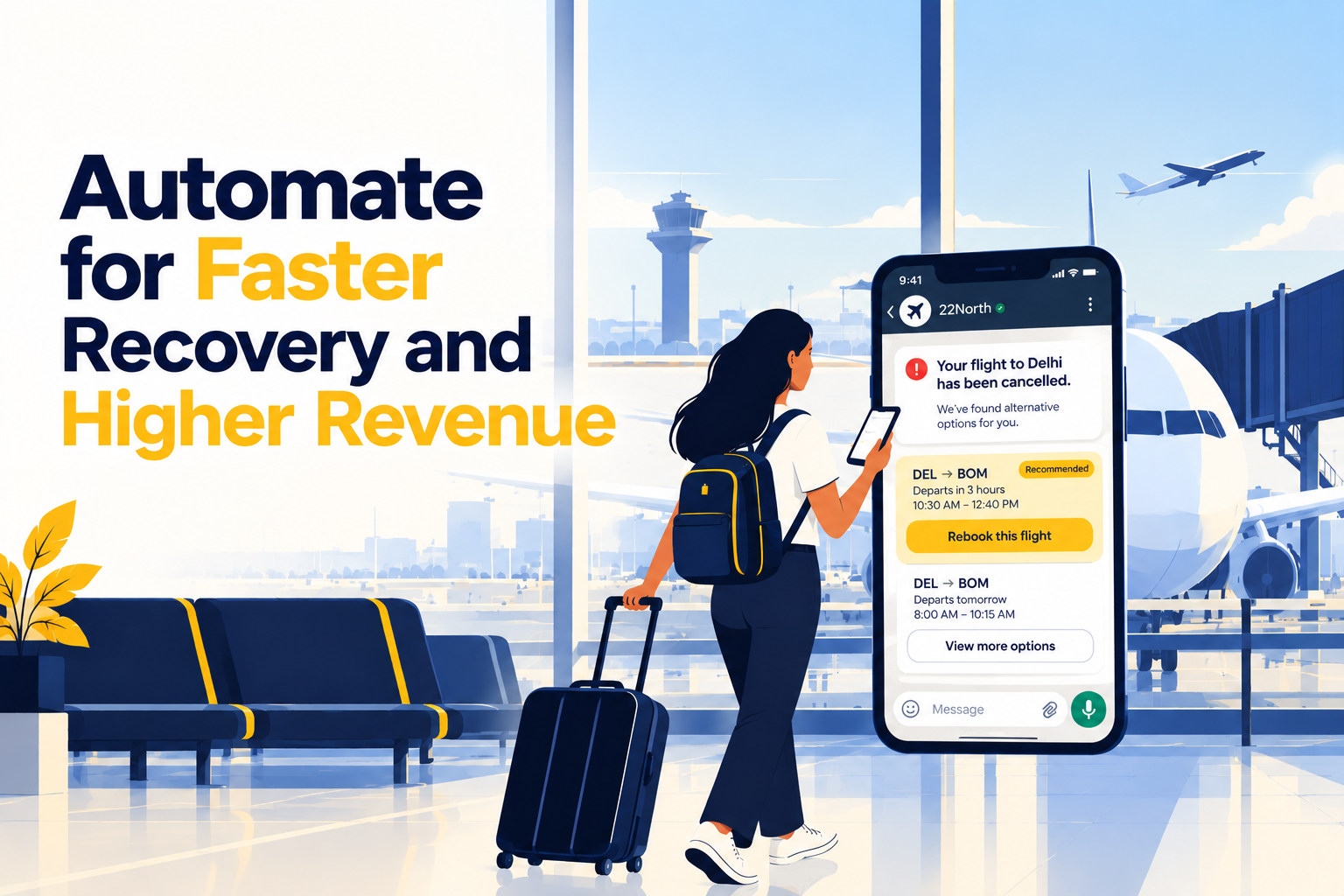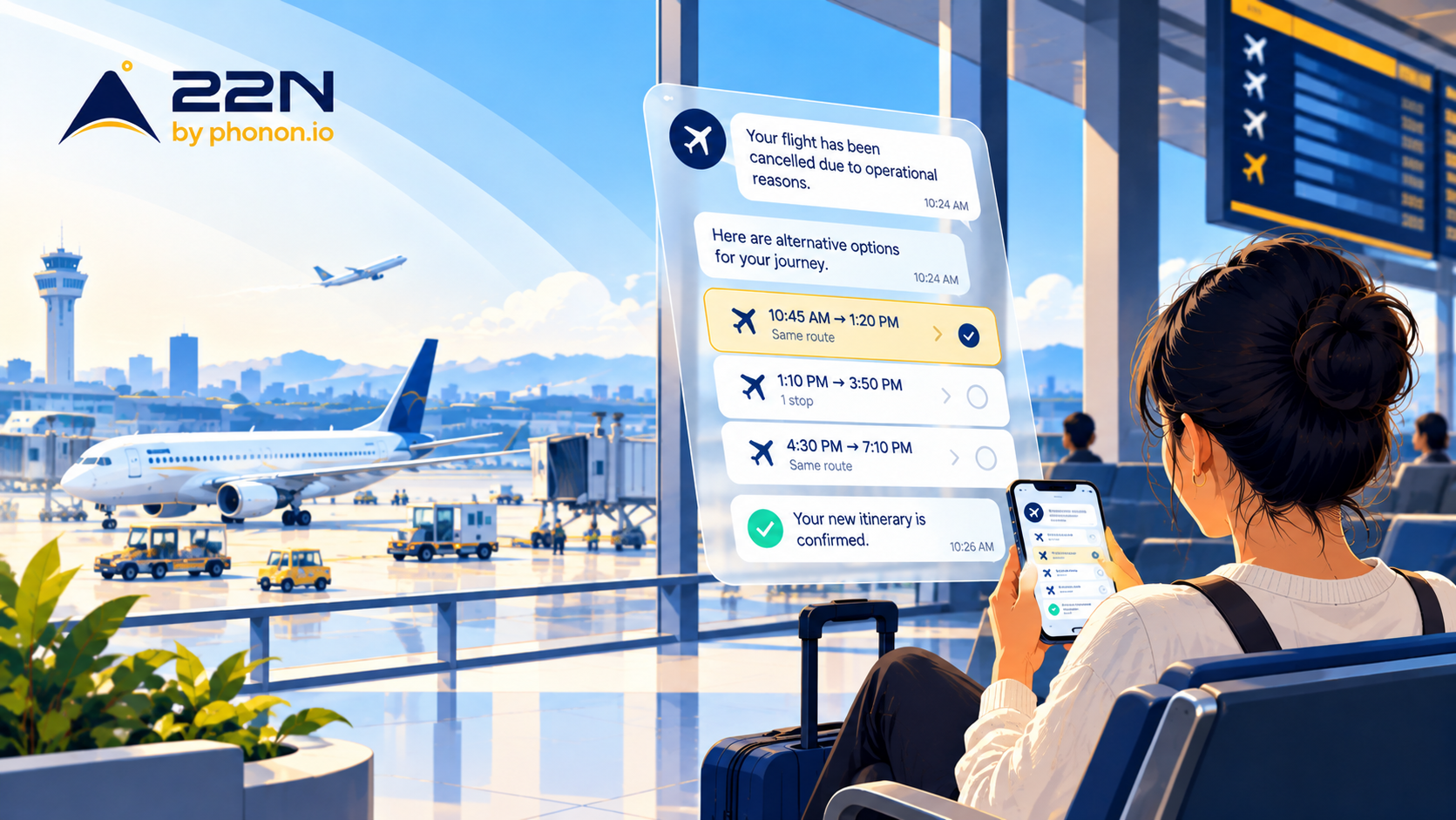
Flight delays and cancellations are not just operational headaches; they represent a compounding financial leak. A delayed aircraft may miss its next departure slot. Passengers connecting through that aircraft may miss onward flights. They need alternative flights, ground staff need to manage queues, and customer service teams must communicate changes across multiple channels. The original disruption may involve a single flight. The recovery effort can involve an entire network. The difficulty is choosing the right recovery option. The next available flight may not be suitable for every passenger and the best alternative can change as seat availability, schedules and operational constraints evolve. Airlines must weigh passenger needs against available inventory, recovery costs and their own operational priorities, all while keeping affected passengers informed.
Effective IROPs (Irregular Operations) management requires a coordinated approach that combines operational decision-making with proactive passenger communication. Airline disruption recovery software supports this process by helping airlines assess recovery options, coordinate passenger reaccommodation and manage the operational and financial impact of flight disruptions.
22North addresses these needs through two complementary products: RecoverMax, which focuses on passenger recovery and reaccommodation and ImpactMax, which focuses on proactive passenger notifications. Together, they address two critical parts of disruption management: taking the appropriate recovery action and keeping passengers informed.
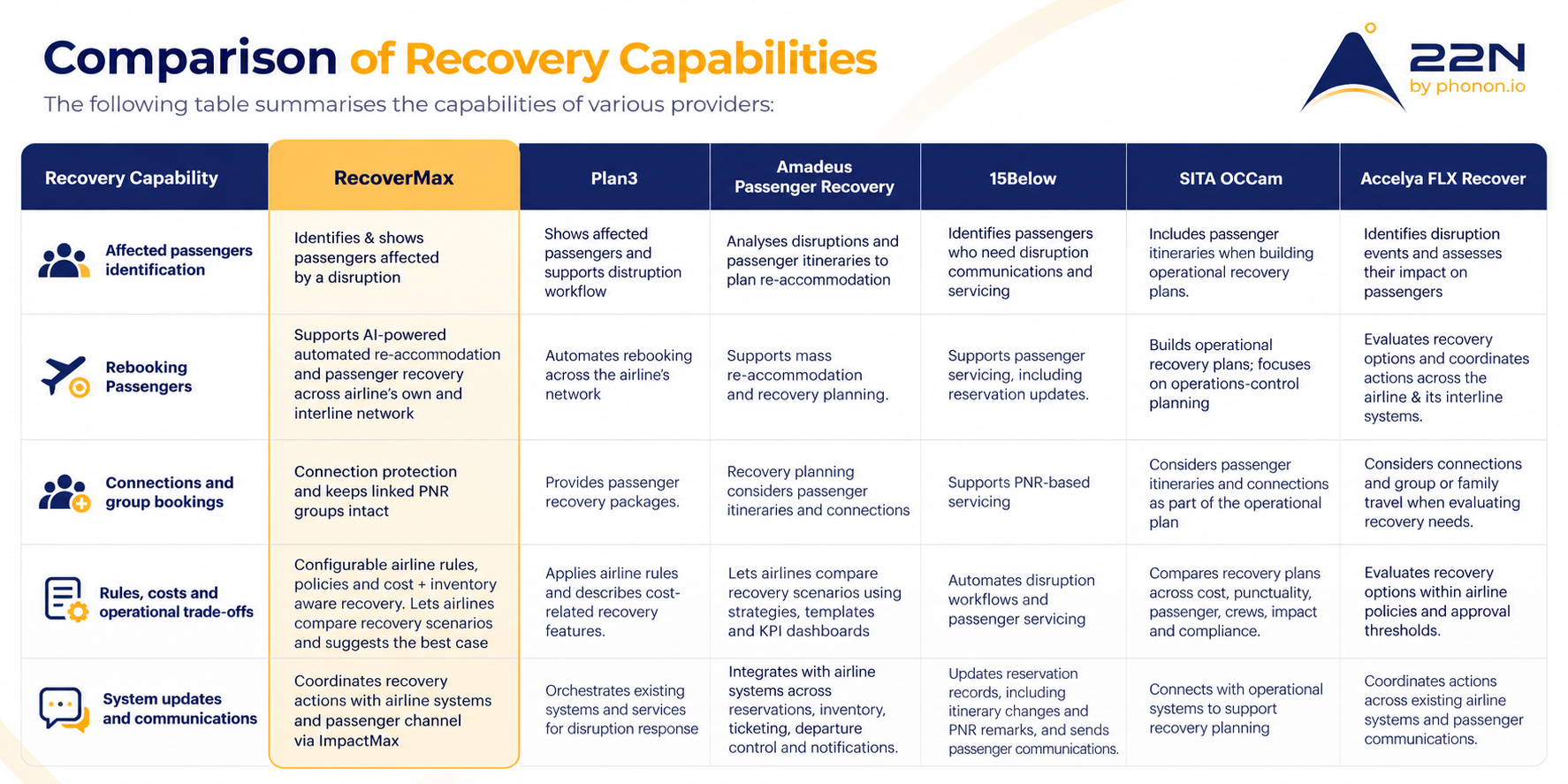
Several established platforms, including Plan3, Accelya FLX Recover and Amadeus, offer capabilities across passenger recovery and disruption management, while providers such as 15below specialise in passenger communications and servicing. Their approaches differ, making it important for airlines to look beyond feature lists and consider how well each solution fits their systems, workflows and operational requirements.
What Is Airline Disruption Recovery Software?
Airline disruption recovery software helps airlines manage passengers affected by flight delays, cancellations, missed connections and other irregular operations (IROPs). Depending on the solution, it can identify affected passengers, evaluate alternative flights, support rebooking and reaccommodation, apply airline recovery policies and coordinate passenger communications.
How Does Automated Passenger Recovery Work?
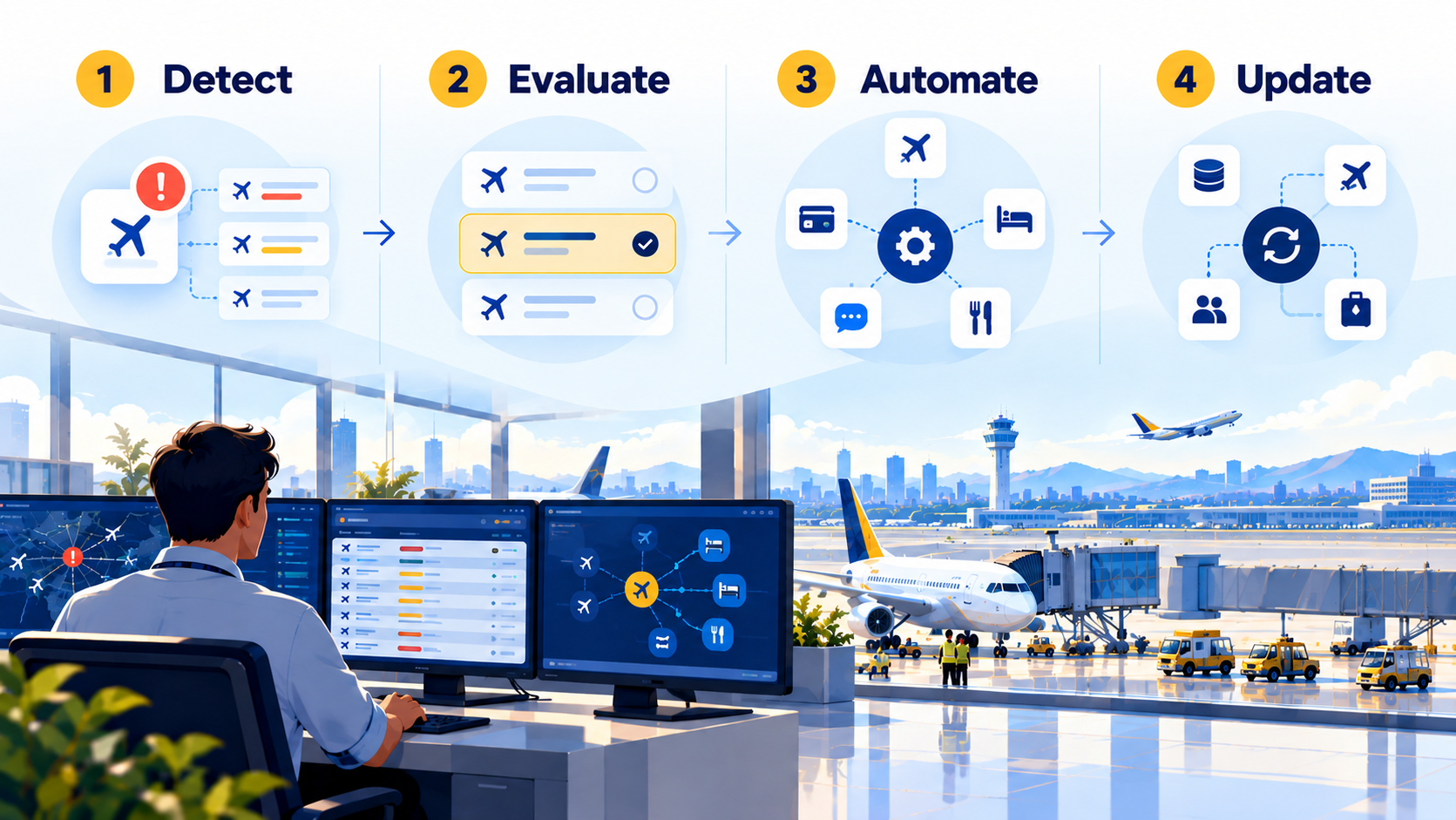
Automated passenger recovery connects disruption information with passenger bookings, flight availability and airline-defined recovery rules. Depending on the platform, capabilities may include:
- Identifying passengers affected by a disruption.
- Evaluating alternative flights and available inventory.
- Rebooking passengers and preserving eligible connections.
- Managing hotels, meals, transport, vouchers and refunds.
- Applying airline-defined policies and passenger priorities.
The most effective approach connects these activities into a coordinated workflow
Leading Airline Disruption Recovery Platforms: What Does the Market Offer?
Several established aviation technology providers address this challenge
- Plan3: Passenger-Centric Disruption Management
Plan3 focuses on helping airlines manage passenger disruption through a centralised platform. Its capabilities include disruption monitoring at the individual passenger level, automated recovery workflows, flight rebooking, hotel and transport arrangements, vouchers, refunds and passenger self-service. The platform allows airlines to configure recovery options for different passenger groups and communicate those options through digital channels.
-
Accelya FLX Recover: Agentic AI for Passenger Recovery
Accelya launched FLX Recover in October 2026. The platform uses specialised AI agents to assess disruptions, evaluate recovery alternatives and coordinate actions across airline systems. Its capabilities include consideration of onward connections, loyalty status, group and family travel, special assistance and compensation obligations
-
Amadeus: Passenger and Schedule Recovery
Amadeus offers disruption-management capabilities that include passenger recovery, schedule recovery and digital operational control. Its approach addresses the relationship between operational recovery and passenger reaccommodation. This is particularly relevant during widespread disruptions, when decisions involving flights, schedules and passengers can affect one another.
-
15below: Disruption Communications and Passenger Servicing
15below provides airline passenger communications and disruption-management capabilities. Its offering includes reservation-system integrations, disruption dashboards, automated communications and passenger self-service for schedule changes, refunds and credits.
-
SITA OCCam: Operational Disruption Optimization
OCCam addresses disruption at the operational level, evaluating constraints involving aircraft, crew, maintenance and passenger itineraries to develop a coherent recovery plan. It connects seamlessly with existing airline infrastructure.
How RecoverMax Approaches IROPs Recovery.
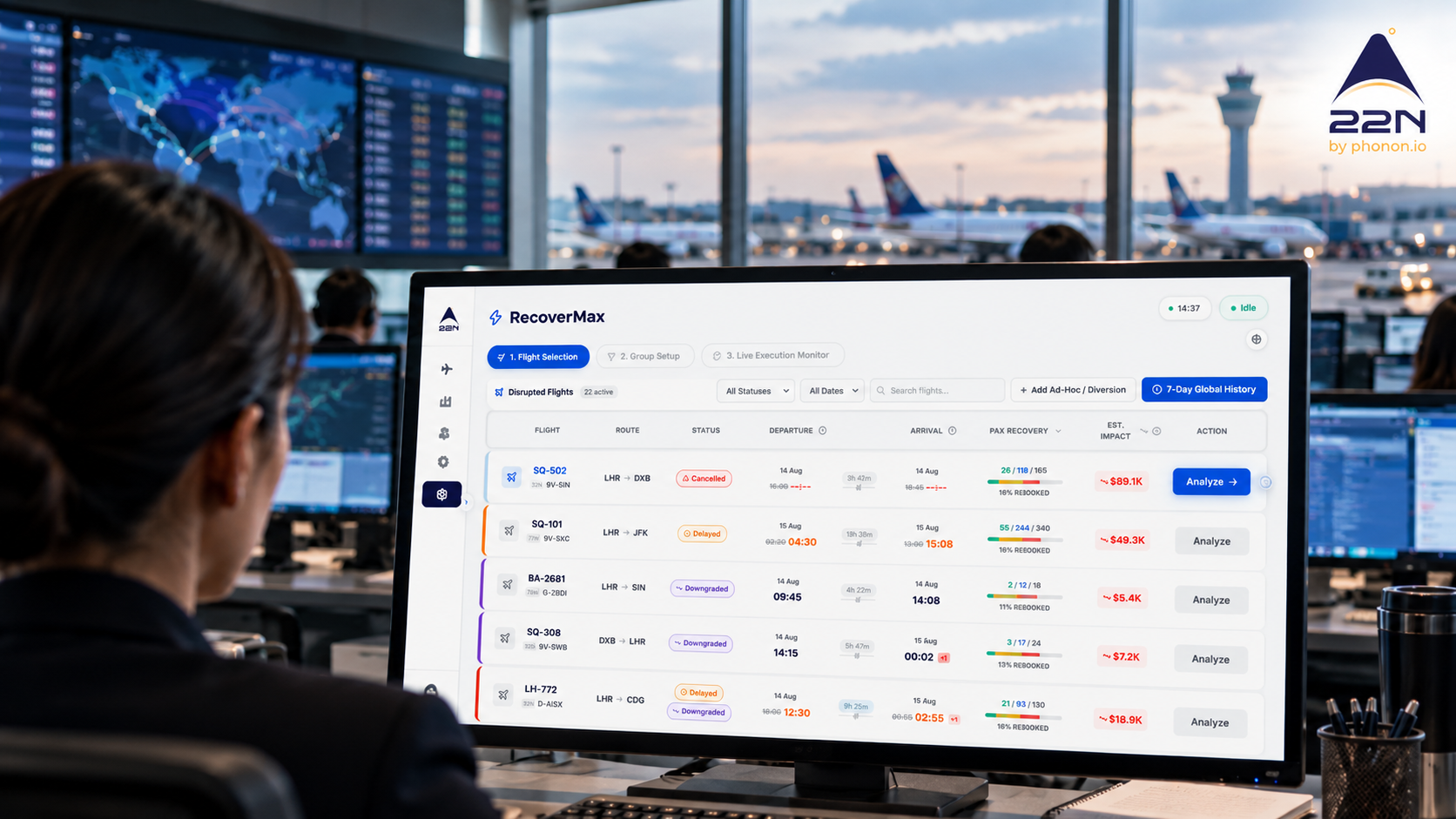
RecoverMax by 22North helps airlines manage passenger recovery during flight delays, cancellations and other operational disruptions. It brings passenger assessment, recovery prioritisation and rebooking workflows together to help airline teams respond faster and manage the cost of disruption.
- • Cost and inventory aware recovery decisions
- • Connection Protection
- • Mass passenger reaccommodation
- • Configurable airline based rebooking prioritization policies and logics.
- • Manual override and exceptional case handling.
- • Proactive notification capabilities with 22North’s ImpactMax
Beyond Features: The Business Case for RecoverMax
For airline decision-makers, the value of disruption recovery software is ultimately measured by operational and financial outcomes.
A useful evaluation should include:
- • Recovery time: How long does it take to identify affected passengers and complete a viable recovery?
- • Manual workload: How many booking investigations and recovery actions still require staff intervention?
- • Recovery cost: Can the airline reduce avoidable rebooking, servicing and passenger-care expenditure?
- • Passenger experience: Can travelers receive relevant options and resolve eligible cases without waiting for an agent?
- • Policy compliance: Are recovery rules applied consistently, with exceptions escalated appropriately?
- • Implementation effort: How much integration, configuration and operational change are required before the solution delivers value?
Business Impact: Approximately 30% reduction in servicing costs.
22North’s Implementation Model:
- • 20 years of aviation industry experience
- • Fully managed SaaS offering
- • Deployable within the airline’s own environment including AWS
- • Accelerated evaluation and onboarding
- • Faster realization of business benefits
The Future of Airline Disruption Recovery
As disruptions affect more passengers and create competing demands on limited flight capacity, airlines need solutions that can evaluate alternatives, apply recovery priorities and execute decisions efficiently.
AI can help airlines assess multiple recovery options and make better-informed decisions, but its effectiveness depends on reliable data, integration with existing airline systems and recovery rules that reflect operational realities. The goal is not simply to automate more tasks. It is to recover passengers efficiently while controlling avoidable costs and maintaining operational oversight.
RecoverMax is designed to support this shift by helping airlines prioritize affected passengers, evaluate alternative travel arrangements and manage reaccommodation through structured recovery workflows.
RecoverMax by 22North: Turn disruption into an intelligent recovery process.
Explore 22North RecoverMax to learn more about automated airline disruption management and passenger recovery.
Sources:
- Plan3 platform
- Accelya’s FLX Recover announcement.
- Amadeus Disruption Management.
- 15below disruption management.
- SITA’s OCCam acquisition announcement.