How connected conversational AI can help airlines automate everyday passenger requests, reduce avoidable contact-center interactions and create more opportunities for digital servicing.
What Can an Airline WhatsApp Chatbot Do?
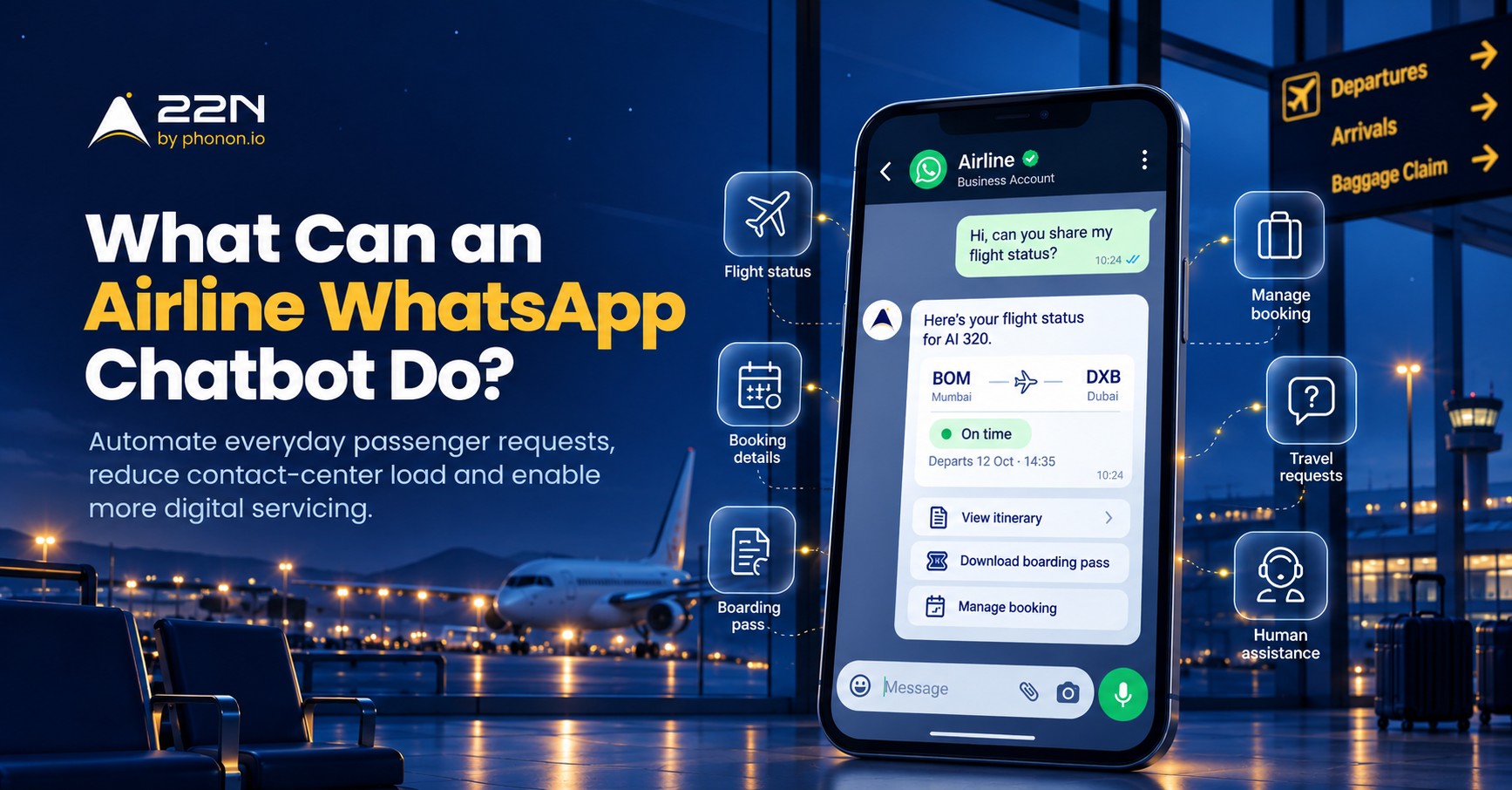
For airlines, passenger service is no longer just about answering questions. It is about helping travellers get things done, quickly and conveniently, without unnecessary dependence on contact centres. An airline WhatsApp chatbot can make this possible by turning everyday enquiries into connected self-service experiences. From checking flight status and retrieving booking details to accessing boarding passes and managing travel requests, WhatsApp can become a practical extension of an airline’s digital service ecosystem.
The opportunity goes beyond automation. By connecting conversations with airline systems and enabling passengers to complete routine tasks independently, airlines can reduce avoidable interactions, improve operational efficiency and deliver a more seamless passenger experience.
The everyday questions driving airline customer-service demand
For passengers, many travel-related questions are simple:
- Is my booking confirmed?
- Has my flight been delayed or rescheduled?
- Where can I find my itinerary or boarding pass?
- Can I update my contact information?
- What happens if my flight is cancelled?
For airlines, however, thousands of similar requests can create significant operational pressure.
These enquiries often reach contact centers, even when the information is already available within airline systems. Agents spend valuable time retrieving booking details, checking flight status or guiding passengers through repetitive processes.
The challenge becomes greater during peak travel periods and irregular operations (IROPS), when passenger demand can increase rapidly.
Airlines need a service model that can handle routine requests independently while preserving human assistance for situations that genuinely require it.
This is where WhatsApp-based conversational AI can make a difference.
From chatbot responses to completed passenger journeys
Traditional chatbots are often designed to answer questions. They recognize keywords, display predefined responses and redirect passengers to websites or support teams.
A connected airline WhatsApp chatbot takes a more practical approach.
By integrating with airline systems such as passenger service systems (PSS), reservation platforms and flight information sources, it can retrieve relevant information and support authorized passenger actions.
Consider a passenger checking an upcoming flight.
Instead of navigating multiple websites or waiting for an agent, the passenger can initiate a WhatsApp conversation, provide the required booking details and receive information relevant to their journey.
Depending on the airline’s integrations and business rules, the same conversation may support itinerary retrieval, travel-document access, booking-related requests or escalation to an agent.
The objective is not simply to respond faster. It is to help passengers complete their requests with fewer steps and less effort.
How does WhatsApp passenger self-service work?
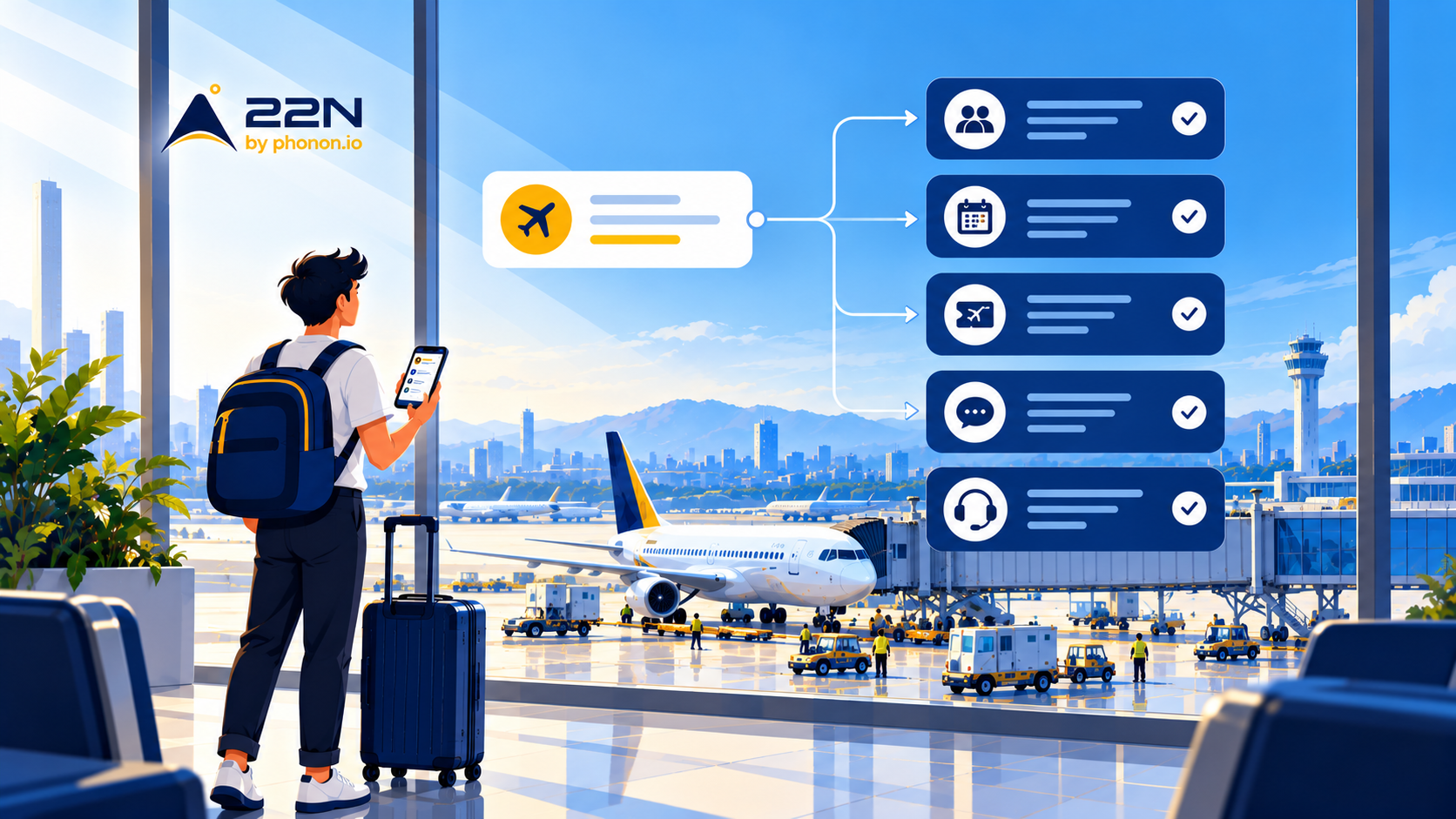
A connected passenger-service journey typically follows five stages:
- Passenger initiates a conversation
The passenger contacts the airline through its official WhatsApp channel.
- The chatbot understands the request
Conversational AI identifies the passenger’s intent, such as checking a booking, retrieving flight information or requesting assistance.
- Airline systems provide relevant information
Through authorized integrations, the platform retrieves available booking, passenger or operational information.
- The passenger completes an eligible task
The chatbot guides the passenger through the available self-service options and confirms the outcome where supported.
- Human assistance remains available
If the request requires an exception, additional verification or manual intervention, the conversation can be transferred to an agent with the relevant context. This creates a more connected experience between automation and assisted service.
Can airline WhatsApp chatbots reduce contact-center workload?
Yes, airline WhatsApp chatbots can help reduce avoidable contact-center interactions by resolving eligible passenger enquiries through automated self-service.
However, the actual reduction in calls or agent workload depends on how many passengers use the chatbot, which requests it can complete and whether those passengers would otherwise have contacted an agent.
For example, when passengers can retrieve their booking information or flight status independently, they may have less reason to contact customer support.
This allows contact-center teams to focus more attention on complex booking changes, exceptional circumstances and disruption-related assistance.
The operational opportunity extends beyond reducing enquiry volumes. A connected chatbot can also improve the quality of agent handovers by preserving passenger context and reducing repeated information gathering.
For a broader perspective, read 22North’s article on the future of airline contact centers.
Why airlines should begin with a phased chatbot rollout
Airline passenger servicing involves complex rules, integrations and operational dependencies.
A booking enquiry may be straightforward, while rescheduling, refunds or passenger modifications can depend on fare conditions, eligibility, available inventory and airline-specific policies.
Introducing every journey simultaneously can make it difficult to identify where improvements are needed.
A phased deployment allows airlines to begin with frequently requested services, evaluate real passenger behavior and gradually introduce more complex transactions.
It also creates opportunities to improve conversational prompts, reduce incomplete journeys, strengthen exception handling and refine agent escalation.
Rather than measuring success by the number of available chatbot features, airlines should focus on whether passengers can successfully complete the tasks those features support.
How to Measure Airline WhatsApp Chatbot Performance?
A useful measurement framework should distinguish between chatbot activity, successful automation and operational impact.
| Measurement | What it helps airlines understand |
| Conversation volume | Passenger adoption and demand |
| Intent distribution | Most frequently requested services |
| Automated resolution rate | Proportion of conversations completed through automation |
| Journey completion rate | Whether eligible tasks are successfully completed |
| Agent escalation rate | Requests requiring human assistance |
| Abandonment rate | Where passengers leave before completing a journey |
| Contact-center enquiry trends | Whether assisted demand changes after deployment |
| Customer satisfaction | Passenger experience with automated servicing |
These metrics provide a basis for improving the service over time.
For example, an airline may observe that a particular journey has high demand but relatively low completion. That insight can guide improvements to prompts, system integrations or eligibility handling.
It is equally important to distinguish automated resolutions from verified contact-center call reductions. A resolved chatbot conversation is a useful outcome, but it does not automatically prove that an inbound call was avoided.
Beyond routine enquiries: The Future of WhatsApp Passenger Self-Service
Once foundational self-service journeys are established, airlines can expand conversational automation into more operationally and commercially valuable areas.
Disruption management and passenger recovery
During flight delays, cancellations or missed connections, passengers need more than a notification.
They need to understand what has happened and what options are available.
A connected WhatsApp journey can guide affected passengers towards eligible recovery actions, such as reviewing alternative flights, requesting refunds or accessing assistance.
This is closely aligned with RecoverMax by 22North, which focuses on airline disruption management, re-accommodation and passenger-led recovery.
The opportunity is to connect disruption communication with practical resolution, rather than leaving passengers to contact the airline after receiving an alert.
Booking and ancillary revenue opportunities
Conversational journeys can also support commercial engagement.
A passenger searching for flights may be guided towards available booking options. An existing passenger may be offered relevant services such as additional baggage, preferred seating or meals, subject to airline integrations and purchasing eligibility.
These journeys can create opportunities for ancillary conversion and more convenient purchasing experiences.
They also complement 22North’s broader airline revenue optimization capabilities, which address capacity decisions and ancillary opportunities.
Actual incremental revenue should be measured through completed transactions and appropriate attribution rather than assumed from chatbot engagement alone.
Proactive passenger communication
Airline customer service is not limited to passenger-initiated conversations.
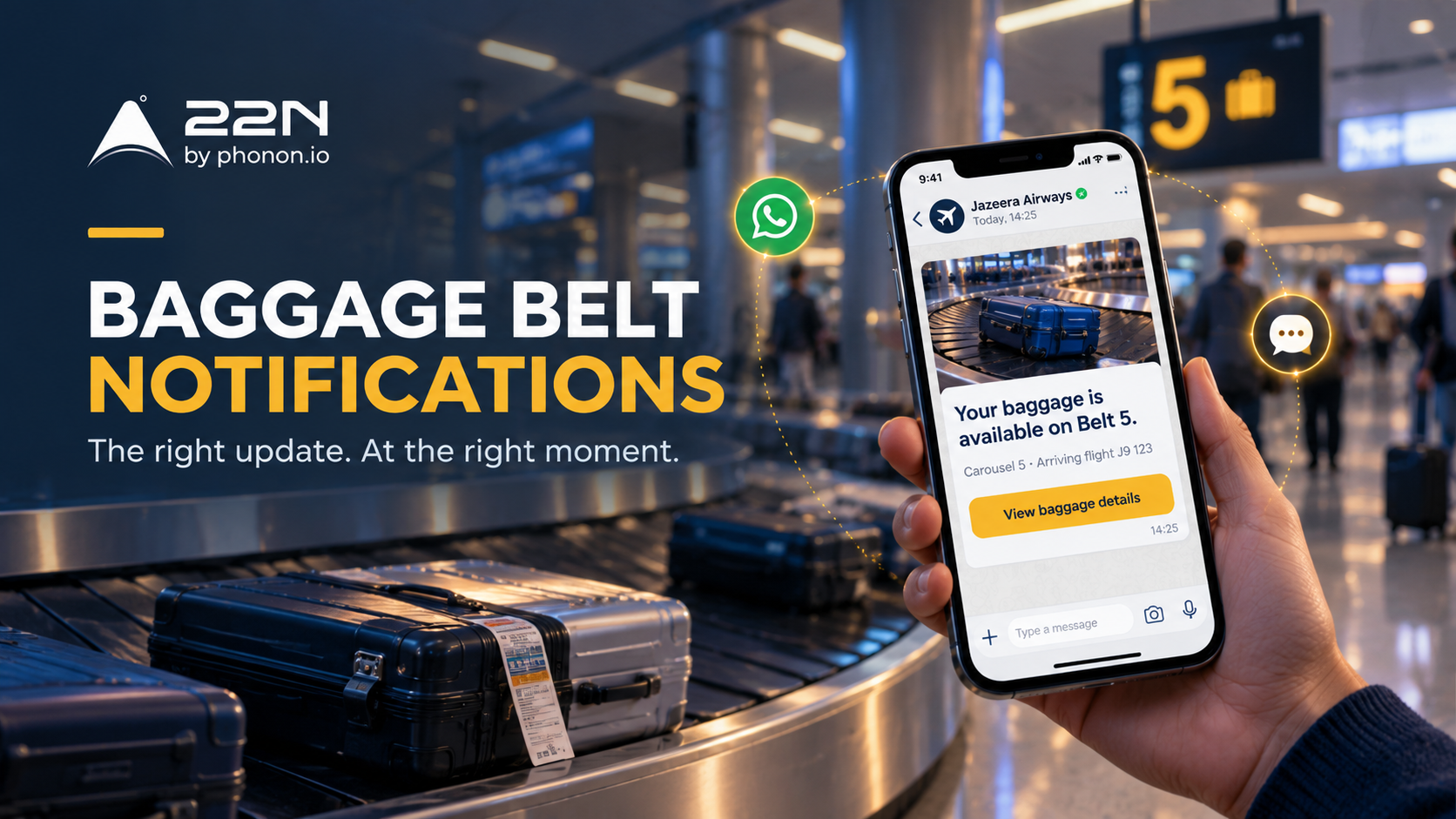
Operational notifications, flight updates and other relevant communications can help passengers stay informed before they need to ask for assistance.
When proactive messaging is connected with conversational self-service, passengers can receive an update and continue into an eligible action through the same channel.
This supports a more continuous passenger experience across different stages of travel.
How 22North approaches connected airline self-service
22North brings together airline passenger engagement, conversational automation and operational workflows to help airlines move beyond isolated customer-service interactions.
The approach is centered on three principles:
Connected airline information: Use authorized integrations to make relevant passenger and operational information accessible through conversational journeys.
Outcome-driven automation: Design journeys around tasks passengers need to complete, rather than simply increasing the number of chatbot responses.
Human assistance when required: Preserve escalation pathways for requests that cannot or should not be completed automatically.
Together, these capabilities can help airlines create a more consistent service experience across routine enquiries, disruption scenarios and selected commercial interactions.
The wider 22North Passenger Operations Platform connects passenger experience with airline operational and commercial priorities.
The future of airline customer service is connected self-service
The real opportunity for airline is not to automate every passenger conversation.
It is to make everyday servicing easier, connect information with action and ensure human support is available when it adds the most value.
As airlines expand their digital-service capabilities, WhatsApp can become a practical interface for passenger information, supported transactions and timely assistance.
The measure of success is simple: not how much the chatbot says, but how effectively it helps passengers move forward.
Explore airline conversational automation with 22North
Discover how 22North can help your airline connect WhatsApp with passenger-service systems, automate routine enquiries and build more effective digital journeys.
Explore 22North’s airline solutions or learn more about connected disruption recovery with RecoverMax.