How connected information, conversational assistance and easier service purchases can improve passenger experience.
An airport journey involves dozens of small decisions.
Where should I park? How do I reach my departure area? Can I access a lounge? Where can I eat? How do I arrange transport after landing?
For travellers, these questions are immediate and practical. For airports, they connect passenger experience, customer-service workload and commercial performance.
Airports may already have the answers across websites, directories, signage and service-provider platforms. Yet travellers still need to find the information, understand whether it applies to them and work out what to do next.
That gap between available information and useful action is where airport service automation can make a difference.
Make Information Easier to Find and Use
A traveller asking about a lounge may need its location, opening hours, access conditions, facilities and booking options. A parking enquiry may involve choosing a suitable option and understanding how to reserve it.
Providing a link can be helpful, but it may leave the traveller with several more steps to complete.
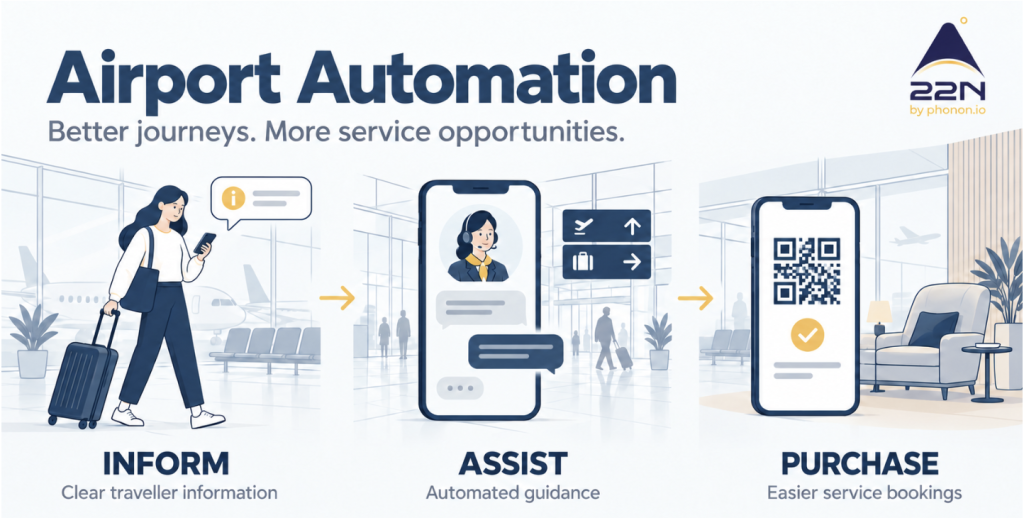
Conversational assistance can guide that process. Travellers can ask questions naturally, explore relevant options and receive clear instructions through a familiar digital channel.
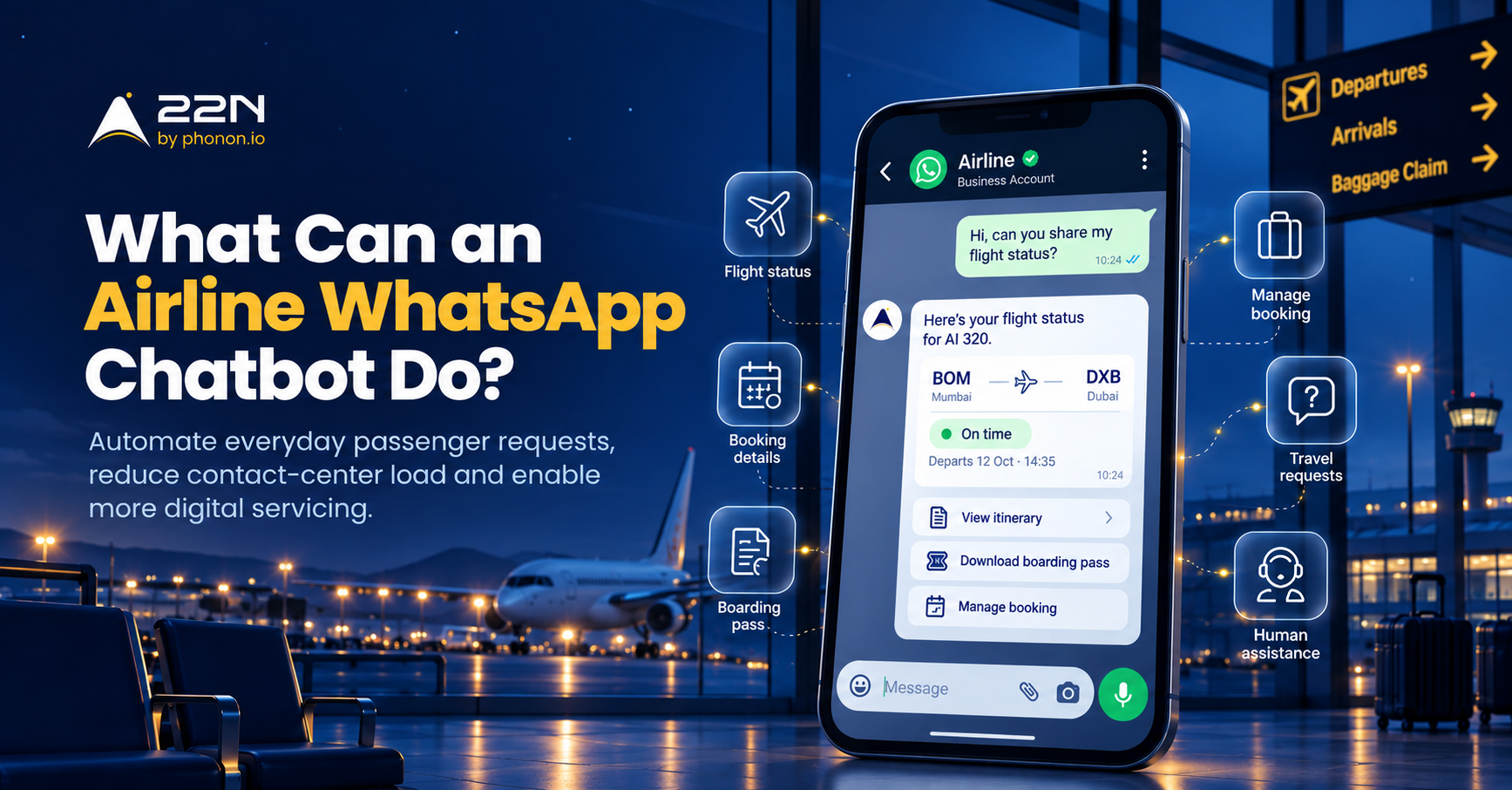
For example, a QR code at an airport touchpoint can open a WhatsApp conversation. From there, a traveller can browse services or ask a specific question without downloading another app.
Or a WhatsApp Voice Call, to ask a question for an instant guided response.
This also creates a practical entry point for airports that do not have passenger details before engagement. Information needed for a particular service can be collected as the traveller progresses.
Automate Routine Assistance While Keeping Support Accessible
Many passenger enquiries concern repeatable topics: facilities, parking, dining, lounge access and transport.
Automating these enquiries can help travellers access guidance while allowing service teams to focus their attention on situations that require individual assistance.
The quality of that automation depends on clear boundaries. Answers should draw from approved airport content, while changing information should come from the appropriate connected source where available.
When a question cannot be resolved automatically, the journey should provide a clear route to human assistance. Passing along the conversation and details already collected can help the traveller continue without starting again.
Good automation makes the next step understandable, whether that step is receiving an answer, completing a task or speaking with someone.
Connect Service Discovery with a Completed Purchase
Consider a traveller looking for somewhere comfortable to wait before departure. A connected journey could help them:
- Explore available lounges.
- View facilities, location and access conditions.
- Select a suitable option.
- Provide the required travel details.
- Review the price and order.
- Complete payment and receive a digital pass, where integrations support it.
Each step addresses a question that could otherwise interrupt the purchase.
The same approach can apply to parking, Fast Lane access, luggage wrapping, transfers and other airport services. Some journeys may support transactions within the conversation. Others may lead to an existing booking platform with clear guidance.
The goal is to make the route from interest to action easier to follow.
Build Ancillary Revenue Around Traveller Needs
Commercial engagement works best when it helps the traveller solve a practical problem.
Someone arranging parking needs an accessible booking option. A passenger exploring lounge access needs enough information to judge whether it suits their needs. A traveller looking for onward transport needs clarity about available services.
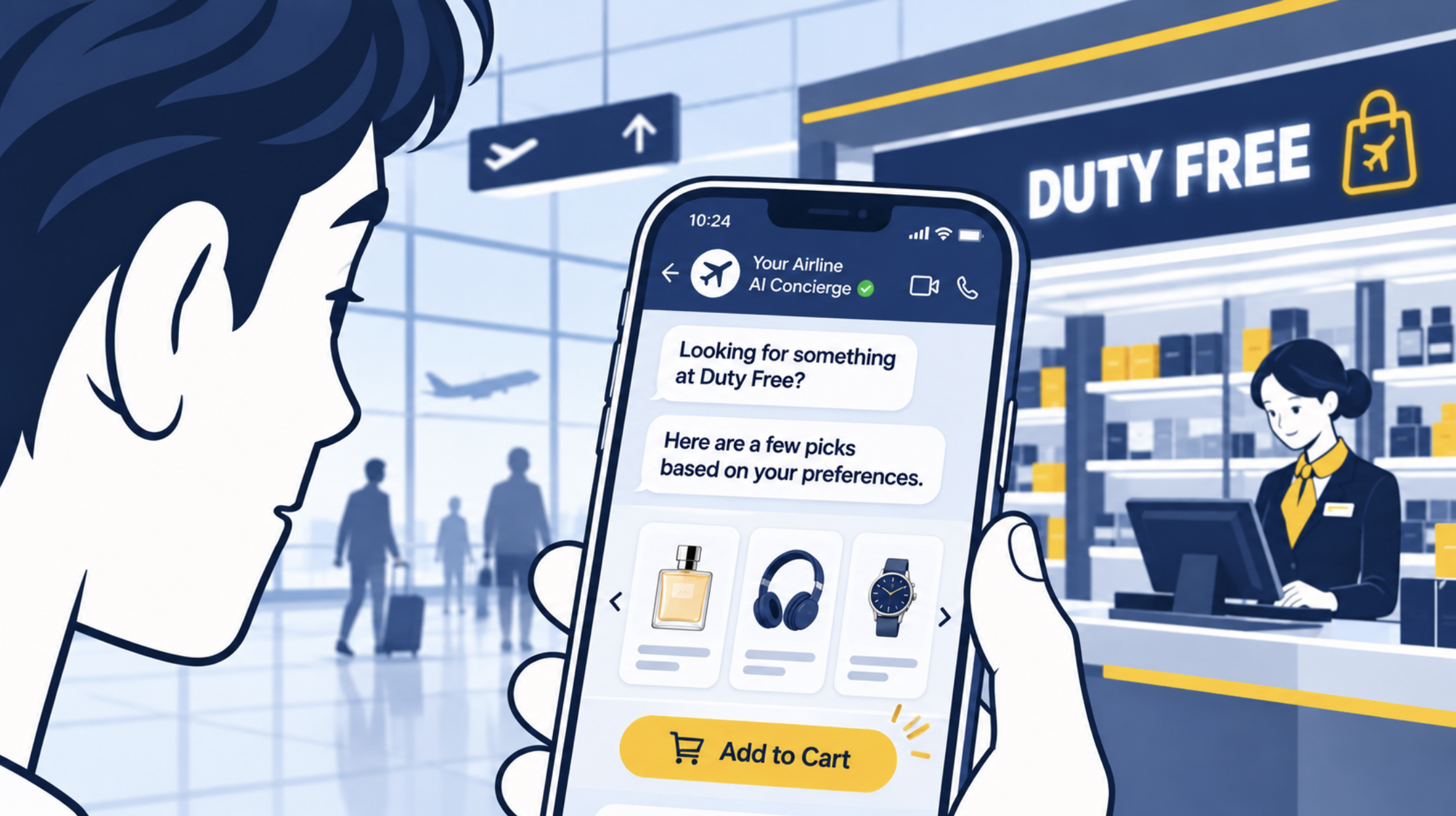
Bringing these options into a conversational marketplace gives travellers another way to discover them.
Recommendations can follow the needs expressed during the conversation and the information the traveller chooses to share. They should also respect service availability and eligibility.
This creates a useful connection between assistance and ancillary revenue: the airport helps travellers understand their options and makes relevant services easier to purchase.
Commercial messages should fit the journey. When a traveller needs urgent guidance, resolving that need should take priority.
Connect the Airport’s Existing Services
Airports already invest in digital channels, payment systems and commercial partnerships. A connected service experience can build on those investments.
Conversational journeys can draw from established content, connect to service-provider platforms and guide travellers through available booking flows.
The scope depends on the underlying integrations. Accurate availability, pricing, eligibility and purchase confirmation require reliable connections to the systems that own that information.
This makes integration quality as important as the conversational interface. The traveller needs confidence that the information presented—and the action completed—is correct.
Use Questions and Feedback to Improve the Experience
Traveller conversations can reveal where airport information needs attention.
Repeated questions may point to unclear directions, missing access conditions or services that are difficult to discover. Feedback may expose a confusing booking step or an instruction that needs updating.
These insights give airport teams a practical basis for improvement.
Content needs ownership, review and updates as services change. Automation becomes more useful when the information behind it remains accurate and reflects the questions travellers actually ask.
Measure Service and Commercial Outcomes Together
The value of airport service automation should be assessed through both passenger and business outcomes.
Useful measures include enquiry resolution, requests for human assistance, service discovery, booking completion, purchase conversion, passenger satisfaction and revenue per engaged traveller.
Looking at these measures together helps airports understand where the experience is working and where travellers still encounter friction.
A service may attract interest but lose passengers during booking. An automated answer may be delivered quickly but still leave a question unresolved. Both are opportunities to improve the journey.
Let 22North put automation to work for your Airport
22North connects traveller information, conversational assistance and airport services to make everyday journeys easier.
From answering routine questions to helping travellers discover and purchase relevant services, 22North supports a connected experience through existing airport and service-provider integrations. This helps reduce manual effort, simplify passenger assistance and create more opportunities for ancillary revenue.
Explore how 22North can automate traveller assistance and make your airport’s services easier to discover and buy.