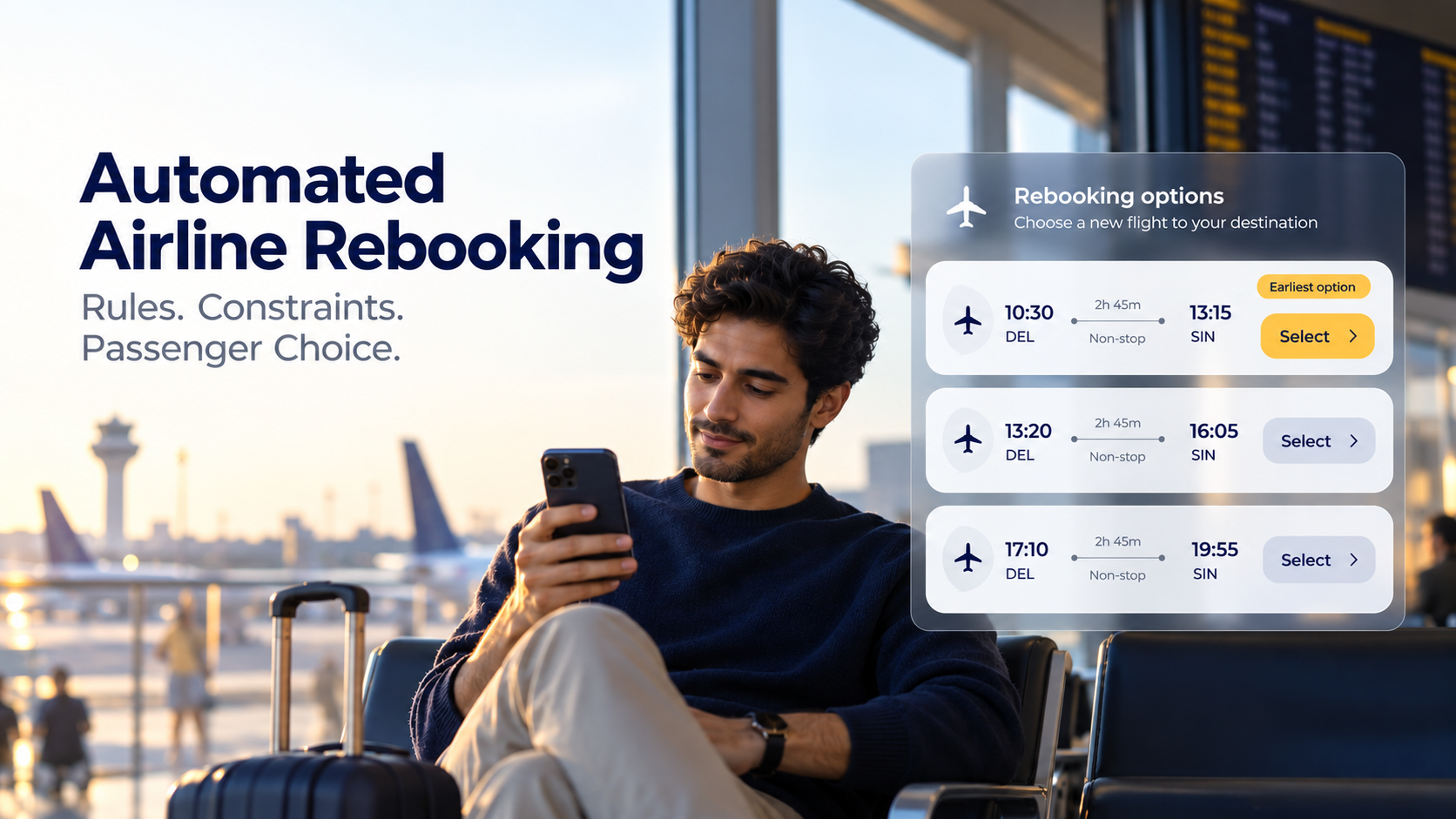
Flight disruptions are inevitable, but managing them efficiently can make all the difference to passenger experience. Automated airline rebooking enables airlines to identify alternative travel options, apply rebooking rules, and help passengers resume their journeys with minimal manual intervention.
What Is Automated Airline Rebooking?
Automated airline rebooking is the process of using technology to identify suitable alternative flights and reassign passengers when cancellations, delays, missed connections, or other disruptions occur. By integrating operational data, booking systems, and predefined business rules, airlines can accelerate recovery while reducing the workload on customer service teams.
How Do Rebooking Rules and Constraints Work?
Effective airline rebooking software must balance operational feasibility, commercial priorities, and passenger needs. Key considerations include:
- Rebooking rules: Define eligibility, fare conditions, ticket validity, and permitted alternative flights.
- Operational constraints: Account for seat availability, flight capacity, connecting journeys, airport restrictions, and minimum connection times.
- Business priorities: Help airlines manage costs, protect network performance, and allocate available seats efficiently.
- Passenger preferences: Consider preferred departure times, travel duration, connecting flights, and available travel alternatives.
Combining these factors allows airlines to recommend viable options rather than simply assigning the next available flight.
Why Does Passenger Choice Matter?
Automation should simplify decisions without removing passenger control. Offering clear alternatives, transparent communication, and self-service rebooking options empowers travellers to select journeys that suit their schedules. When required, passengers should also have access to human assistance and applicable refund or rerouting options under relevant airline policies and regulations.
How Can Airlines Improve Disruption Recovery?
Modern airline disruption management solutions connect rebooking logic with real-time operational information and automated passenger communication. This enables faster decision-making, consistent rule application, and timely updates across digital channels.
For airlines, the objective is to reduce recovery time, improve operational efficiency, and deliver a more predictable passenger experience.
The future of airline rebooking lies in intelligent automation with passenger choice at its core. By combining clear rules, practical constraints, and flexible alternatives, airlines can turn disruption management into a more efficient and passenger-centric process.