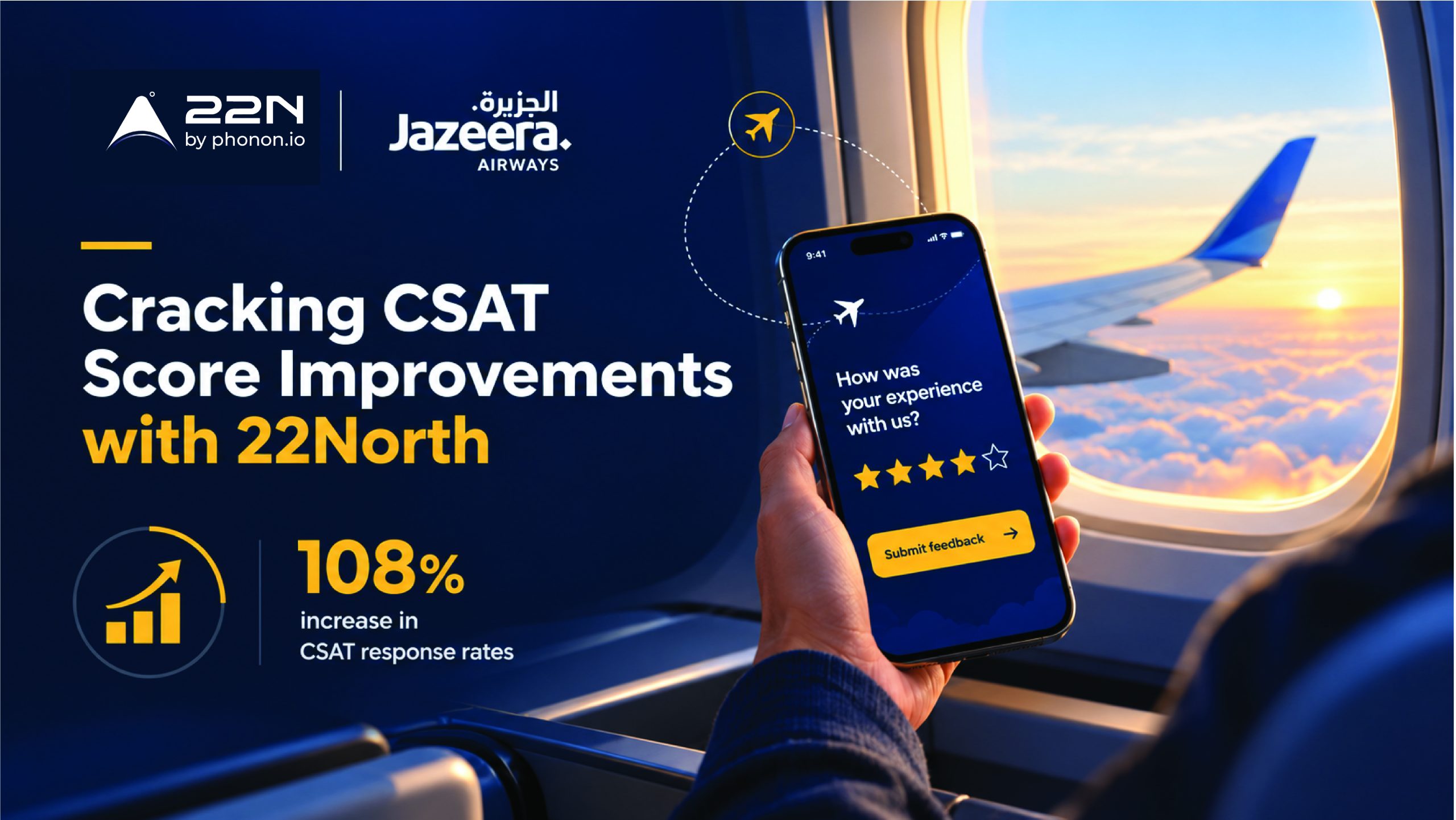
Customer Satisfaction Scores (CSAT) help airlines understand how passengers feel about their travel experience. They reveal what works, what frustrates travellers, and where airlines can improve.
In a competitive aviation market, passenger satisfaction matters. It can influence loyalty, repeat bookings, brand reputation, and revenue. Most importantly, it helps airlines make better decisions based on real passenger feedback.
Why Does CSAT Matter in Aviation?
Passengers interact with an airline at many points. These include booking, check-in, boarding, baggage collection, and customer support. Every interaction can shape their overall experience.
CSAT helps airlines identify service gaps and understand passenger expectations. Teams can then use this feedback to improve staff training, processes, technology, and communication.
Airports can benefit too. Programs such as ACI’s Airport Service Quality (ASQ) help airports measure passenger satisfaction and compare service quality.
How 22North Helped Jazeera Airways Increase CSAT Survey Responses by 108%
In September 2025, Jazeera Airways partnered with 22North by Phonon. Since then, CSAT survey response rates have increased by 108%, according to 22North’s reported results.
More responses give airlines a clearer picture of passenger sentiment. They also help teams spot recurring issues and decide what to address first.
For example, are passengers increasingly giving neutral ratings? Is meal quality affecting their experience? Could better communication improve their perception of boarding, check-in, or flight punctuality?
These questions turn feedback into practical opportunities for improvement.
CSAT in Aviation: Turning Feedback into Action
Many airlines rely on different systems for reservations, operations, customer support, and passenger communication. When these systems work in silos, teams may struggle to see the full passenger journey.
A connected approach helps airlines share relevant information and respond more proactively. Instead of waiting for a complaint, teams can identify potential service gaps and improve the experience before frustration grows.
A useful way to approach customer satisfaction is through three principles:
-
Customer-centricity: Understand what passengers need.
-
Communication: Share timely, relevant information.
-
Consistency: Deliver a reliable experience across touchpoints.
Why the Right Survey Channel Matters
A well-designed survey needs more than good questions. Airlines must also reach passengers at the right time and through a convenient channel.
WhatsApp can make feedback easier to share by bringing surveys into a familiar messaging experience. Airlines can also use SMS, email, RCS, and WeChat to reach passengers across different channels.
With 22North, airlines can connect passenger communication with feedback journeys. This helps reduce delays between a service interaction and the survey, giving teams more timely insights.
Make Every Passenger Interaction Count
CSAT is more than a score. It is a way to understand passenger needs, improve service, and build stronger relationships.
By combining thoughtful surveys, effective communication, and meaningful analysis, airlines can turn feedback into better experiences.
Discover how 22North helps airlines connect passenger communication with more informed customer experience decisions.
For broader passenger trends, explore the IATA Global Passenger Survey, which examines traveller preferences and expectations across the journey.