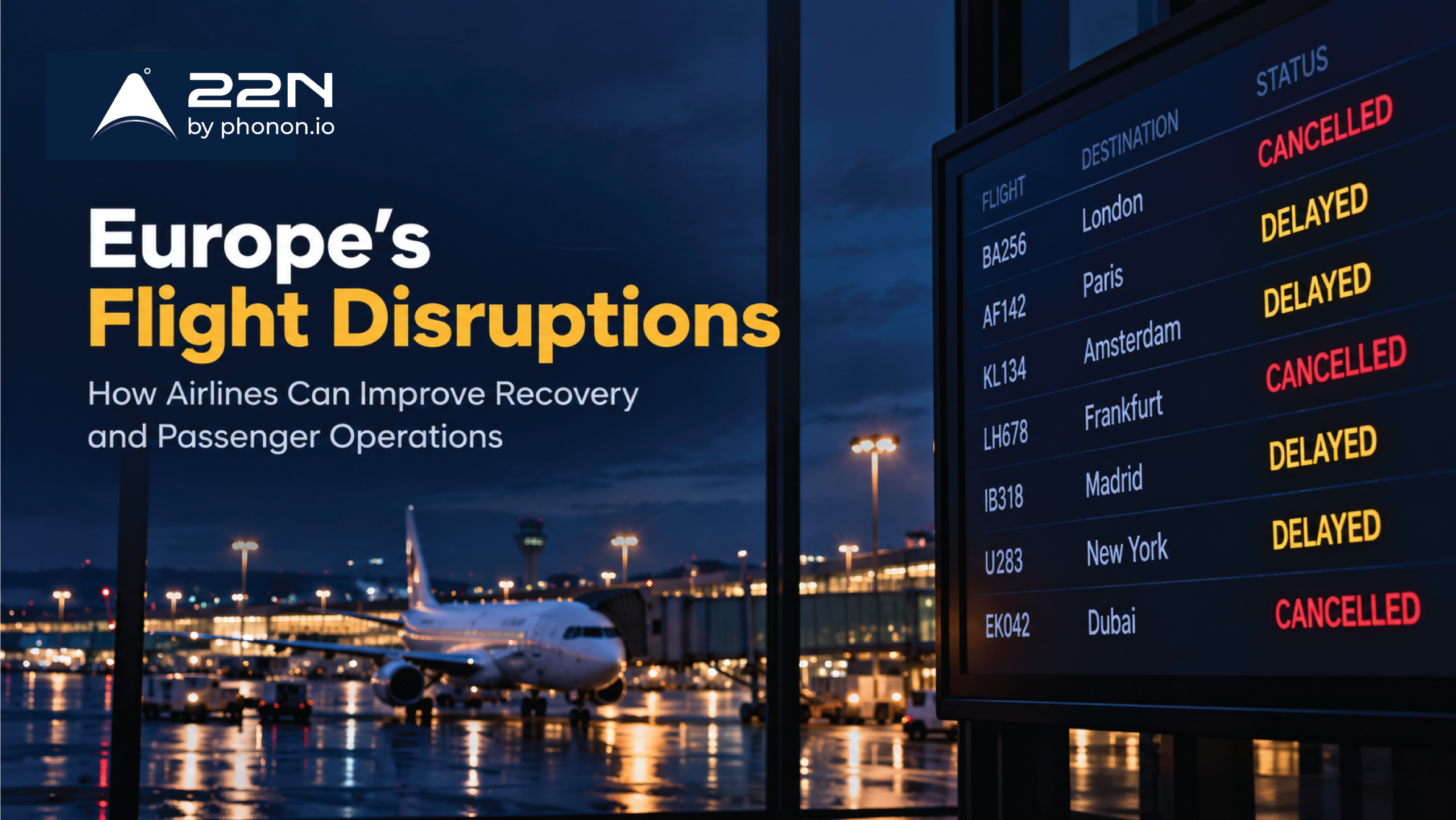
Flight delays and cancellations across Europe highlight the need for smarter airline disruption management. When operational bottlenecks affect hundreds of flights in a short period, the impact extends beyond departure boards. Passengers face missed connections, uncertainty and longer waiting times, while airlines must manage aircraft rotations, ground handling, staffing constraints and increased customer service demands.
In May 2026, reports of more than 300 flights cancelled or delayed within a week brought renewed attention to the challenges facing airline operations. Major European aviation hubs, including Amsterdam Schiphol, Paris Charles de Gaulle (CDG) and London Heathrow, operate within complex, interconnected systems where even a single disruption can affect multiple flights and passenger journeys.
For airlines, the challenge is twofold: recover operations efficiently and keep passengers informed throughout the disruption.
Why Do Flight Delays and Cancellations Create Wider Problems?
Airline disruptions rarely affect just one flight. A delayed aircraft can disrupt subsequent departures, while staffing shortages, ground handling bottlenecks and limited recovery options can compound operational pressure.
Common challenges include:
-
Aircraft and crew scheduling: Delays can affect aircraft rotations and crew availability across multiple flights.
-
Passenger re-accommodation: Cancelled or missed connections require timely rebooking and coordinated assistance.
-
Rising servicing costs: Increased passenger enquiries put additional pressure on airline contact centres and ground teams.
-
Communication gaps: Inconsistent or delayed updates leave passengers uncertain about their next steps.
-
Revenue impact: Disruptions can affect capacity utilisation, ancillary sales and overall operational efficiency.
Addressing these challenges requires more than sending flight status notifications. Airlines need connected workflows that help teams identify disruptions, coordinate recovery actions and communicate relevant information to passengers.
How Can Airlines Improve Flight Disruption Management?
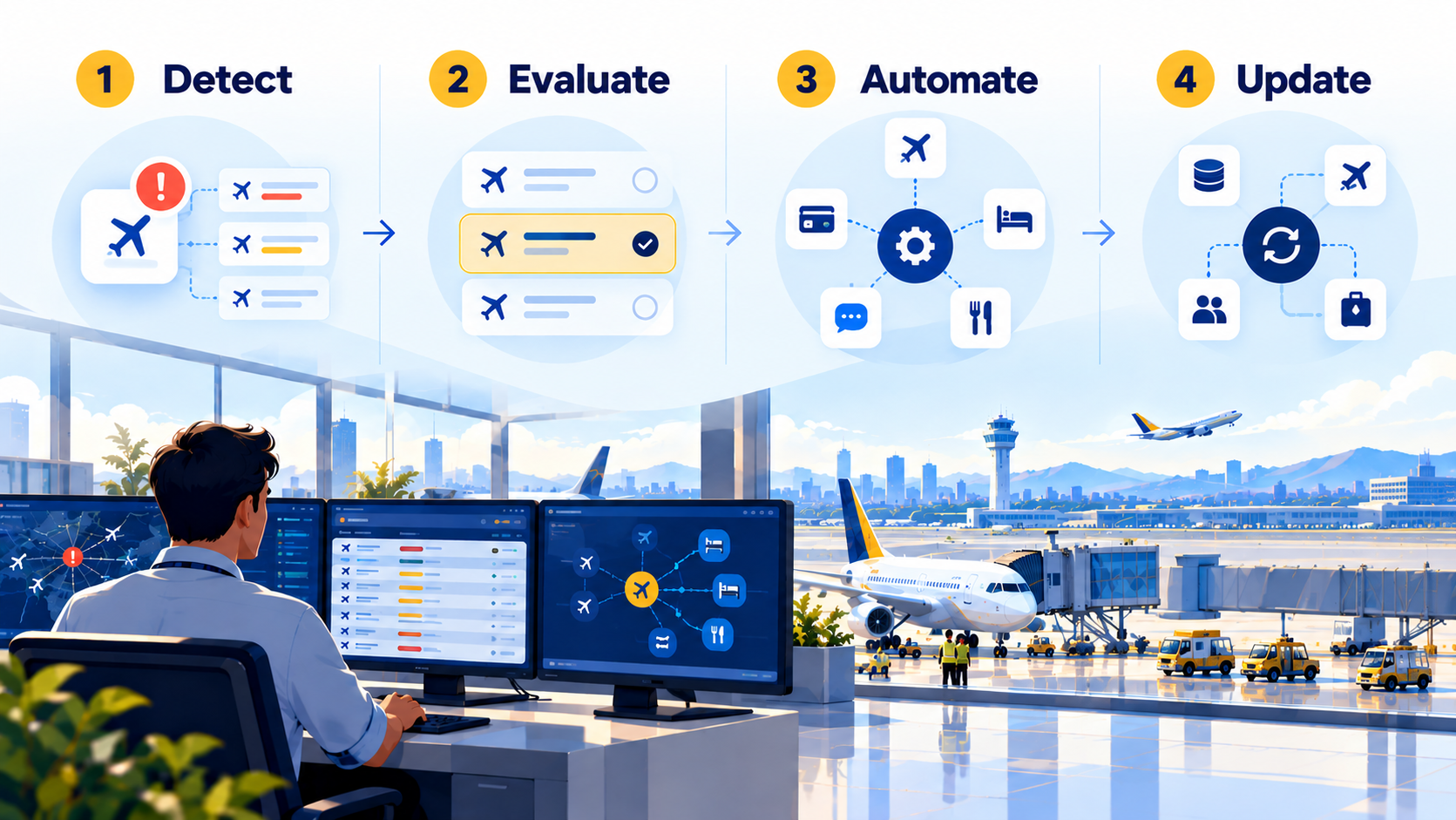
Airlines can improve disruption management by combining timely passenger communication, predictive insights, integrated operational systems and automated recovery workflows.
1. Improve Passenger Communications
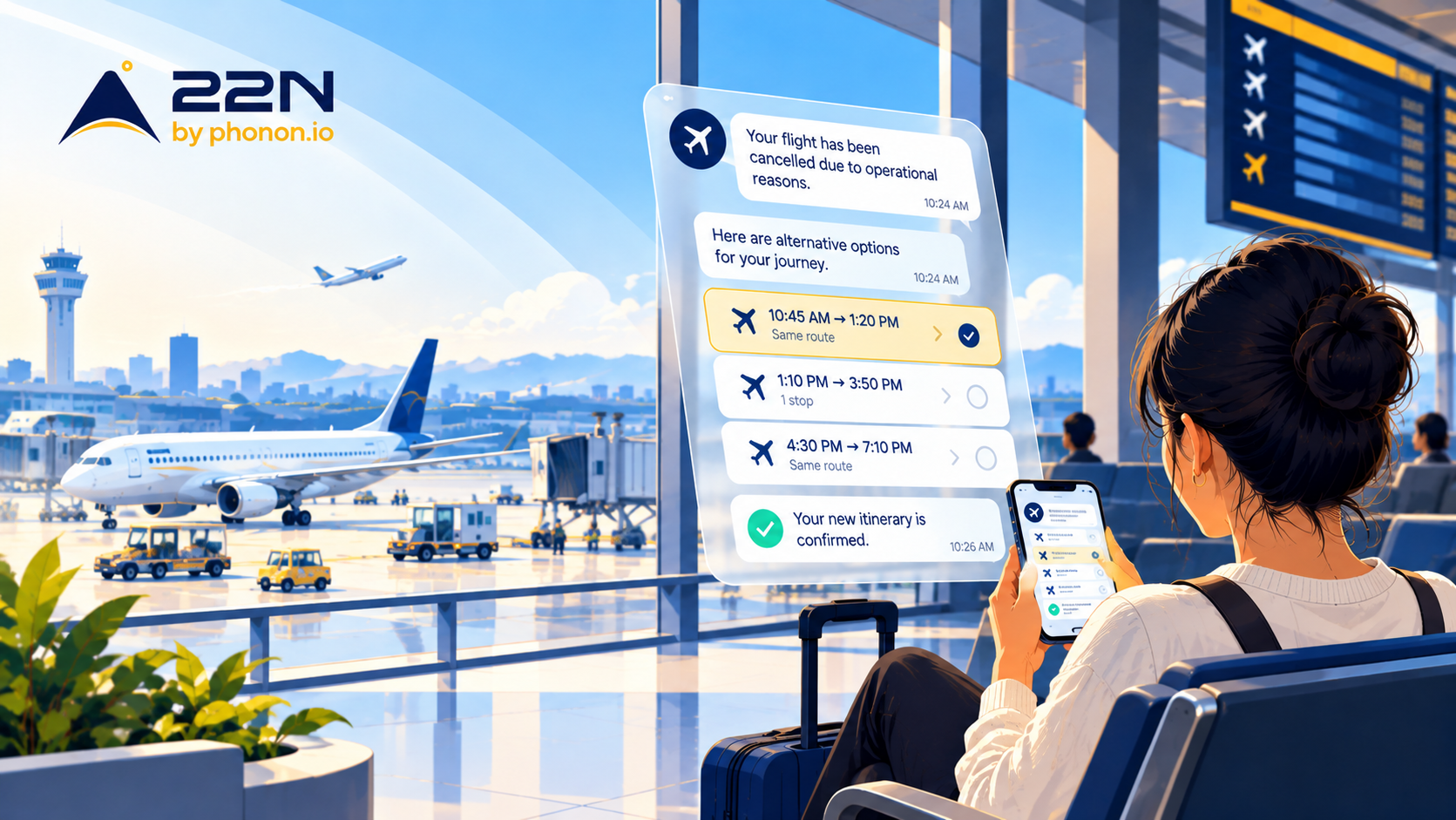
Deliver timely updates about flight delays, cancellations, gate changes and revised travel plans across channels such as WhatsApp, SMS, email and voice. Clear communication helps passengers understand what has changed and what they need to do next.
2. Automate Passenger Recovery Workflows
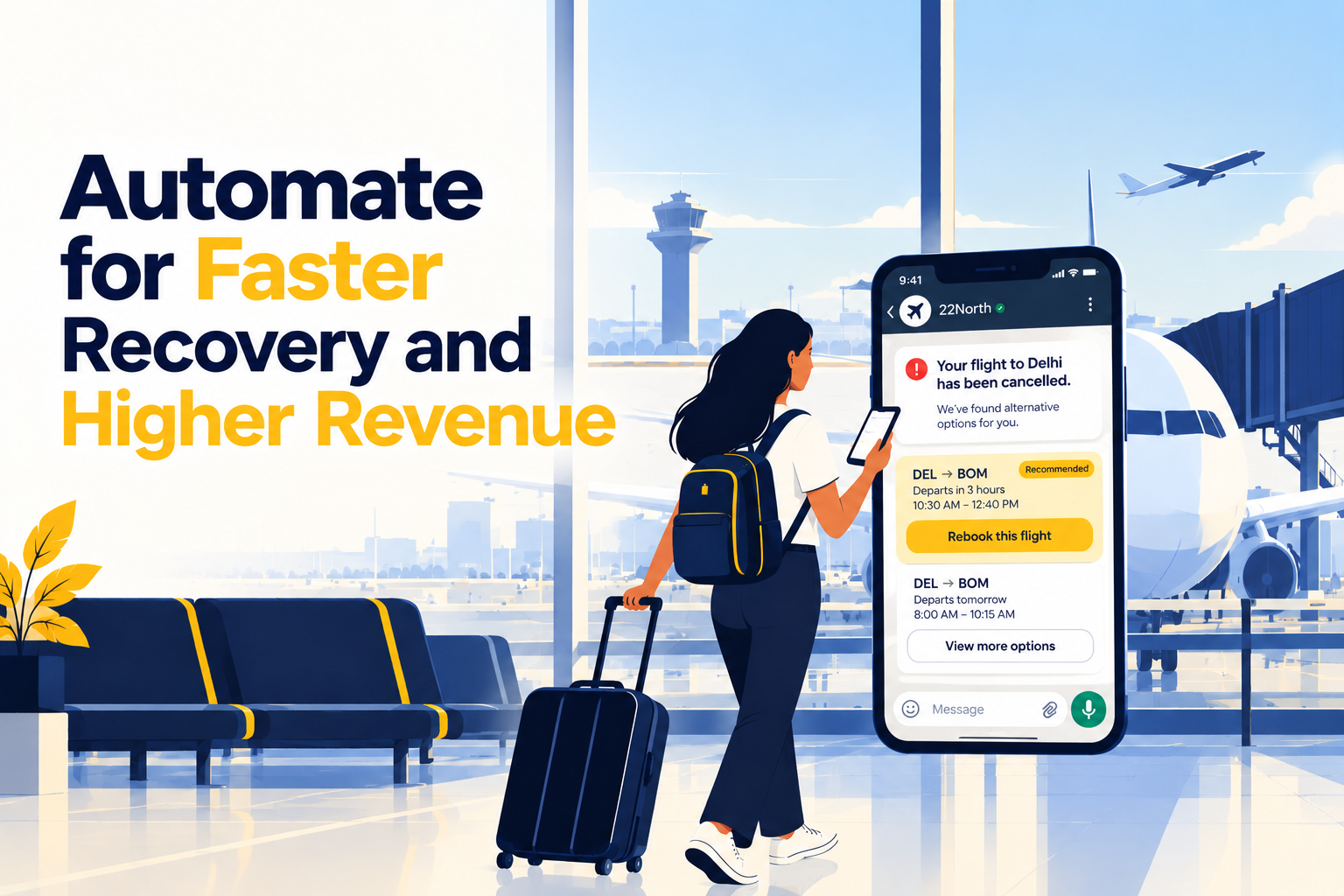
Support re-accommodation and other disruption-related servicing through connected workflows. Where applicable, automation can help passengers access available options and reduce repetitive manual work for service teams.
3. Use Predictive Insights
Use operational data and predictive insights to identify potential disruptions earlier, assess their likely impact and help teams prepare appropriate responses.
4. Connect Airline Systems and Teams
Integrate relevant airline systems and operational workflows to reduce information silos, improve coordination and support more consistent decision-making across disruption management.
5. Reduce Contact Centre Pressure
Enable self-service for routine enquiries while giving agents the context they need to handle complex passenger situations. This helps service teams focus their attention where human intervention matters most.
How Does 22North Help Airlines Manage Disruptions?
22North by Phonon is an AI-enabled passenger operations platform designed to help airlines optimise revenue, manage disruptions and automate passenger-facing workflows.
Rather than treating passenger communication as an isolated activity, 22North connects disruption recovery, revenue optimisation and passenger communications within a broader airline operations approach.
With 22North, airlines can work towards:
-
Disruption recovery: Support automated recovery workflows and passenger re-accommodation processes.
-
Passenger communications: Coordinate timely flight updates and service messages across multiple communication channels.
-
Connected agent workflows: Help service teams manage passenger interactions through a unified inbox.
-
Operational efficiency: Reduce repetitive manual tasks through integrated, flow-based automation.
-
Revenue optimisation: Support better capacity decisions and revenue opportunities alongside day-to-day operational needs.
The objective is to help airlines move from fragmented responses towards more coordinated, data-informed operations.
The Future of Airline Disruption Management
Flight disruptions cannot always be prevented. However, their impact can be managed more effectively when airlines have the right systems, information and workflows in place.
By connecting operational decision-making with passenger recovery and communication, airlines can improve response coordination, reduce avoidable servicing effort and deliver clearer passenger experiences during uncertain journeys.
22North, powered by Phonon, helps airlines connect disruption recovery, revenue optimisation and passenger communications through intelligent automation built for aviation.
Ready to Rethink Airline Disruption Management?
Connect with Phonon’s travel automation experts to explore how 22North can support your airline’s passenger operations.
Email: connect@phonon.io
Explore: 22North