Customer expectations have changed. They want to reach businesses through the channels they already use, whether that means making a phone call, starting a webchat, or sending a message on WhatsApp. For customer service teams, however, managing these conversations across separate platforms can create unnecessary complexity.
Agents often switch between multiple applications to respond to customers. This fragments conversation histories, increases response times and makes it difficult to maintain a consistent customer experience.
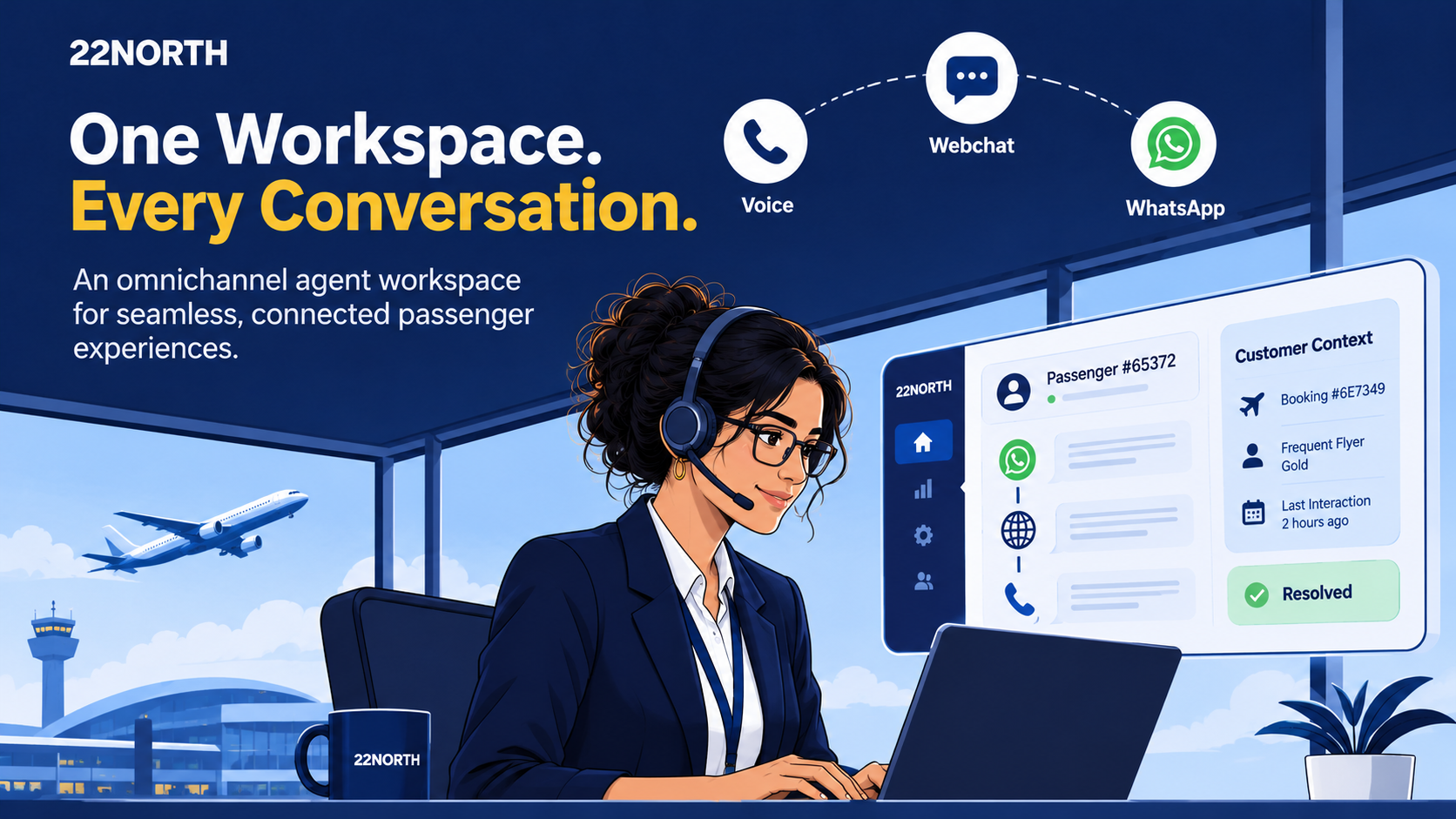
The solution is an omnichannel agent workspace that brings voice, webchat and messaging together in one place.
Why Do Customer Service Teams Need a Unified Workspace?
When communication channels operate independently, agents have to piece together customer information from different systems. A customer might start a conversation on WhatsApp, follow up through webchat and eventually call the support team. Without a connected workspace, the agent handling the call may have no visibility into the previous interactions.
This creates three major challenges:
- Fragmented customer information: Conversation histories and customer details are scattered across platforms.
- Operational inefficiency: Agents spend time switching applications instead of resolving customer queries.
- Inconsistent experiences: Customers are repeatedly asked to explain their concerns when moving between channels.
A unified workspace addresses these challenges by bringing interactions into a shared interface, allowing agents to access relevant customer information and manage conversations with greater continuity.
5 Essential Capabilities of an Omnichannel Agent Workspace
Building an effective agent workspace involves more than integrating multiple communication channels. It requires connecting the entire customer interaction journey.
1. Unified Voice, Webchat and Messaging
The foundation is a single inbox that consolidates customer interactions across voice calls, website chat and messaging platforms such as WhatsApp.
Agents should be able to view incoming interactions, respond to messages and manage calls without constantly switching between applications. A consolidated customer timeline also helps maintain visibility into previous conversations.
2. Intelligent Conversation Routing
Not every query should reach the same agent. Intelligent routing directs conversations based on factors such as customer intent, agent availability, language and query complexity.
For example, a routine booking enquiry could be handled through automated assistance, while a complex complaint could be routed directly to an experienced support agent.
3. AI-Powered Assistance and Automation
AI can help identify customer intent, answer frequently asked questions and automate repetitive interactions.
However, automation should not operate independently of human support. When a query requires judgement or intervention, the system should facilitate a seamless handoff to a live agent, retaining the conversation history and relevant customer information.
4. Complete Customer Context
Agents need more than a conversation window. They need access to relevant customer profiles, previous interactions, transaction details and ongoing requests.
Having this information alongside the conversation reduces repetition and enables more informed responses.
5. Real-Time Monitoring and Supervision
Supervisors need visibility into active conversations, agent workloads, response times and service-level performance.
Features such as conversation monitoring, escalation controls and supervisor intervention help teams maintain service quality while managing high interaction volumes.
How Leading Platforms Are Approaching Omnichannel Support
Several technology platforms are already addressing the need for unified customer interactions.
Intercom brings phone, email, live chat and messaging channels into its shared Inbox, combining AI assistance with human-agent support.
Genesys Cloud CX provides an omnichannel contact centre environment where voice, web messaging, WhatsApp and other digital interactions can be managed through connected agent workflows.
NiCE CXone offers a unified agent workspace that combines voice and digital interactions with customer context, routing and workforce management capabilities.
These platforms demonstrate how the contact centre is evolving from a collection of independent communication tools into a connected customer engagement environment.
Bringing It Together with ConverseMax by 22North
For airlines, managing passenger conversations requires an additional layer of operational context. A passenger enquiring about a booking, requesting a change or seeking assistance during a flight disruption needs more than a generic customer support interaction.
ConverseMax by 22North brings conversational AI and human-agent support together in a unified passenger service workspace.
It connects WhatsApp Business, live webchat and voice within a single agent environment. Agents can access customer and reservation context, view conversation histories and take over interactions from AI assistants without losing continuity.
Its capabilities include a unified inbox, AI-powered intent recognition, deterministic workflows, WebRTC and PSTN voice escalation, customer profiles and supervisor monitoring.
By connecting conversations with airline systems such as Amadeus, Sabre and Navitaire, ConverseMax is designed to make passenger servicing more context-aware and operationally connected.
The Future of Customer Service Is Connected
Managing voice, webchat and messaging in one workspace is no longer simply about convenience. It is about giving agents the information, tools and context they need to resolve customer requests efficiently.
As AI-driven automation becomes increasingly integrated into customer service, the most effective platforms will combine intelligent self-service with seamless human intervention.
For airlines, this means moving beyond disconnected communication channels towards a unified passenger engagement experience. With platforms such as ConverseMax, the goal is simple: one workspace, connected conversations and better passenger experiences.