26 Oct, 2026
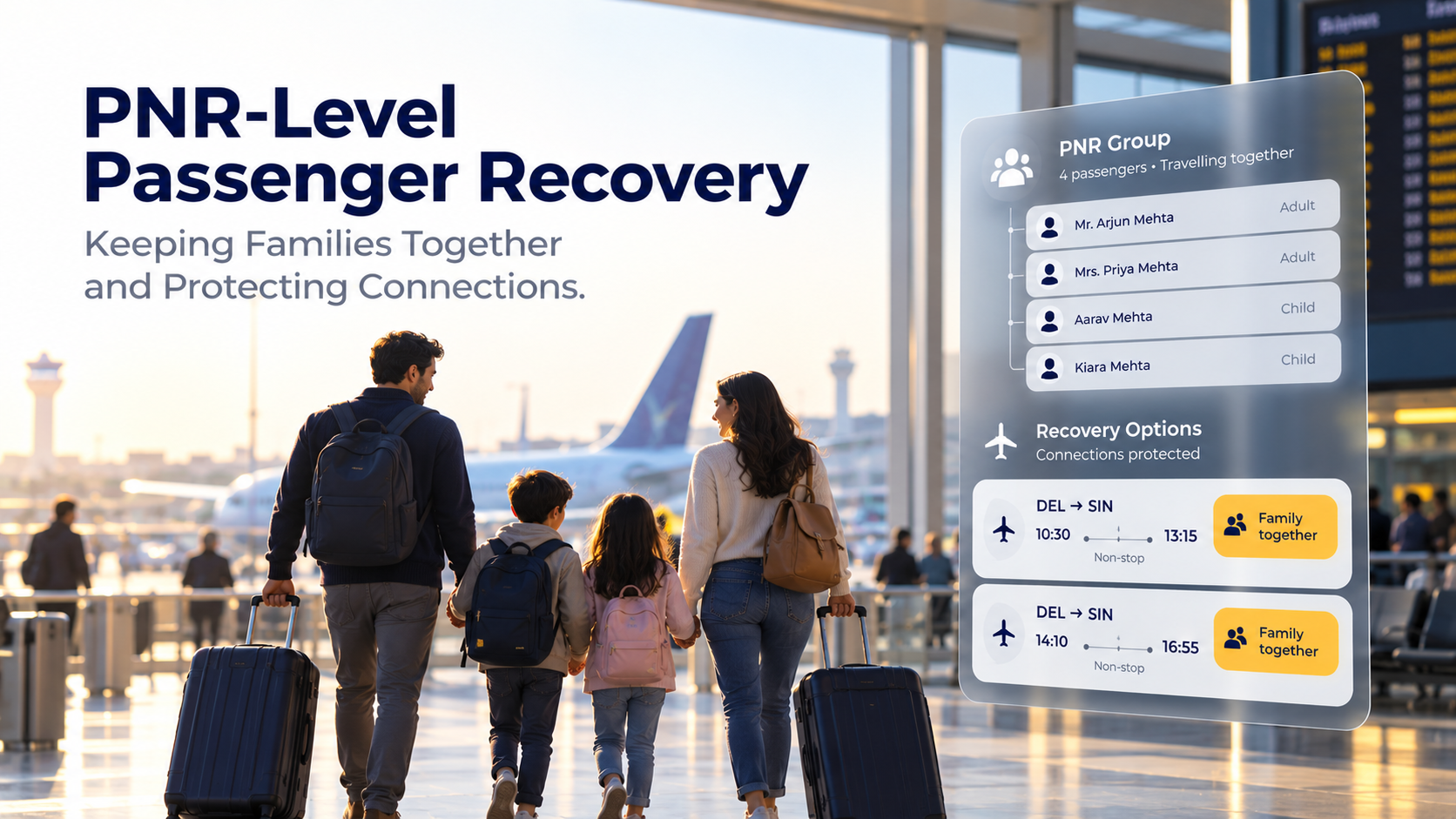
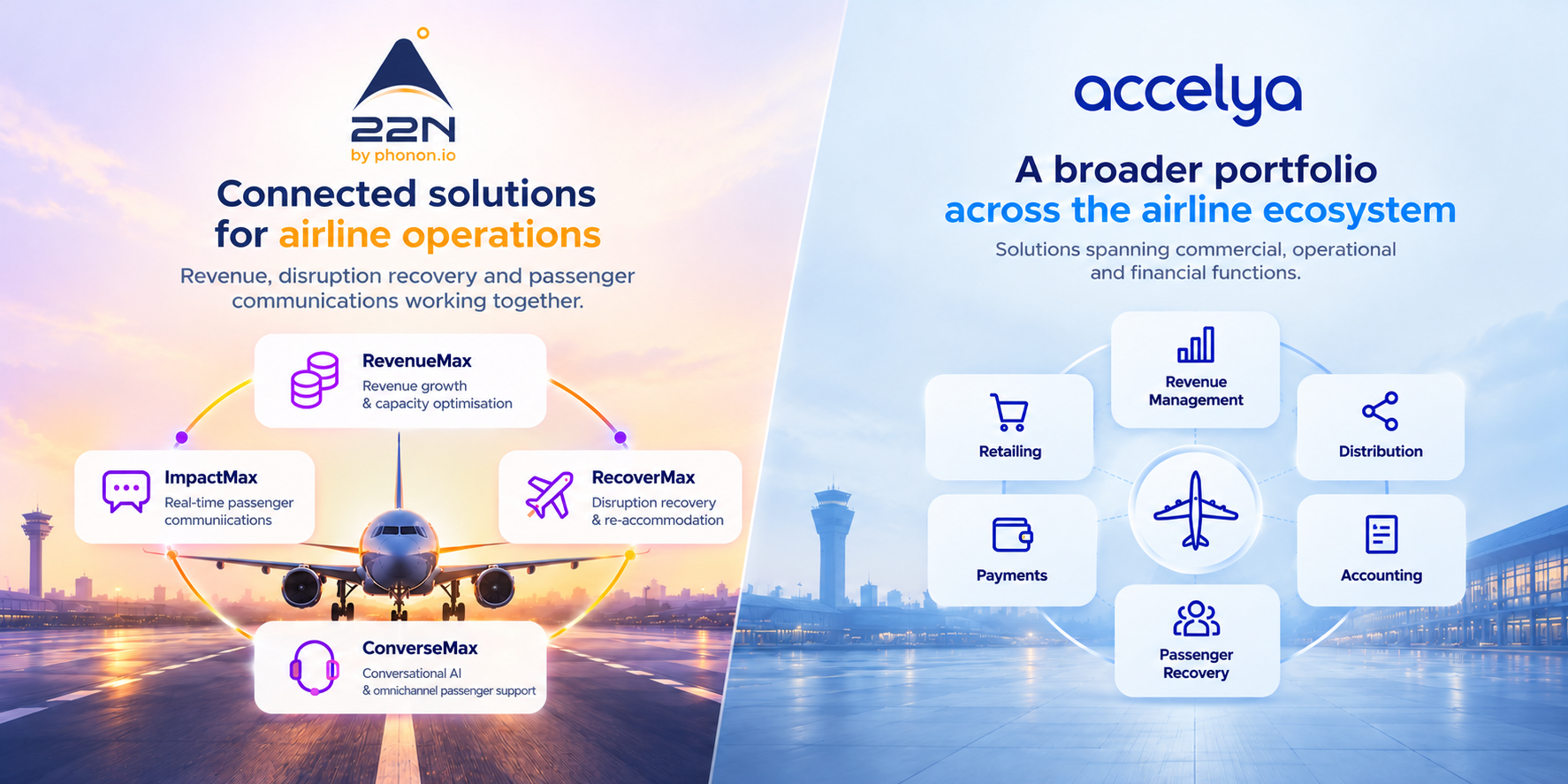
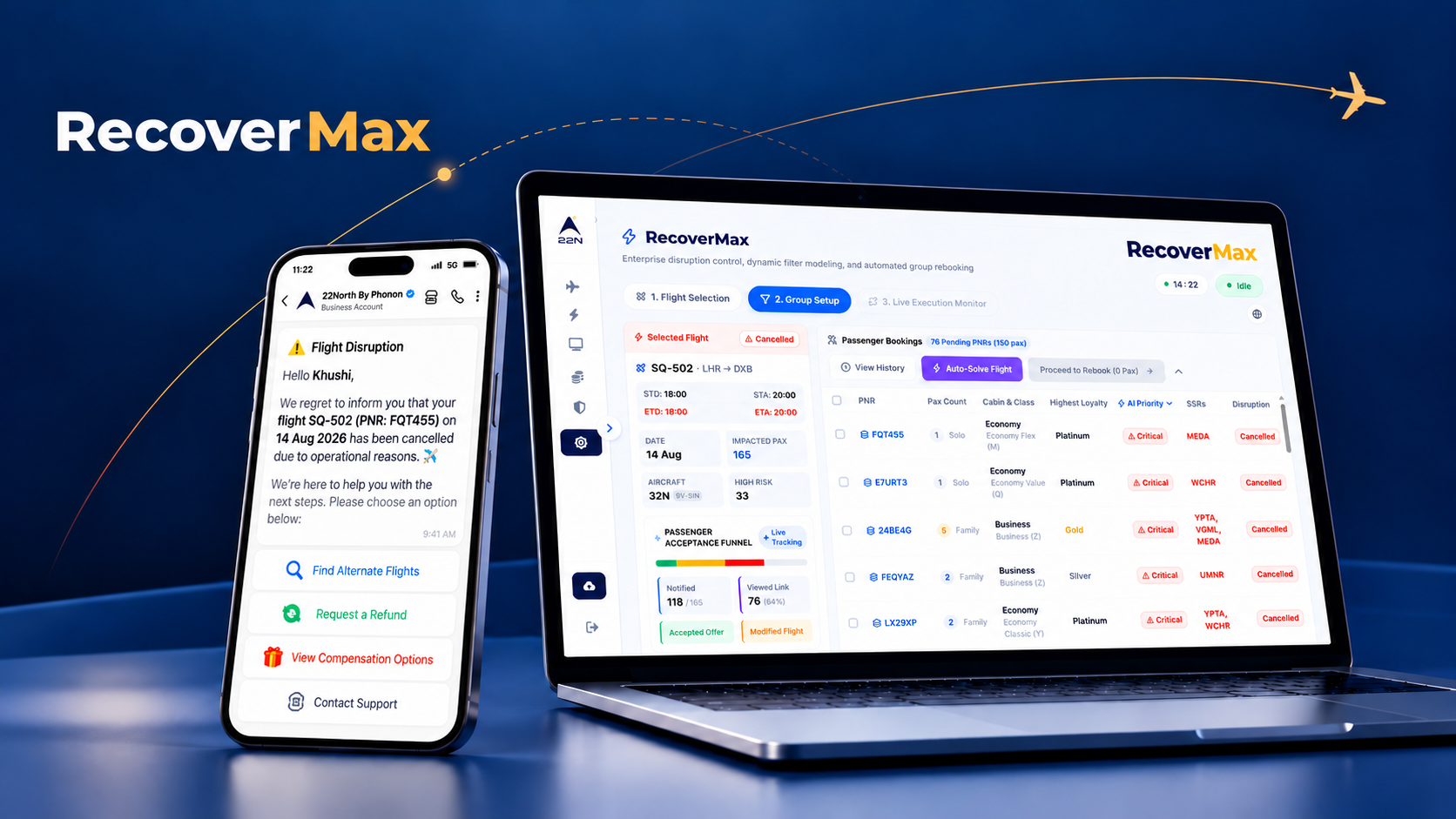
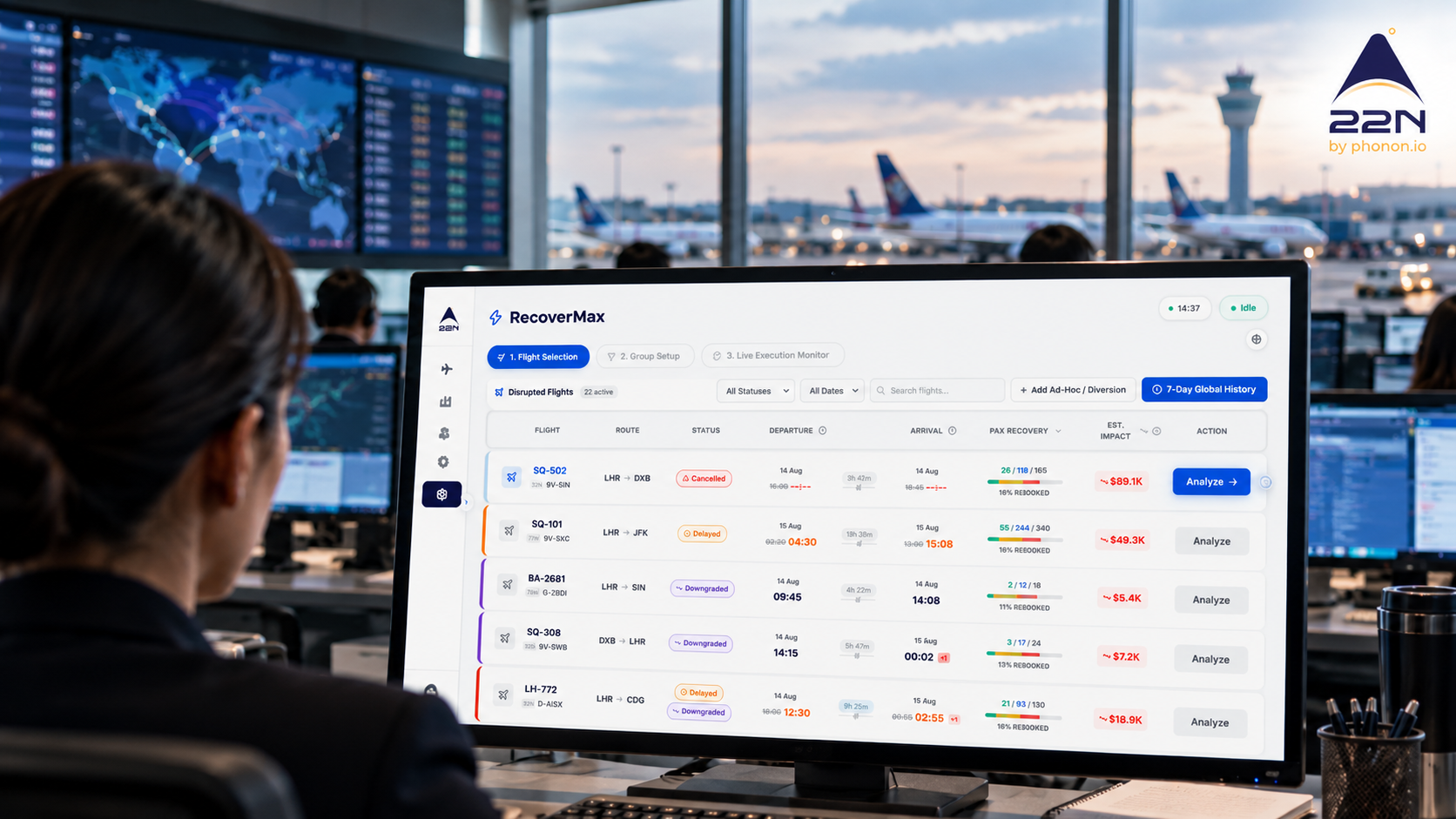
Introduction Airlines face a complex balancing act: maximising revenue, making the best use of available capacity, managing operational disruptions and delivering a consistent passenger experience. Technology plays a critical role in each of these areas, but its real value depends on how effectively it supports decisions and translates them into operational outcomes. This makes choosing the right technology partner an important strategic decision. A platform may offer sophisticated revenue management, for example, but airlines must also consider how it handles overbooking scenarios, passenger recovery, operational exceptions and the communication that follows a decision. Two providers worth examining in this context are 22North and Accelya. Both operate in the airline technology landscape, with overlapping capabilities in revenue-related processes and passenger recovery, but their product portfolios have different areas of emphasis. • Accelya offers a broad airline technology ecosystem spanning revenue management, pricing, retailing, distribution, financial processes and passenger recovery. • 22North delivers a focused, modular operational suite comprising four natively connected products: RevenueMax, RecoverMax, ImpactMax, and ConverseMax, focused on revenue optimisation, disruption management, passenger communications and conversational servicing. This blog examines how each provider addresses practical airline challenges, where their capabilities overlap and where 22North’s unified, closed loop approach provides a distinct operational advantage. 1. Revenue optimisation: Macro Forecasting vs. Gate-Level Yield Protection Revenue management is a core part of airline commercial strategy. It involves forecasting demand, optimising inventory, managing pricing and making decisions that influence the revenue generated from available seats. Accelya's FLX ONE Revenue Management addresses this broader discipline, serving airlines looking to optimize long-term commercial performance and offer creation across distribution channels. 22North approaches revenue optimisation through RevenueMax, with a focus that includes capacity-related decisions, overbooking and spoilage scenarios, voluntary denied boarding opportunities and ancillary revenue. The distinction becomes particularly relevant when an airline needs to act on a specific operational problem rather than only optimise demand and inventory. The differentiator to evaluate: How effectively does each solution connect a revenue-related decision to the operational actions needed to achieve the intended outcome? 2. Disruption recovery: From identifying alternatives to completing passenger recovery Both providers address passenger recovery during irregular operations, including flight disruptions that require alternative travel arrangements. Accelya announced FLX Recover in October 2026, describing an AI-powered approach to evaluating recovery options and coordinating actions across airline systems. However, the value of a recovery solution depends on more than identifying an available seat. Airlines need a system that can account for passenger itineraries, onward connections, inventory, special assistance, travelling groups, recovery policies and booking execution. Evaluating the recovery workflow The differentiator to evaluate: How reliably the system manages the full recovery journey under the airline's actual operating rules. 3. Passenger communications and servicing: Deterministic AI Workflow Communications deliver information to passengers. Interactive servicing helps passengers understand their options, obtain answers and complete permitted actions. During a disruption, both are essential. Accelya's passenger recovery proposition includes communication-related workflows, while its wider portfolio supports airline commercial and passenger processes. 22North addresses these needs through two products: ImpactMax and ConverseMax. • ImpactMax focuses on event-driven, intelligent passenger and operation team notifications, helping airlines communicate relevant updates. • ConverseMax focuses on AI automation, omnichannel inbox and a unified agent workspace for passenger servicing with intelligent deterministic workflows. AI understands what the customer wants, while deterministic workflows manage critical transactional steps where accuracy and business rules matter. The differentiator to evaluate: How effectively can an airline connect an operational event to the right passenger communication and, where necessary, a service interaction that helps resolve the issue? 22North's product structure provides a defined way to evaluate both outbound communication and interactive servicing within the same portfolio. The important question is whether the required workflows share accurate context and coordinate actions reliably. 4. AI and automation: Comparing outcomes Both airline technology portfolios include AI-related capabilities, although their scope and implementation differ by product. Accelya's FLX Recover brings agentic AI into disruption management. Its wider portfolio also addresses revenue management and other commercial processes. 22North applies its product approach across revenue optimisation, disruption recovery, passenger notifications and conversational servicing. For airlines, the presence of AI is only one consideration. What matters is how it is used within the operational workflow. An effective evaluation should distinguish between three levels of capability: Identify: Detect a risk, disruption, passenger need or revenue opportunity. Recommend: Evaluate the available options against business rules and operational constraints. Execute: Carry out permitted actions, record outcomes and escalate exceptions when necessary. Deterministic AI: Safety in Automation A major challenge in airline automation is ensuring AI bots do not hallucinate policy details or issue invalid rebookings. Systems should solve this by separating intent from execution: AI for NLU: Generative AI understands what the passenger wants in natural language across WhatsApp, WebChat, SMS and other SNS. Deterministic Execution: The moment an action involves a financial or booking transaction (rebooking, voucher issuance, seat change), the system routes the request through hardcoded, deterministic business rules. If an interaction requires human intervention, the entire history transfers seamlessly into a unified agent workspace, preserving complete context. Four products, connected operational priorities One of the defining characteristics of 22North is the way its four products map to related airline challenges. • RevenueMax: addresses revenue opportunities and capacity-related operational decisions. • RecoverMax: addresses passenger recovery and reaccommodation during IRROPs • ImpactMax: omnichannel passenger communications platform that keeps people connected to the right information, across the journey. • ConverseMax Unified inbox for passenger services uniting AI automation, human agents, WhatsApp, WebChat and voice into one unified airline workspace. Together, they provide a focused framework for evaluating how airlines manage decisions and interactions across the passenger journey. Accelya offers a broader portfolio, which can be valuable when an airline is evaluating commercial, retailing, distribution and financial systems as part of a wider transformation. Conclusion Accelya and 22North operate in overlapping parts of the airline technology landscape, but they approach the market from different Accelya's broad portfolio is relevant to airlines looking for capabilities across revenue management, retailing, distribution, financial processes and passenger