Air travel continues to grow, placing increasing pressure on airlines and airports to deliver timely, accurate and reliable passenger communications. According to IATA projections published for 2025, global air passenger traffic was expected to reach 9.8 billion journeys, highlighting the scale of communication required across the aviation industry.
When flight delays, severe weather, airspace restrictions or crew shortages disrupt operations, thousands of passengers may need immediate updates. Delayed or inconsistent information can lead to crowded airport counters, overwhelmed contact centres, missed connections and frustrated travellers.
A resilient airline passenger communication system helps airlines keep passengers informed, even during operational disruptions. By combining multi-channel messaging, cloud infrastructure, aviation system integrations and automated workflows, airlines can improve communication reliability and respond more effectively when conditions change.
Here are seven ways airlines and airports can build a more resilient passenger communication system.
1. Build a Multi-Channel Passenger Communication Framework
Passengers expect flight updates through channels that are convenient and accessible to them. Relying on a single communication channel can create problems when delivery is delayed or a provider experiences an outage.
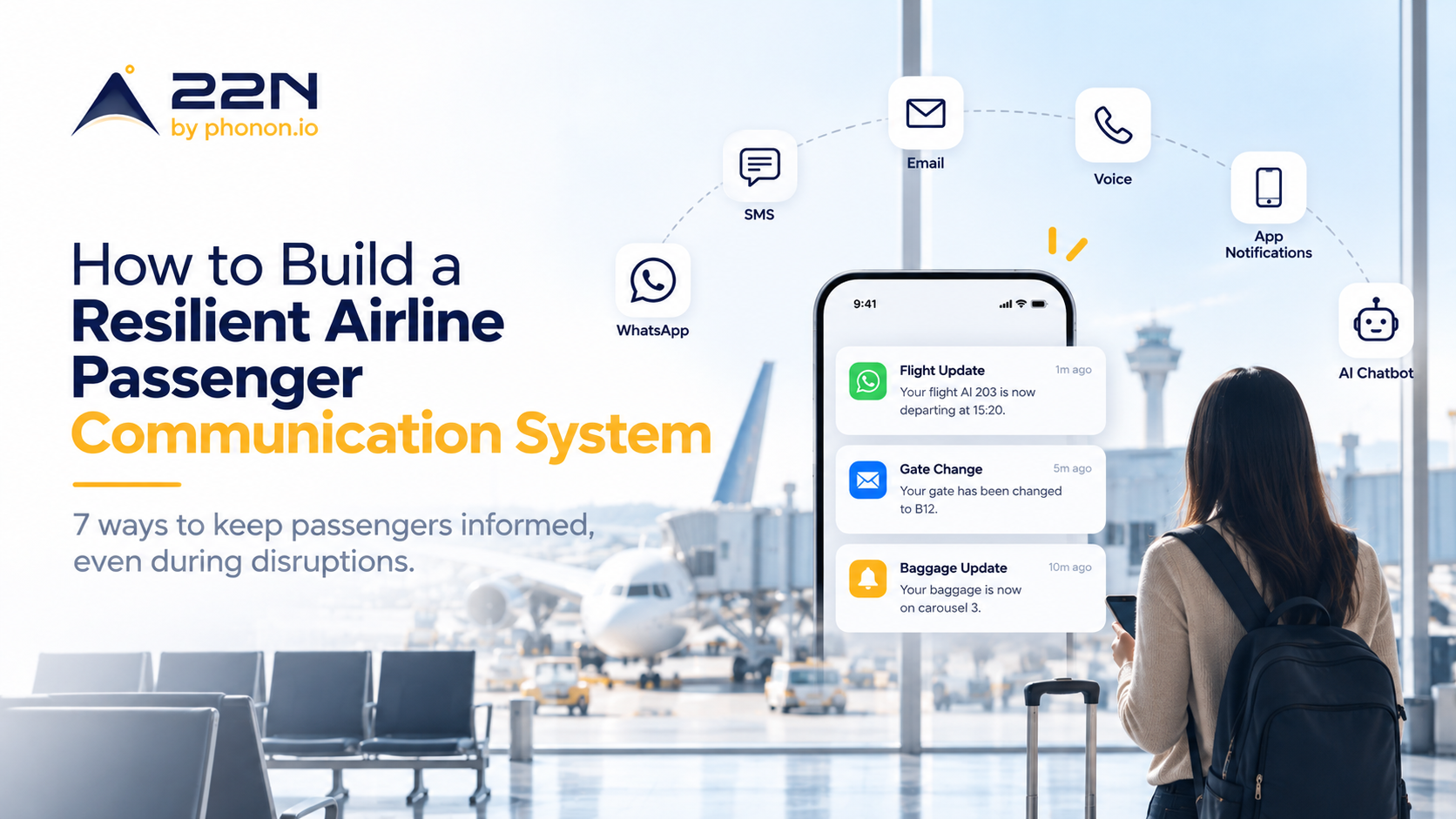
An effective airline passenger communication platform should support multiple channels, including:
-
WhatsApp: Share flight updates, travel information and service notifications.
-
SMS: Deliver time-sensitive messages to passengers.
-
Email: Send booking information, travel documents and detailed updates.
-
Voice calls: Communicate urgent information when appropriate.
-
Web and mobile app notifications: Provide updates through digital passenger touchpoints.
-
Automated chatbots: Help passengers access information and resolve routine queries.
A multi-channel approach also creates opportunities for fallback messaging. For example, if a message cannot be delivered through one channel, the system may attempt delivery through another, depending on passenger preferences, consent, channel availability and configured rules.
The objective is simple: deliver the right information through an appropriate available channel, with minimal delay.
2. Use Scalable Cloud Infrastructure
Airline communication volumes can increase sharply during mass delays, cancellations and other operational disruptions. Systems that cannot handle sudden demand may experience slowdowns precisely when passengers need information most.
Cloud-based infrastructure and well-designed microservices architectures can help communication platforms manage these fluctuations.
Key capabilities to consider include:
-
Automatic scaling: Adjust computing resources as message volumes increase.
-
Service isolation: Reduce the risk of one component failure affecting the entire platform.
-
Geographic redundancy: Support continuity if a particular region becomes unavailable.
-
Controlled deployments: Update components while minimising service interruptions.
-
Monitoring and recovery: Detect failures and trigger appropriate recovery procedures.
Cloud infrastructure alone does not guarantee uninterrupted service. Resilience also depends on architecture, configuration, provider reliability, recovery procedures and regular testing.
3. Integrate with Core Airline and Airport Systems
Reliable passenger communication depends on accurate operational information. If a flight’s status changes but the communication platform does not receive the update, passengers may receive outdated or conflicting information.
An airline passenger communication system should integrate with relevant operational systems, such as:
-
Passenger Service Systems (PSS)
-
Departure Control Systems (DCS)
-
Flight movement and status systems
-
Baggage management systems
-
Crew scheduling and rostering systems
-
Airport Operational Databases (AODB)
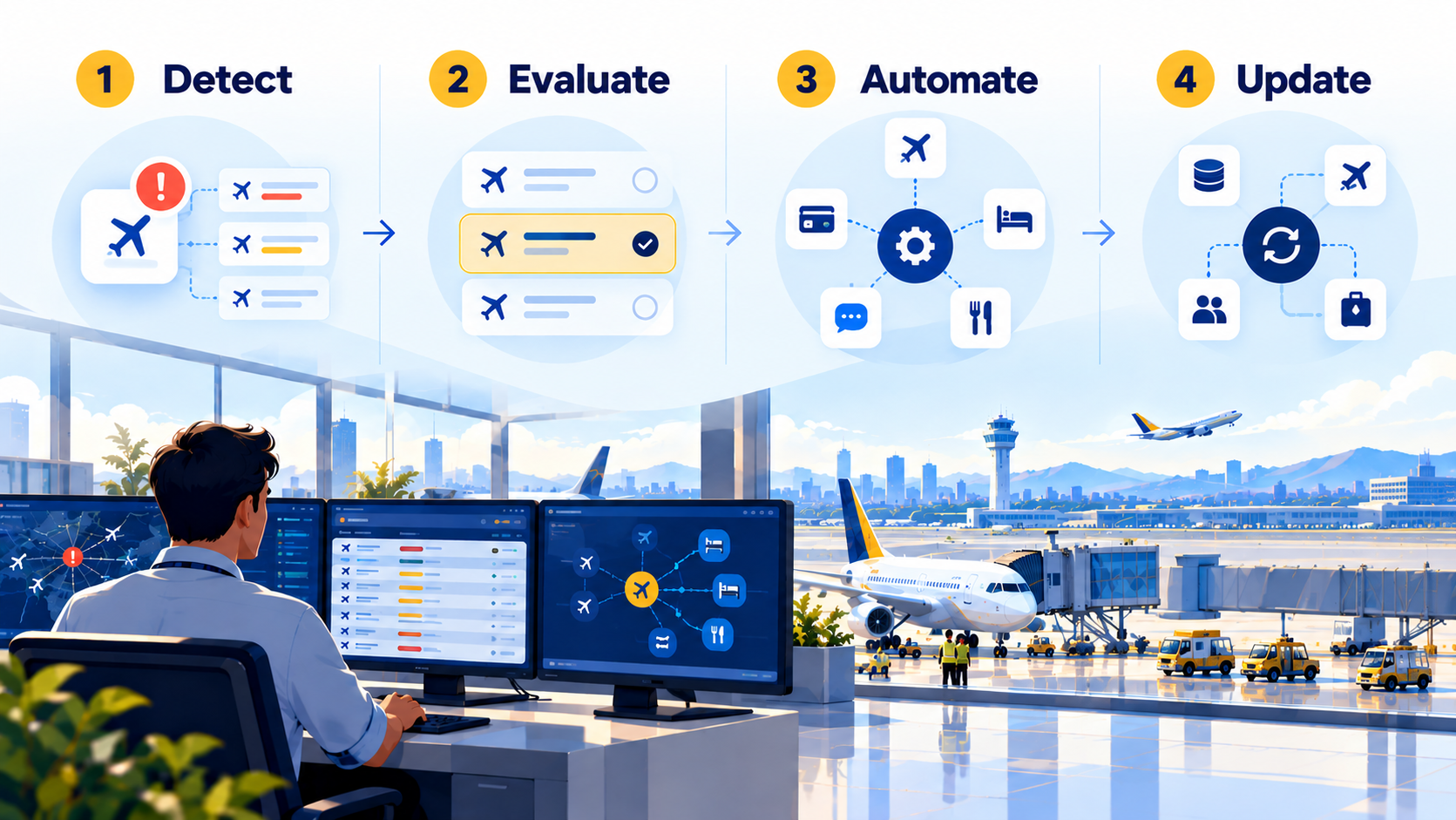
These integrations can help trigger automated communications when relevant events occur, such as flight delays, cancellations, gate changes or baggage updates.
For example, when an integrated system reports a gate change, an automated workflow can identify the affected passengers and initiate the appropriate notification.
Connecting communication workflows with operational data reduces reliance on manual updates and helps airlines deliver more consistent passenger information.
4. Make Passenger Communications Multilingual
Airlines serve passengers from different countries, regions and linguistic backgrounds. During a disruption, unclear communication can add to uncertainty and increase demand for customer support.
A resilient passenger communication platform should support:
-
Passenger language preferences, where available.
-
Approved message templates in relevant languages.
-
Local date, time and formatting conventions.
-
Location-specific travel information and advisories.
-
Consistent terminology across communication channels.
For operationally important messages, translations should be reviewed and approved appropriately. Automated translation should not introduce ambiguity into critical travel instructions.
Clear, accessible and relevant messaging helps passengers understand what has changed and what they should do next.
5. Prioritise Security, Compliance and Auditability
Airline communications often involve personal information, booking details and operationally sensitive updates. Reliability must therefore be supported by strong security and governance.
When evaluating an airline communication platform, consider the following safeguards:
-
Encryption: Protect information in transit and, where appropriate, at rest.
-
Role-based access control: Limit access according to individual responsibilities.
-
Communication logs: Maintain records of messages and delivery outcomes.
-
Data protection controls: Handle passenger information according to applicable privacy requirements.
-
Provider redundancy: Plan for failures affecting communication gateways and service providers.
-
Availability commitments: Define service-level objectives, monitoring and recovery expectations.
Regulatory obligations vary by jurisdiction and use case, so airlines should verify the specific requirements applicable to their operations.
A secure and auditable communication system helps organisations manage risk while maintaining visibility into passenger communication activities.
6. Use Intelligent Routing and Workflow Automation
During disruptions, airline teams must communicate quickly while handling a high volume of passenger enquiries. Automation can help manage routine tasks and reduce avoidable manual effort.
Depending on the platform and integrations available, intelligent communication workflows can:
-
Route notifications through configured channels.
-
Trigger messages based on flight or booking events.
-
Personalise updates using approved passenger and journey information.
-
Provide self-service access to common travel information.
-
Help agents access relevant context during passenger interactions.
-
Escalate complex enquiries to human service teams.
For example, when a flight is delayed, an integrated workflow could trigger a notification to affected passengers and provide relevant next-step information.
More complex actions, such as rebooking or refunds, require the appropriate system capabilities, business rules and authorisation.
The aim is not to automate every interaction. It is to automate repeatable tasks while ensuring passengers can access human assistance when needed.
7. Test Communication Systems Under Failure Conditions
A communication system may perform well during normal operations but struggle when message volumes spike or a service becomes unavailable.
Regular testing helps airlines identify weaknesses before they affect passengers.
Important tests include:
-
Load testing: Simulate high message volumes during widespread delays.
-
Channel failure testing: Assess what happens when a messaging or SMS provider becomes unavailable.
-
Network testing: Evaluate performance under constrained network conditions.
-
Failover testing: Verify recovery procedures across services or regions.
-
Delivery monitoring: Track message acceptance, delivery outcomes and delays.
-
Recovery exercises: Test incident response processes and service restoration.
Testing should also confirm that fallback mechanisms do not send duplicate, conflicting or outdated messages.
The goal is to identify potential failure points, validate recovery procedures and improve the system’s ability to maintain service during unexpected events.
Why Is Communication Resilience Important for Airlines?
Resilient passenger communications can support several important airline priorities:
-
Better passenger experience: Keep travellers informed when plans change.
-
Lower service pressure: Reduce repetitive enquiries through timely updates and self-service.
-
Improved operational coordination: Connect communication workflows with relevant airline systems.
-
Greater continuity: Prepare for channel failures, infrastructure issues and sudden increases in demand.
-
Stronger passenger trust: Provide consistent information throughout the travel journey.
Communication resilience is not simply about keeping a platform online. It is about ensuring that accurate, relevant information can reach the right passengers through appropriate channels when it matters most.
How Does 22North Support Resilient Airline Communications?
22North by Phonon is an aviation-focused passenger operations platform designed to connect passenger communications, disruption recovery and automated workflows.
22North helps airlines bring communication and operational processes closer together through capabilities such as multi-channel passenger messaging, connected airline integrations and configurable automation.
Its WhatsApp-first approach supports passenger engagement through a familiar messaging channel, while integrations with other supported communication channels can provide additional ways to reach passengers.
By connecting operational events with communication workflows, airlines can work towards more timely flight updates, more consistent passenger information and reduced reliance on manual servicing.
The broader objective is to help airlines build connected passenger operations that remain responsive as travel conditions change.
Build a More Resilient Passenger Communication Strategy
Airline delays and disruptions cannot always be prevented. However, their impact on passengers can be managed more effectively when communication systems are designed for scale, continuity and operational accuracy.
By combining multi-channel messaging, scalable infrastructure, core aviation integrations, multilingual support, security controls, automation and regular testing, airlines can build a more resilient passenger communication ecosystem.
22North by Phonon helps airlines connect passenger communications with disruption recovery and automated operations.
Ready to Modernise Your Airline Communication System?
Speak with our Travel Automation Experts to explore how 22North can support your airline’s passenger communication and automation strategy.
Email: connect@22north.io
Website: www.22north.io
22North — connecting airline systems, passenger communications and operational workflows.