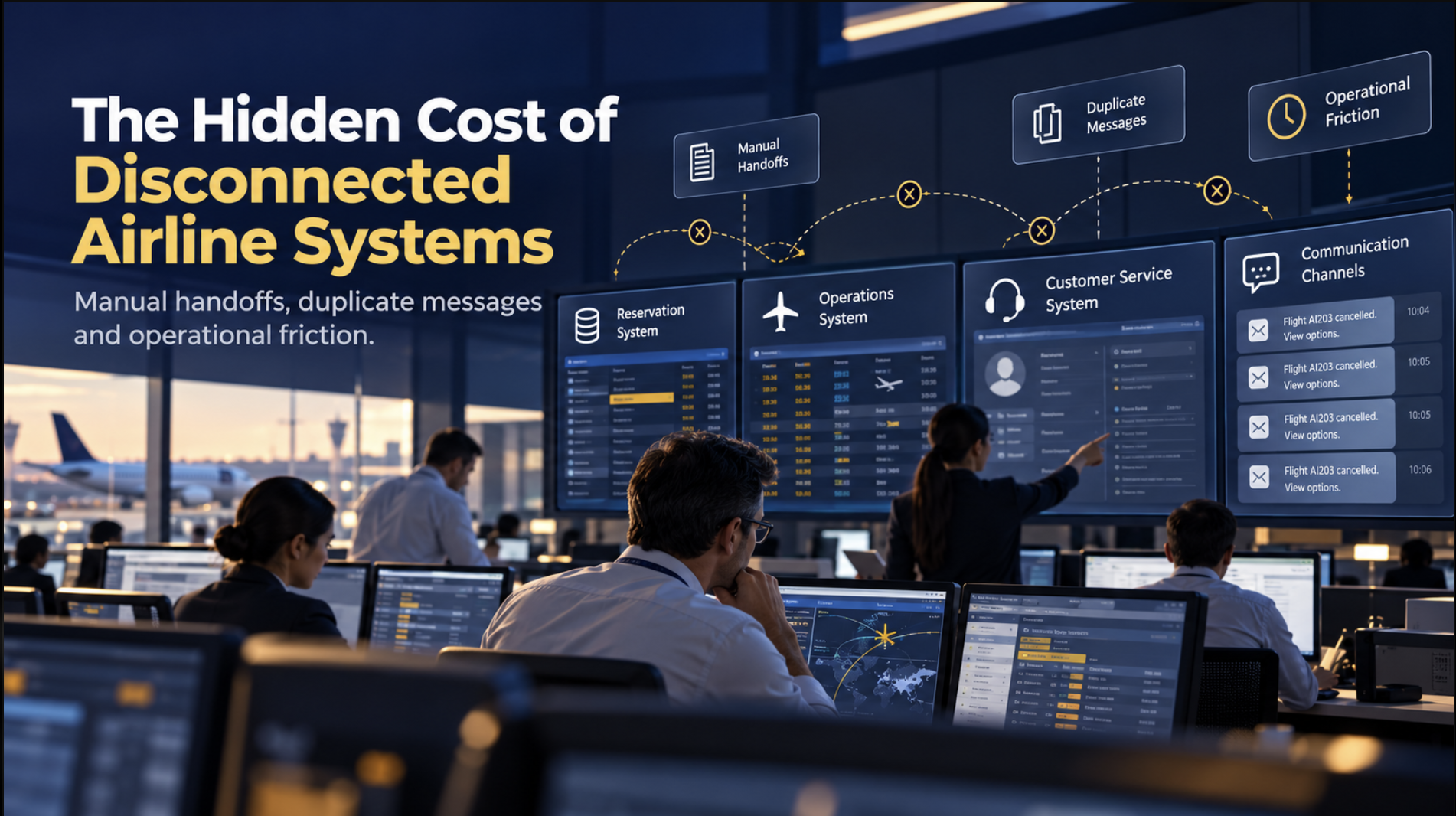
Airlines rely on reservation platforms, operational tools, customer service applications, and communication channels to manage passenger journeys. When these systems operate in silos, information gaps can lead to manual work, duplicate messages, and repeated passenger contacts.
Disconnected airline systems create hidden operational costs by making teams spend more time coordinating information and less time resolving passenger needs.
1. Manual Handoffs Increase Operational Work
When systems do not exchange information effectively, employees often become the link between them. Teams may export passenger lists, update spreadsheets, verify booking details, or manually transfer data between applications.
These steps increase processing time and create opportunities for errors, delays, and inconsistent records. Integrating systems and automating routine workflows can reduce unnecessary handoffs while allowing staff to focus on exceptions.
2. Duplicate Messages Create Passenger Confusion
When separate communication tools operate independently, the same passenger may receive multiple notifications about one flight change or disruption.
Duplicate messages can increase communication costs and make it difficult for passengers to identify the latest information. Shared event records, message-status tracking, and coordinated workflow rules help airlines reduce unnecessary repetition.
3. Repeated Passenger Contacts Increase Service Demand
Passengers often contact customer service repeatedly when notifications lack clear next steps or agents cannot access previous interaction details.
Without consistent information across systems, passengers may need to explain their situation multiple times. Connected communication workflows can help teams access relevant booking details and interaction history, supporting clearer updates and more efficient resolution.
4. Fragmented Data Affects the Passenger Experience
A flight change may affect an onward connection, while a cancellation may require new travel arrangements. If systems share only partial information, communications may not reflect the passenger’s complete journey.
Integrating relevant reservation and communication data helps airlines deliver more contextual updates and coordinate service processes more effectively.
How Can Airlines Reduce These Hidden Costs?
Airlines can reduce friction by integrating relevant systems, automating routine communication workflows, tracking message outcomes, and establishing clear rules for handling duplicate events and exceptions.
Platforms such as 22North can connect passenger communication workflows with reservation systems, including Amadeus, Navitaire, and Sabre, depending on the available interfaces and integration requirements.
The goal is not simply to automate more messages. It is to ensure that the right information reaches the right team and passenger at the right time.
Conclusion
Disconnected airline systems create avoidable work across operations, communication, and customer service. Manual handoffs consume staff time, duplicate notifications create confusion, and fragmented information drives repeat enquiries.
Connected systems and coordinated workflows help airlines reduce operational friction, improve communication consistency, and deliver a smoother passenger experience.