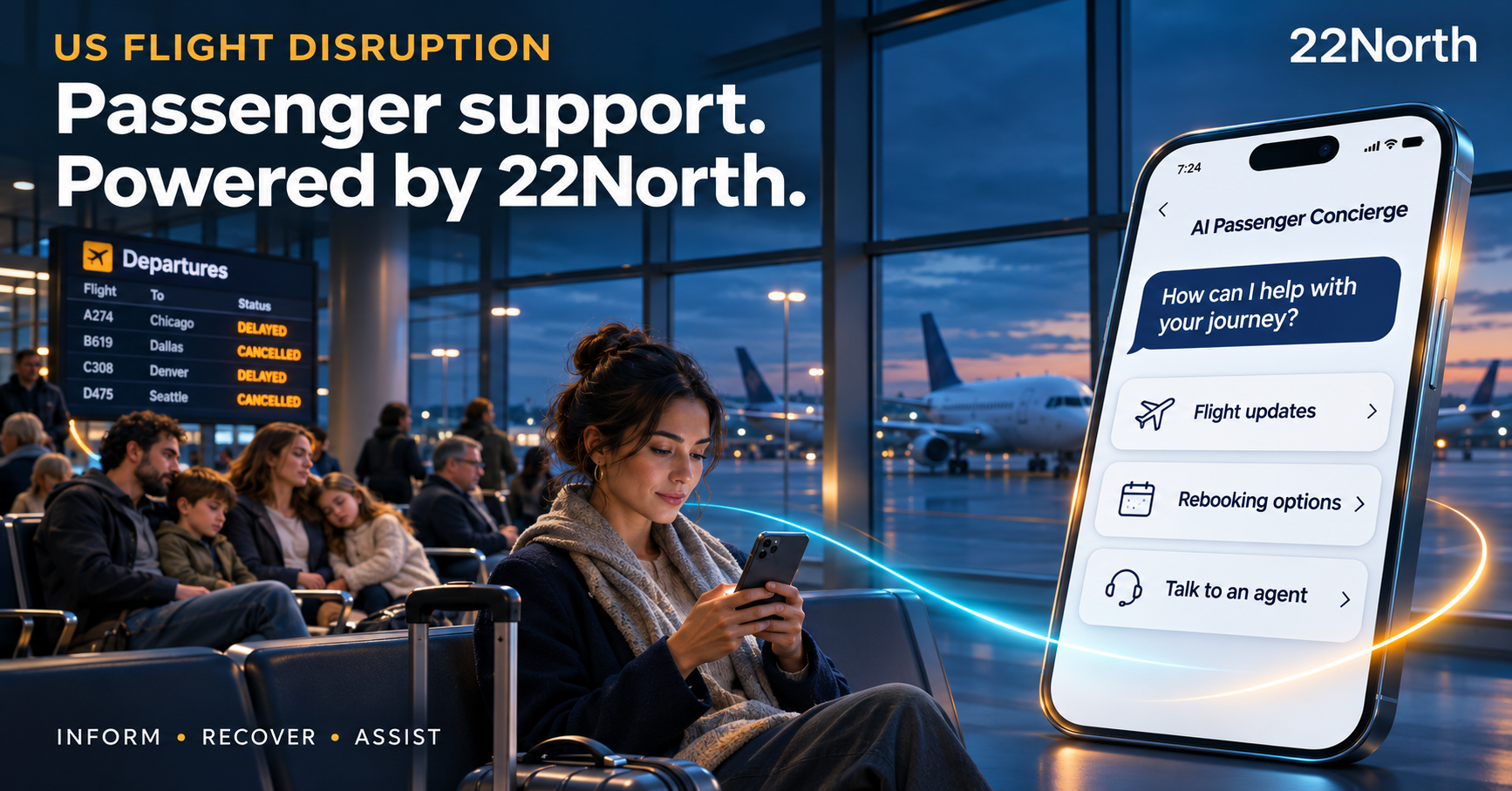
Thousands of flights disrupted. Passengers waiting aboard aircraft, sleeping in terminals and struggling to reach their airlines. An AI concierge for airline disruption can help passengers get answers and understand their next steps when uncertainty takes over.
The 13 November 2026 US nationwide ground stop showed how quickly an operational failure can leave passengers searching for assistance. How could 22North help airlines respond during a disruption like this?
By connecting timely updates, eligible rebooking options and human support in one guided passenger journey.
For a family facing cancellation, that could mean reviewing alternative flights that keep them together. For a passenger stranded overnight, it could mean clear guidance on available assistance. For an overwhelmed contact centre, it could mean handling routine enquiries automatically while giving agents the context to resolve complex cases.
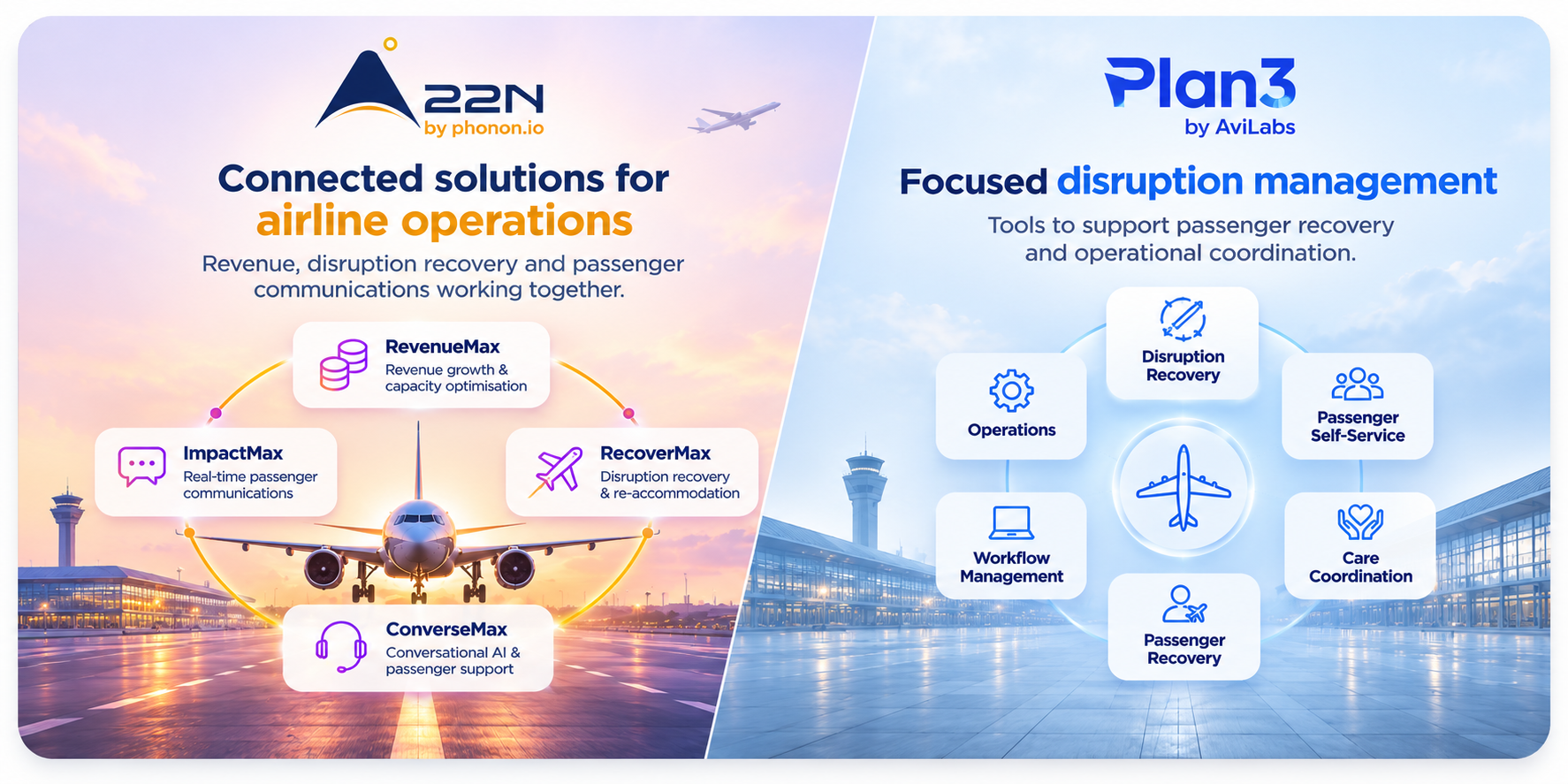
With ImpactMax, RecoverMax, ConverseMax and RevenueMax, 22North connects passenger communication, disruption recovery, conversational support and capacity decisions—helping airlines turn uncertainty into practical next steps.
The Ground Stop Ended. The Passenger Recovery Continued.
On 13 November, telecommunications instability prompted the Federal Aviation Administration to issue a nationwide ground stop. According to the FAA, the system stabilized and air traffic resumed that evening. Its subsequent update said the root cause remained under investigation.
Reopening the airspace did not immediately restore every journey. Aircraft and crews were out of position, creating further disruption through the weekend. Reuters later reported that US air travel largely returned to normal on Monday, 16 November.
That gap between technical recovery and passenger recovery matters.
A system may be operational again while a traveler still needs a replacement flight, an explanation of available assistance, or someone who understands their booking.
An AI concierge cannot restore an air-traffic network or create seats on a full flight. Its role is to connect passengers with verified information, available recovery options and human assistance while the airline manages the operational response.
Here is how those capabilities could support passengers during a major flight disruption.
1. For the Passenger Waiting on the Aircraft: Clarity Before Certainty
Imagine being seated on an aircraft during a ground stop.
You understand that safety comes first. What you need to know is whether your flight is still operating, what the airline has confirmed, and where to seek help.
A useful passenger message could say:
“Your flight is affected by the current air-traffic restriction. A revised departure time has not yet been confirmed. We will share the next verified update here. Please continue to follow cabin crew instructions.”
The message acknowledges uncertainty without inventing an answer.
22North’s ImpactMax connects operational events with passenger communications across channels including WhatsApp, SMS, email and voice. Its published capabilities cover delays, gate changes, airport advisories and other journey updates.
In a disruption workflow, that capability can help airlines communicate consistently as confirmed information changes.
The passenger may still have to wait. But they have a clear communication channel and know what has—and has not—been confirmed.
2. For the Family Facing Cancellation: A Way Forward
Now consider a family of four whose evening flight has been cancelled.
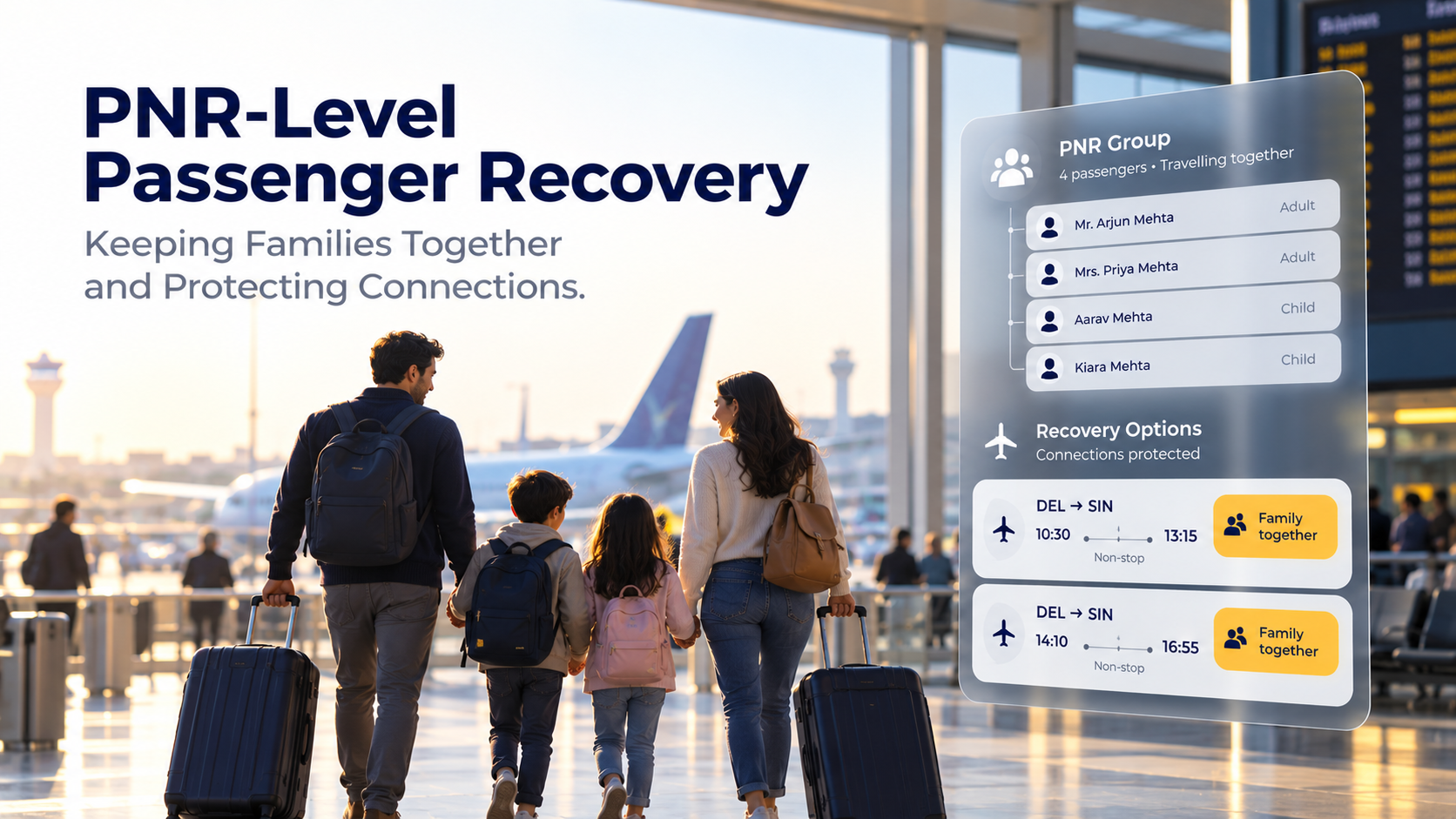
Their immediate concern is whether they can travel together. An alternative itinerary that separates the children from their parents would create another problem.
RecoverMax, 22North’s disruption recovery product, supports automated reaccommodation, connection-aware recovery and PNR-based passenger grouping. It evaluates available alternatives within airline-defined rules and supports passenger self-service. Keeping groups together remains subject to inventory and operational constraints.
An illustrative recovery journey could offer:
“Your flight has been cancelled. Review the available alternatives for your booking, or request assistance if these options do not meet your needs.”
The family can then review eligible choices through the configured digital journey, with a route to staff when necessary.
This changes the purpose of the interaction. The airline is helping passengers make a recovery decision instead of leaving them to discover the next step themselves.
3. For the Passenger Stranded Overnight: Make Assistance Understandable
A cancellation late at night creates practical questions.
Where should I go? What assistance is available? How do I access it? What happens if I cannot complete the process?
RecoverMax’s published scope includes coordinating recovery components such as replacement flights, meals, hotels, refunds and other entitlements within an airline-defined disruption plan. Its website also describes mobile self-service and digital voucher journeys. Availability depends on eligibility, configuration and connected providers.
A well-designed concierge can make that process easier to navigate: explain an approved option, guide the passenger through the required steps, and show whether the request has been completed.
The distinction matters at midnight. A traveler needs to understand what help they can access now.
4. For the Passenger Calling Repeatedly: Keep the Conversation Connected
Consider another traveler who has already explained their situation through chat and now needs to speak with an agent.
Repeating the booking details and the entire problem adds frustration at an already difficult moment.
CoverseMax brings AI assistance and human service into a unified workspace across WhatsApp, WebChat and voice. Its published capabilities include reservation and customer context, API-connected workflows, and escalation to agents with conversation history.
A passenger might write:
“The alternative offered does not work for me. I need help reviewing another option.”
Routine questions can follow configured workflows. Cases requiring judgement can move to an agent who can see the relevant context.
For airline teams, the intended benefit is more time to handle complex requests. For passengers, it is continuity: one problem being carried toward resolution.
5. When Recovery Flights Fill Up: Manage Capacity With Passenger Choice
As services recover, some departures may face more demand than available seats.
Imagine a flexible traveler who would accept a later departure in exchange for a clearly explained incentive. Identifying that willingness early could help the airline manage a constrained flight.
RevenueMax supports capacity risk detection, no-show prediction, voluntary flexibility incentives and seat reallocation. Its published scope also includes contextual ancillary offers.
During disruption recovery, voluntary choices can form part of a coordinated capacity response. Any offer should clearly explain the alternative itinerary and agreed benefits.
Commercial engagement also needs appropriate timing. When a passenger needs urgent assistance, resolving that need should lead the interaction.
How the Products Support One Passenger Journey
22North presents its suite as a connected passenger operations platform spanning communication, recovery, service and revenue decisions.
| Passenger need | Relevant 22North product | Role in the response |
| “What is happening to my flight?” |
|
Deliver contextual operational updates |
| “What alternatives can I choose?” |
|
Support eligible recovery options and self-service |
| “Can someone help with my situation?” | Connect conversational assistance with human support | |
| “Could I voluntarily take another flight?” |
|
Support flexibility offers and capacity decisions |
Together, these capabilities provide a foundation for a concierge that can connect a passenger’s question to an operationally valid next step.
A Useful AI Concierge Must Know When to Escalate
The quality of an AI concierge depends on the information and controls behind it.
For a disruption deployment, airlines should ensure that flight information comes from approved sources, transactions follow validated rules, and failed actions are clearly identified. A rebooking request should only be described as confirmed after the reservation system confirms it.
Passengers also need an accessible route to human help, particularly when their circumstances fall outside automated workflows.
ConverseMax describes this approach through natural-language understanding combined with deterministic transaction workflows and human handoff. RecoverMax likewise places automation within airline-defined policies and escalation boundaries.
The aim is dependable assistance: clear answers where information exists, honest uncertainty where it does not, and a useful escalation when automation reaches its limit.
Build Passenger Support for the Difficult Days
The November disruption showed how a technical incident can affect journeys long after the initial restriction ends.
Airlines must continue investing in operational resilience. Alongside that work, passenger support needs to remain accessible when demand surges.
The traveler waiting on an aircraft needs clarity. The family facing cancellation needs suitable alternatives. The passenger stranded overnight needs practical guidance. The service agent needs enough context to help.
An AI concierge earns its place by connecting those needs with actions the airline can actually deliver.
With ImpactMax, RecoverMax, ConverseMax and RevenueMax, 22North brings together the capabilities to support that connected response.
Explore 22North to see how your airline can connect passenger communication, disruption recovery and conversational assistance.
Sources and Further Reading
Incident reporting checked on 17 November 2026. Passenger scenarios and sample messages are illustrative. Product capabilities reflect 22North’s public descriptions; deployment scope depends on integrations, airline rules and configuration.
- BBC News — original article supplied
- MyJoyOnline — BBC-attributed republication of the report
- FAA — Nationwide Ground Stop: Questions and Answers
- Reuters, via MarketScreener — US air travel recovery update
- 22North — Passenger Operations Platform
- ImpactMax — Passenger Communications
- RecoverMax — Disruption Management and Passenger Recovery
- ConverseMax — Conversational AI and Unified Passenger Service
- RevenueMax — Capacity and Ancillary Revenue Optimisation