When a flight is delayed, airlines need to make several decisions quickly. Which passengers need assistance? Who qualifies for a voucher? Which connections are at risk, and what recovery options are available?
Answering these questions requires information from multiple systems, clear business rules, and coordinated actions. Intelligent automation helps airlines bring these elements together to manage complex operational workflows more efficiently.
What Is Intelligent Automation?
Traditional automation follows predefined workflows. A flight delay triggers a notification, a cancellation initiates a recovery process, or a passenger enquiry creates a service case. Intelligent automation goes a step further by using operational data, business rules and AI-enabled capabilities to determine the appropriate next action.
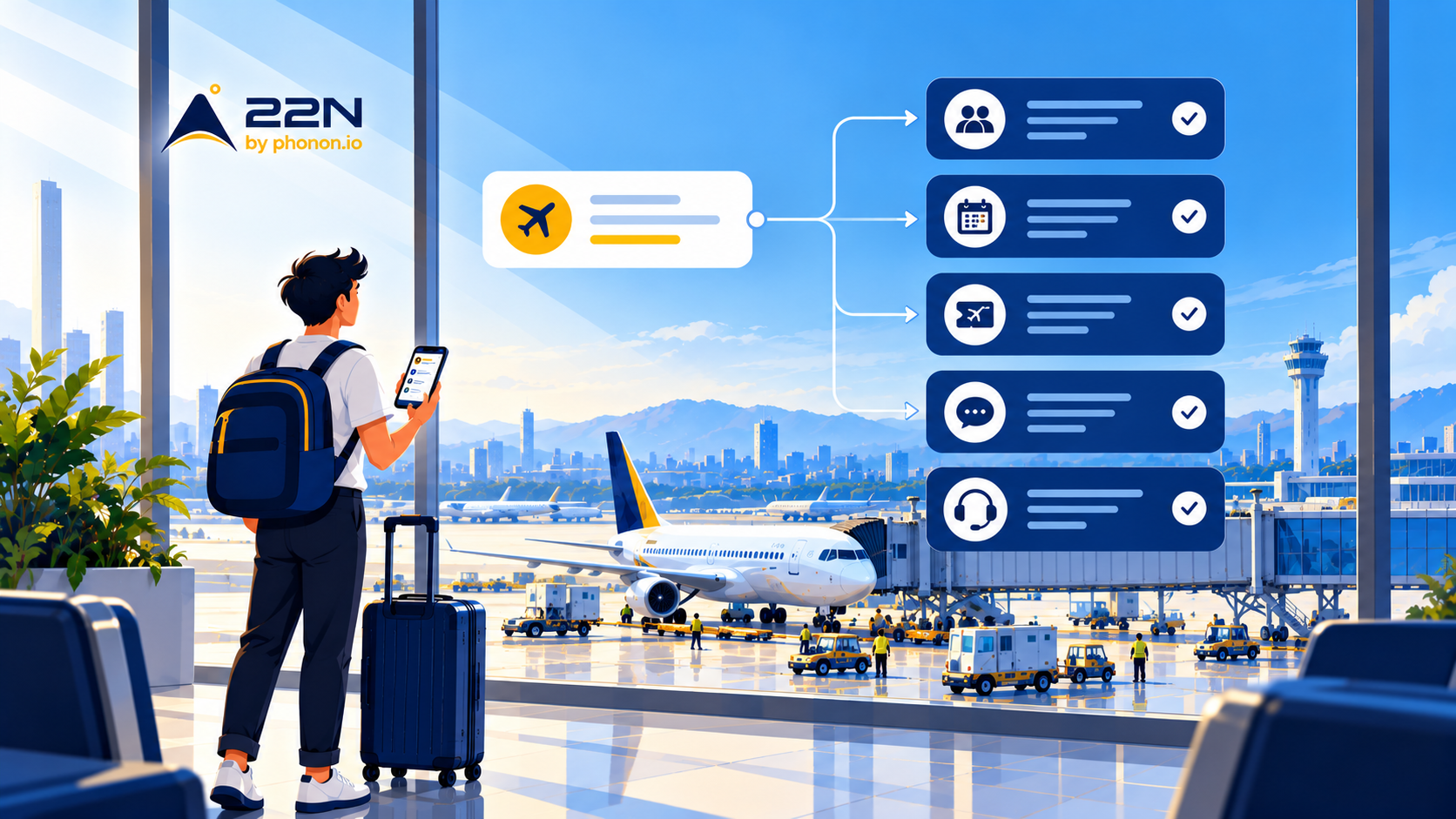
For example, when a delay puts connecting passengers at risk, an automated workflow can identify affected bookings, evaluate available recovery options, communicate relevant information and route unresolved cases to an agent.
How Does It Work?
Intelligent automation in airline operations brings together three key elements:
-
Business rules: Define eligibility, compensation policies, rebooking restrictions and operational requirements.
-
Data and AI: Provide passenger and flight context, identify potential risks and support recommendations.
-
Human oversight: Manage exceptions, handle complex cases and maintain control over critical decisions.
Together, these capabilities help airlines automate routine tasks while ensuring that actions remain aligned with operational policies and passenger needs.
Where Can Airlines Apply Intelligent Automation?
Intelligent automation can support several areas of airline operations:
-
Disruption recovery: Identify affected passengers and coordinate rebooking and assistance workflows.
-
Passenger communications: Deliver relevant updates across channels based on changing operational conditions.
-
Customer servicing: Automate routine enquiries and route complex cases to the right team.
-
Revenue optimisation: Support commercial decisions using demand, availability and business rules.
-
Operational workflows: Reduce repetitive manual tasks and improve coordination across systems.
The benefits depend on the quality of integrations, the workflows selected for automation and how performance is measured. Airlines should evaluate success through outcomes such as recovery completion, servicing effort and the number of unresolved passenger cases.
How 22North Approaches Intelligent Automation
At 22North, we focus on connecting airline systems, operational intelligence and passenger-facing workflows.
From identifying passengers affected by a cancellation to coordinating recovery options, updating bookings and communicating confirmed arrangements, the objective is to make passenger operations more connected and manageable.
By combining automation, AI-enabled capabilities and system integrations, 22North helps airlines streamline workflows, reduce manual servicing effort and deliver more consistent passenger experiences.
Intelligent automation is not just about completing tasks faster. It is about connecting the right information to the right action at the right time.
Explore 22North’s passenger operations solutions at 22north.io.